How to Remove Rust From Metal Objects and Surfaces
Rust on shovels, pruners, and patio metal is not one cleaning job. Learn which pantry methods work, when to neutralize acid, and what never belongs on plated blades.
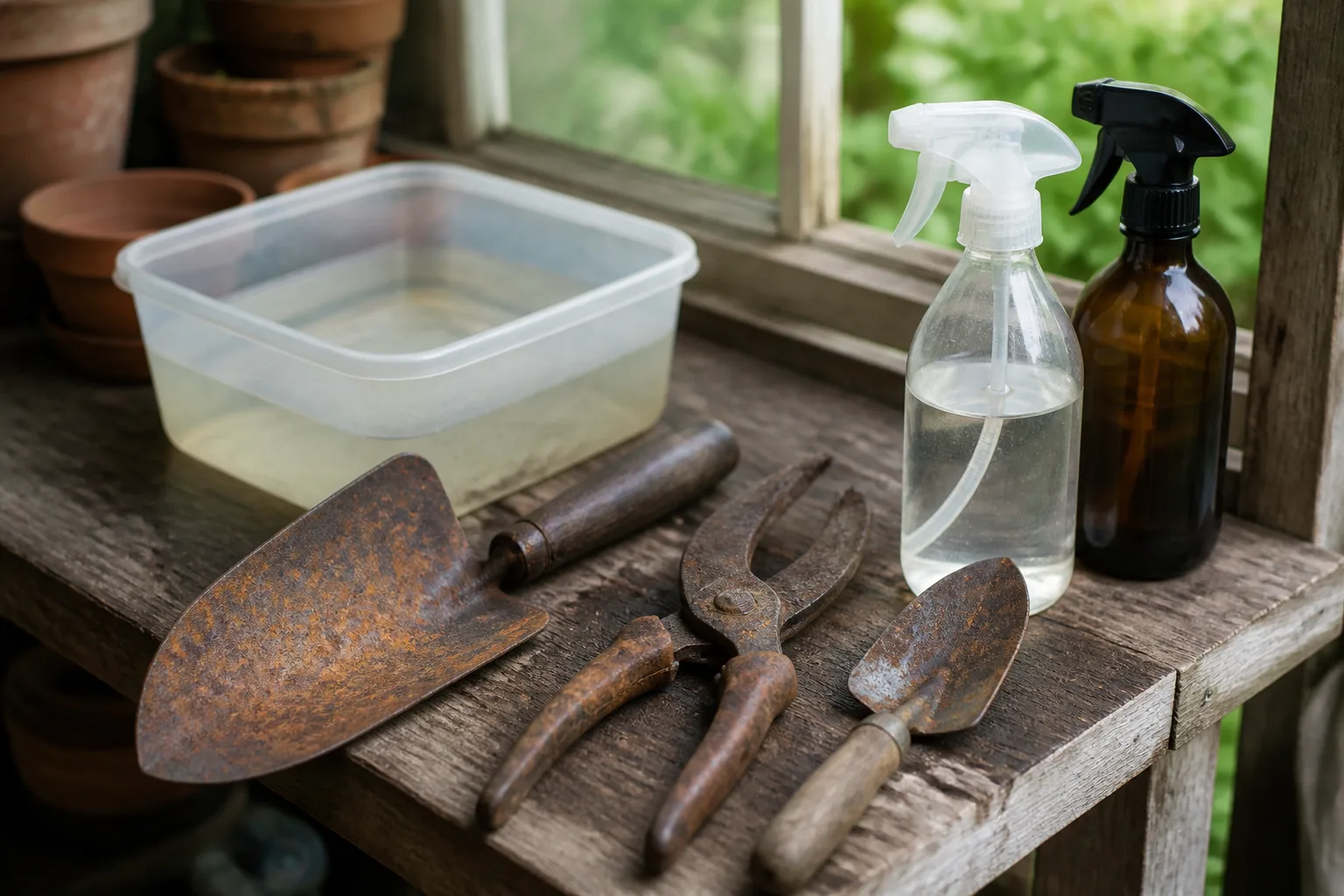
That chalky orange film on a shovel left in the rain, the rough spots on bypass pruners, and the reddish drip marks under a wrought-iron planter hook are all rust—but they are not the same cleaning problem. Treat a concrete stain like surface corrosion on a blade and you will waste an afternoon. Treat a plated pruner like bare carbon steel and you may strip the finish you needed to keep.
This guide walks through pantry methods, paste cleaners, and store-bought removers for metal objects and surfaces gardeners actually deal with: hand tools, trellis brackets, metal planters, patio furniture feet, and the marks those items leave behind. You will get a decision path based on metal type, realistic soak times, the neutralization step most DIY articles skip, and when to reach for a dedicated soak from our best rust removers for tools and patio metal roundup instead of another vinegar bath.
Rust on Metal: What You Are Actually Trying to Remove
Rust is iron oxide—steel or iron that reacted with oxygen and moisture. On a tool blade or shovel head, you are fighting surface rust: flaky orange-brown scale bonded to the metal itself. Your goal is to return clean bare metal you can dry, oil, and store.
On a concrete patio, glazed tile, or colorfast outdoor cushion, you often have a rust stain: oxidized iron particles sitting in a porous or textured surface. The slab or fabric is not rusting; it is discolored. Stain removers with oxalic acid chemistry target that discoloration without requiring you to submerge a driveway. Concrete discoloration from metal furniture and fertilizer iron is a common outdoor example—fix the rusty foot or planter bracket, or the mark comes back no matter how hard you scrub.
Surface rust on bare steel and cast iron

Surface rust on shovels, hoes, loppers, and cast-iron grill grates is a metal restoration job. Pantry acids, commercial dissolvers, or mechanical abrasion all work when the rust is mostly superficial. Deep pitting—tiny craters where metal has already been eaten away—means you can clean what remains, but you will not restore a mirror finish without grinding or replacing the part.
Rust stains on concrete, tile, and fabric
Rust stains need chemistry that lifts iron oxide from the surface pores, not a 24-hour vinegar soak. Skip vinegar on large concrete areas; it is slow, can lighten some sealers unevenly, and does not match labeled masonry rust removers for established driveway marks. For bathroom tile and porcelain, similar stain-focused products apply—outside the garden scope but worth knowing so you do not grab the shovel soak tub by mistake.
Before You Start: Match the Method to the Metal
Every rust method trades time against risk. Acids dissolve iron oxide; abrasives scrape it off. Both can damage the wrong metal or finish.
Carbon steel and bare cast iron — Vinegar soaks, lemon-baking soda paste, oxalic-acid powders like Bar Keepers Friend, and phosphoric gels are generally appropriate when you plan to rinse, neutralize, dry, and oil afterward.
Stainless steel — Light rust and heat-tint marks often respond to oxalic-acid cleansers or a baking-soda paste with a non-scratch pad. Avoid long vinegar soaks; acid can etch or pit some stainless grades. Always rub with the grain and patch-test.
Galvanized steel — Zinc coating protects the steel underneath. Aggressive acid soaks or heavy wire brushing can strip galvanizing and accelerate future rust. Use shorter contact times and gentler abrasion.
Aluminum, brass, and copper — Vinegar and lemon can etch or discolor these metals. Do not soak aluminum trellis clips or brass hose fittings in acid without a patch test. Often a specialized metal polish or very mild paste is safer.
Plated, painted, or coated tools — Chrome-plated pruners, painted shovel sockets, and powder-coated patio frames need spot treatment only where rust has broken through. Submerging the whole tool dissolves rust and attacks intact coating at the soak line. Wrap handles in plastic, keep liquid below the paint, or use a gel you can brush on precisely.
Antiques and high-value pieces — Test every method on a hidden spot. When in doubt, consult a metal conservator before acid or aggressive filing.
Metals and finishes that tolerate mild acids
Undiluted distilled white vinegar (about 5% acetic acid) and cleaning vinegar (often 6% acidity) work best on small bare-steel parts: trowel blades, hinge pins, clips, and tool heads you can soak without wetting wood handles. Lemon juice plus baking soda paste suits localized spots on flat metal. Cream of tartar (tartaric acid) mixed with vinegar makes a thicker paste that clings to vertical surfaces like fence brackets.
When to skip DIY acids and use a commercial remover instead
Reach past the pantry when:
- Rust is thick, scaled, or has been growing for multiple seasons
- The item is too large to soak safely (full shovel with wooden handle)
- You need results in hours, not days
- The metal is plated, heat-treated, or you are unsure of the alloy
- Previous vinegar soaks left black etching or dull pits
Chelation soaks like Evapo-Rust and brush-on phosphoric gels are slower than hype suggests on heavy rust but far faster and more controlled than multi-day vinegar for pitted shovel heads. Our best rust removers guide compares soak vs gel chemistry for garden and patio jobs.
Supplies That Work for Most Rust Jobs
Gather before you start so wet metal does not sit exposed mid-process:
- Distilled white vinegar or cleaning vinegar for soaks
- Baking soda for paste and for neutralizing acid after soaks
- Lemon juice (fresh or bottled) for paste cleaners
- Cream of tartar and citric acid powder for stubborn patches
- Coarse steel wool, lump pumice, or nylon brush for scrubbing
- Microfiber cloths and old toothbrush for detail work
- Plastic tub or bucket (glass or plastic—not metal, which the acid will attack)
- Rubber gloves and eye protection when using any acid or commercial remover
- Boiled linseed oil, paste wax, or silicone spray for post-clean protection
- Plastic sheeting to protect potting benches and wood surfaces from drips
UW–Madison Extension recommends coarse steel wool or pumice for rusted shovels, hoes, saws, and pruning shears, followed by oil on all metal surfaces—mechanical removal still matters even when acids loosen the bulk of the scale.
Remove Rust With a Vinegar Soak

Vinegar is the most reliable pantry rust remover because acetic acid converts iron oxide into water-soluble iron acetate you can rinse away. It is inexpensive, low-toxicity, and excellent for light to moderate surface rust on bare carbon steel small enough to submerge.
When vinegar is the right first move
Use a vinegar soak when rust is flaky but not deeply pitted, the metal is bare steel or cast iron, and you can keep wooden handles above the liquid line. Pour enough undiluted vinegar into a plastic tub to cover the rusty zone. For fixed objects like a rusted trellis bracket, saturate a rag with vinegar, press it against the rust, and wrap with plastic wrap to slow evaporation.
Soak times:
- 30 minutes — light surface haze on trowels or clips
- 2–4 hours — typical seasonal tool rust
- 8–24 hours — heavy scale; check every few hours so you do not over-etch
Cleaning vinegar at 6% acidity works faster than standard 5% white vinegar but also etches sooner—check progress hourly on thin metal.
After soaking, scrub with a nylon or soft brass brush. An old toothbrush reaches screw heads and serrations. Rinse with clean water.
Neutralize, rinse, and dry so rust does not return overnight
This step separates a one-time fix from rust that blooms again by morning. Acid left in micro-pits keeps working after you towel the tool dry.
Make a baking soda neutralizing bath: about 1 tablespoon baking soda per cup of warm water. Submerge the metal briefly or wipe with a soda-water rag. Rinse again, then dry thoroughly with a clean cloth. Heat helps—leave small parts in the sun or use a hair dryer on crevices.
Finish with a thin coat of boiled linseed oil, mineral oil, or paste wax on bare steel. Extension guidance applies here: clean, rust-free, dry metal plus oil is the maintenance baseline that keeps pruners opening smoothly next season.
Lemon Juice and Baking Soda Paste for Spot Rust
When you cannot soak—because the handle cannot get wet, the rust is on a vertical post, or you are treating a single patch—a paste works better than a bath.
Mix roughly two parts baking soda (or laundry borax for extra bite) with one part lemon juice until spreadable. Thickly coat the rusty area. Let it sit at least 30 minutes; mist with water if the paste dries and cracks. Scrub with a brush, rinse, neutralize with baking soda water if you used a large lemon-juice ratio, and dry completely.
This method shines on spot rust on shovel edges, hose reel mounts, and the bite of a hoe where vinegar pooling is awkward. It is gentler than a long soak but slower on thick scale—repeat once or escalate to vinegar or a commercial gel.
Potato, Salt, and Oxalic Acid Tricks for Small Jobs
Raw potato halves carry a small amount of oxalic acid—the same active ingredient in many commercial rust powders. Sprinkle salt or baking soda on the cut face for abrasion, rub the rusted spot, rinse, and dry. Good for knife-scale rust, hinge pins, and tiny clips when you do not want to set up a soak tub.
Bar Keepers Friend and similar oxalic-acid cleansers are the store-bought version of this chemistry. Wet the metal, sprinkle powder, let it dwell a few minutes, scrub lightly, rinse. Works well on stainless tool accents and sink-adjacent rust drips without the multi-hour timeline of vinegar. Follow label directions; oxalic acid can irritate skin—wear gloves.
The aluminum foil ball trick for rust spots on chrome or stainless uses a mild galvanic reaction when you rub wet foil on the stain. It can lift fresh rust marks on kitchen tools but is unreliable on heavy garden-tool scale and can scratch soft finishes—test first.
Cream of Tartar and Citric Acid for Stubborn Patches
Cream of tartar (tartaric acid) mixed with vinegar into a thick paste clings to vertical garden hardware—trellis eyes, bracket bolts, metal planter hooks—better than thin vinegar alone. Apply, wait at least five minutes (30 minutes for heavier rust), scrub, rinse, neutralize if needed, dry, and oil.
Citric acid powder from brewing or canning supplies offers stronger acid than lemon juice without the mess. Mix equal parts citric acid and baking soda with just enough water to form a paste. Apply, dwell 30 minutes, scrub, rinse, dry. Citric acid is also the active in many concrete rust stain products—useful knowledge when the same planter left marks on the patio below.
Commercial Rust Removers When Pantry Methods Stall
Pantry methods win on cost and accessibility for light rust. When scale is thick or you are restoring a whole tool collection before spring, commercial chemistry saves days.
| Approach | Best for | Typical dwell | Caution |
|---|---|---|---|
| Chelating soak (Evapo-Rust type) | Bare steel parts you can submerge | 1–24 hours | Keep paint/plating above liquid line |
| Phosphoric gel (naval jelly type) | Localized thick rust on ferrous tools | 5–30 minutes | Corrosive; gloves, ventilation; rinse promptly |
| Oxalic powder cleanser | Stainless, light tool rust, fixtures | Minutes | Do not mix with bleach |
| Rust dissolver spray gel | Large flat panels, vertical metal | Per label | Acids; patch-test coatings |
WD-40 Rust Remover Soak and similar specialty baths dissolve rust without scraping when you can fully immerse bare metal. Phosphoric acid gels cling to shovel tines and gate hinges but require careful rinse and neutralization—treat them as workshop chemicals, not pantry cleaners. Read OSHA guidance on handling corrosive cleaners: eye protection, gloves, fresh air, and no mixing with bleach or ammonia.
For a full comparison of bottles matched to garden tools, patio furniture, and concrete stains, see the best rust removers for tools and patio metal.
Mechanical Removal: Steel Wool, Wire Brush, and Sandpaper
Chemistry loosens rust; abrasion removes it. UW–Madison Extension advises coarse steel wool or lump pumice on rusted cutting tools and shovels, with caution that sandpaper and emery cloth can scratch surfaces where rust re-forms.
Workflow that works:
- Knock off loose flakes with a wire brush or stiff nylon brush
- Follow with 0000 steel wool or pumice on cutting edges—less aggressive than coarse wool on polished areas
- For stamped, blunt-edged shovels, a mill file can re-establish a 30° cutting angle after heavy rust removal
- Wipe clean, neutralize any acid residue, dry, oil
Avoid wire wheels on power tools unless you accept visible scratch patterns. Never use a wire brush on stainless then store the brush with carbon-steel residue—it can embed free iron that rusts the stainless later.
Rust Stains on Concrete, Tile, and Outdoor Surfaces

When a metal planter or chair leg leaves an orange mark on concrete, you are treating a stain, not the metal itself. Sweep debris, wet surrounding concrete so cleaner does not absorb unevenly, and patch-test in a hidden corner.
Use a product labeled for masonry or concrete rust stains—often oxalic or citric acid based. Apply per label dwell time, scrub with a nylon brush (not wire, which deposits metal that rusts again), and rinse away from planting beds. Fix the source: felt feet on furniture, drip trays under planters, or storing wet tools on the slab.
For fresh, light marks, a thick lemon-and-salt paste may lighten the stain, but established driveway rust usually needs labeled chemistry. Bleach addresses organic growth, not iron oxide—do not substitute.
How to Prevent Rust on Garden Tools and Patio Metal
Removal is half the job. Prevention is what keeps you from repeating it every fall.
- Dry tools before storage. Rinse soil, towel metal, and hang in a dry shed—not leaning against a damp wall.
- Oil metal surfaces after each heavy use or at season end. A light coat of boiled linseed oil on wood handles prevents splintering too.
- Never leave tools outdoors overnight or in standing water in a bucket.
- Hand-wash kitchen knives and carbon-steel garden knives; dishwashers strip protective films and pit edges.
- Paint or seal exposed steel on trellises and raised-bed brackets; touch up chips promptly.
- Use galvanized or stainless hardware where permanent outdoor moisture is unavoidable.
- Lift patio furniture off unsealed concrete or use protective feet so rust rings do not etch the slab.
Extension maintenance guidance is blunt: rusted tools take more force to use and cut poorly. Ten minutes of wipe-down beats an afternoon of restoration.
Troubleshooting: When Rust Will Not Budge
Rust reappears within days — You skipped neutralization, left acid in crevices, or stored the tool wet. Repeat clean, neutralize, dry thoroughly, oil, and store indoors.
Black staining after vinegar — Over-soaking etched the metal. You can often oil and use the tool, but shine is gone. Shorten future soaks; switch to chelating soak for heavy jobs.
Pitting under the rust — Metal is already lost. Cleaning smooths what remains but will not fill holes. Replace structural parts; cosmetically oil and monitor.
Plating bubbles or flakes — Coating has failed. Acid will accelerate damage. Stop DIY; replace the tool or strip and refinish professionally.
Rust on the cutting edge won’t clear without rounding the blade — Sharpen after rust removal per extension technique: secure in a vise, file at the original angle, deburr the back, then oil.
Concrete stain returns — The metal source is still bleeding. Treat the furniture foot or tool, seal concrete if appropriate, and add drip protection.
Conclusion
Removing rust from metal objects and surfaces starts with naming the job: surface corrosion on bare steel versus stains on concrete and tile. Match pantry vinegar, paste cleaners, and oxalic-acid powders to light rust on carbon steel; neutralize acids, dry completely, and oil before storage. Escalate to commercial soaks and gels when scale is thick, metal is plated, or time matters—and use mechanical steel wool or pumice where extension guides recommend it for cutting tools.
The fastest “like new” result is realistic on seasonal tool rust caught early. It is not realistic on deeply pitted blades or failed plating without professional help or replacement. Fix the metal, fix the drip source on your patio, and build a dry-storage habit so you are sharpening and planting next spring—not soaking the same shovel again.