How to Propagate Hibiscus From Seed or Cuttings
Learn how to propagate hibiscus from seed or cuttings. Match the method to tropical or hardy types, collect mature seed, and raise seedlings safely.
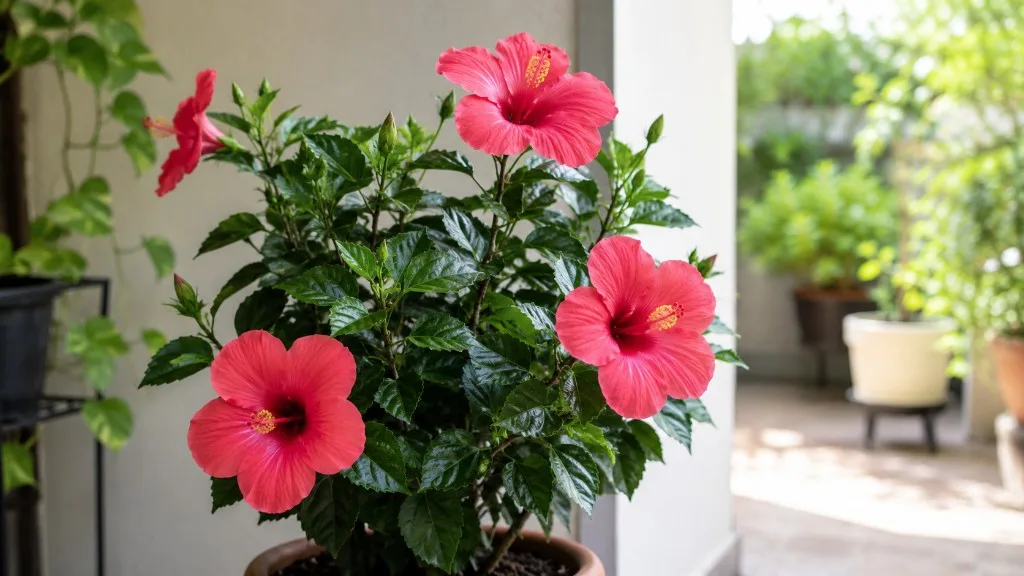
The right way to propagate hibiscus depends on what kind of plant you have and whether you want a genetic copy or a batch of seedlings with room to vary. A softwood cutting can preserve a prized flower color and growth habit. Seed is useful when you want to raise several hardy rose mallows, experiment with a cross, or grow a plant that is not sold locally. Because “hibiscus” covers tender tropical shrubs, hardy perennials, and woody shrubs, identify the plant before choosing a method.
For most named tropical hibiscus cultivars, use cuttings to keep the parent’s traits. For hardy rose mallow, seed can be a straightforward, rewarding option, especially when you accept that seedlings may not match the flower or size of the parent. This guide explains how to decide, collect and sow seed, raise seedlings, and use cuttings when fidelity matters.
Choose a propagation method by species and goal
Before you sow a seed or cut a stem, read the plant tag or compare the leaves, stems, and winter behavior with a reliable profile. A tropical Chinese hibiscus (Hibiscus rosa-sinensis) is not managed like a hardy rose mallow (H. moscheutos), and neither behaves like rose of Sharon (H. syriacus). Similar-looking flowers do not mean the seedlings share the same cold tolerance or growth habit.
Then decide what “success” means. If it means another plant with the same double orange blooms, compact habit, or named cultivar, choose a vegetative method. A cutting is genetically the same plant as its parent, while seed is the result of pollination and can combine traits from two parents. If you want a lot of plants, welcome color variation, or want to observe seedlings, seed may be the better choice.
Seed and cuttings do different jobs
| Your goal | Better starting point | What to expect |
|---|---|---|
| Keep a named cultivar’s flower color and form | Stem cutting | A clone, though rooting success varies by plant and conditions |
| Grow several hardy rose mallows economically | Seed | Multiple seedlings, with possible variation in flower and habit |
| Start a tropical hibiscus for a patio | Cutting | Usually the more predictable home method; protect from cold |
| Experiment with crosses or select new traits | Seed | A longer project with unpredictable results |
That genetic difference is fundamental, not a flaw in seed propagation. NC State Extension’s propagation handbook explains that sexual propagation combines genetic material and produces offspring that differ from their parents, whereas asexual propagation maintains a clone. The plant label matters: seed from a hybrid may show more variation than seed from a stable open-pollinated plant.
Identify which hibiscus you have
The group your hibiscus belongs to changes the season and aftercare more than the basic fact that seeds need moisture and warmth. If the label is missing, check a local nursery, extension plant database, or the types of hibiscus guide before using a frost date or hardiness range.
Hardy rose mallow
Rose mallow, including H. moscheutos and its garden hybrids, is an herbaceous perennial in many temperate gardens. Its stems die back in winter and new growth returns from the crown. Many types grow well from seed; Clemson Extension notes that early-started perennial hibiscus may bloom during its first year. That is a possibility, not a promise: late sowing, a short summer, seedling vigor, and the particular cultivar all affect flowering.
Hardy does not mean every hibiscus seedling is identical or adapted to every climate. Check a cultivar’s range and your local winter conditions. The Clemson Extension hibiscus guide describes several perennial species and their differing cultural needs, while the NC State Plant Toolbox profile for rose mallow helps confirm the species.
Tropical Chinese hibiscus
Chinese hibiscus is a tender, woody evergreen in warm climates. It is usually grown in a container or moved indoors where winters freeze. NC State Extension identifies stem cuttings as its propagation method. Seed can germinate, but a seedling from a hybrid may differ from the showy parent and will take longer to become a flowering shrub. If the point is to keep a particular cultivar, a cutting is the sensible route.
Rose of Sharon and other woody hibiscus
Rose of Sharon is a deciduous shrub, not a tropical patio hibiscus or an herbaceous rose mallow. It can produce seed, but a seedling may not preserve a named cultivar’s flower form. Also consider whether volunteers are welcome: rose of Sharon may self-seed, and local guidance should inform whether a particular cultivar is suitable. Several other species are called hibiscus, so do not apply rose-mallow seed instructions to an unidentified plant without checking its specific needs.
When growing from seed makes sense
Start with seed when you want multiple plants, enjoy raising seedlings, or are growing a hardy species that sets viable seed. Seed is also useful when you are selecting for a new color or habit and can wait to see what appears. It is less suitable when you have one expensive named cultivar and need a faithful replacement. In that case, a seedling could be healthy and attractive but still be the wrong plant for your design.
Seed availability can be the limiting step. Some hibiscus flowers drop without setting a capsule, and some cultivars produce little or no viable seed. If you have no mature pods, do not assume you missed the harvest; the plant may not have set seed. Ask whether the plant is self-fertile or needs cross-pollination, or buy seed sold under a botanical species or cultivar name from a reputable supplier. When buying, check the packet’s year and germination notes, then follow any species-specific treatment it gives.

Collect and label mature seed
Hibiscus seed is inside a capsule that develops after pollination. Do not collect the flower itself as though the petals contain seed. Leave a few healthy blooms uncut and watch the structure at the base of each spent flower. If a capsule begins to swell, allow it to mature on the plant. For many hardy hibiscus, a mature capsule turns brown and papery and begins to split; Clemson Extension recommends collecting at that stage for fall sowing. If you harvest while a capsule is green and soft, the seed may be immature.
When the capsule is dry but before it has scattered its contents, clip it into a labeled paper bag or envelope. Open it over a tray, separate the firm seeds from chaff, and discard any that are visibly damaged or soft. Let the cleaned seed air-dry briefly in a shaded, ventilated place, then store it in a cool, dry envelope if you are not sowing immediately. Add the plant’s name, cultivar if known, collection date, and whether the seed came from a known cross.
A seed collected from a named plant is not automatically that named cultivar. Pollinating insects can carry pollen from another hibiscus, and hybrid offspring can vary even when you know the parent. Keep the label honest: “seed collected from [parent]” is more accurate than assuming every seed will reproduce its parent. This note will help explain later differences in bloom color, habit, or vigor.
Gather supplies and set a safe schedule
Use clean pots or cell trays with drainage holes, fresh sterile seed-starting mix, a waterproof label, and a clear lid or loose cover. A heat mat with a thermostat can help in a cool room, but a warm location is more important than expensive equipment. Do not use garden soil in a small indoor tray; it can compact, drain poorly, and carry weed seeds or disease organisms. Pre-moisten the mix so it is damp throughout but does not drip when squeezed.
In a cold-winter climate, indoor sowing about 10 to 12 weeks before the expected last spring frost gives hardy seedlings time to develop before outdoor planting. Clemson Extension gives a 12-week indoor start for hibiscus; use your local last-frost estimate as a planning guide, not a guarantee. Tender tropical hibiscus can be started indoors year-round where warmth and light are available, but the seedling must remain protected from cold. Direct sow hardy seed outdoors only when your local season is long enough and frost risk has passed; indoor trays make moisture and early growth easier to monitor.
Prepare the seed coat without damaging the embryo
Hibiscus seeds often benefit from soaking, but the need for nicking can vary with species, seed age, and the individual seed lot. Clemson Extension recommends an overnight soak before sowing. For a hard, glossy seed that resists water, a very light abrasion can open a small entry point; NC State Extension’s seed-propagation guidance explains that scarification is used to make an impermeable seed coat more permeable. It does not mean every seed should be cut deeply.
Hold one seed at a time and rub a tiny patch with fine sandpaper or an emery board until the outer coat is just dulled. Stop before reaching the pale inner tissue. A knife can slip, and a deep cut can injure the embryo, so skip it if the seeds are small or difficult to hold. Then soak the seeds in room-temperature water for about eight hours or overnight. Discard seeds that are crushed or soft. If a packet gives different instructions, follow its species-specific directions rather than repeating a generic treatment.
Sow hibiscus seed at the right depth
Fill the tray with pre-moistened mix and level the surface. Sow one seed per cell when you have enough room; this limits root tangles and makes transplanting easier. Cover each seed with about ¼ inch of mix, press gently for contact, and label the tray with the species, cultivar, and sowing date. If you sow multiple seeds in a shared container, leave enough space to lift each seedling without tearing its neighbors’ roots.
Set the tray in a warm place, aiming for soil around 70–75°F (21–24°C) while the seeds germinate. Keep the medium evenly damp, never waterlogged. A clear cover slows drying, but it should not seal stagnant air in forever: open or vent it briefly each day and remove excess condensation. Put the tray in bright light out of strong direct sun; a covered tray in hot sun can overheat quickly. A seedling heat mat should warm the mix gently, not bake the bottom of the cells.
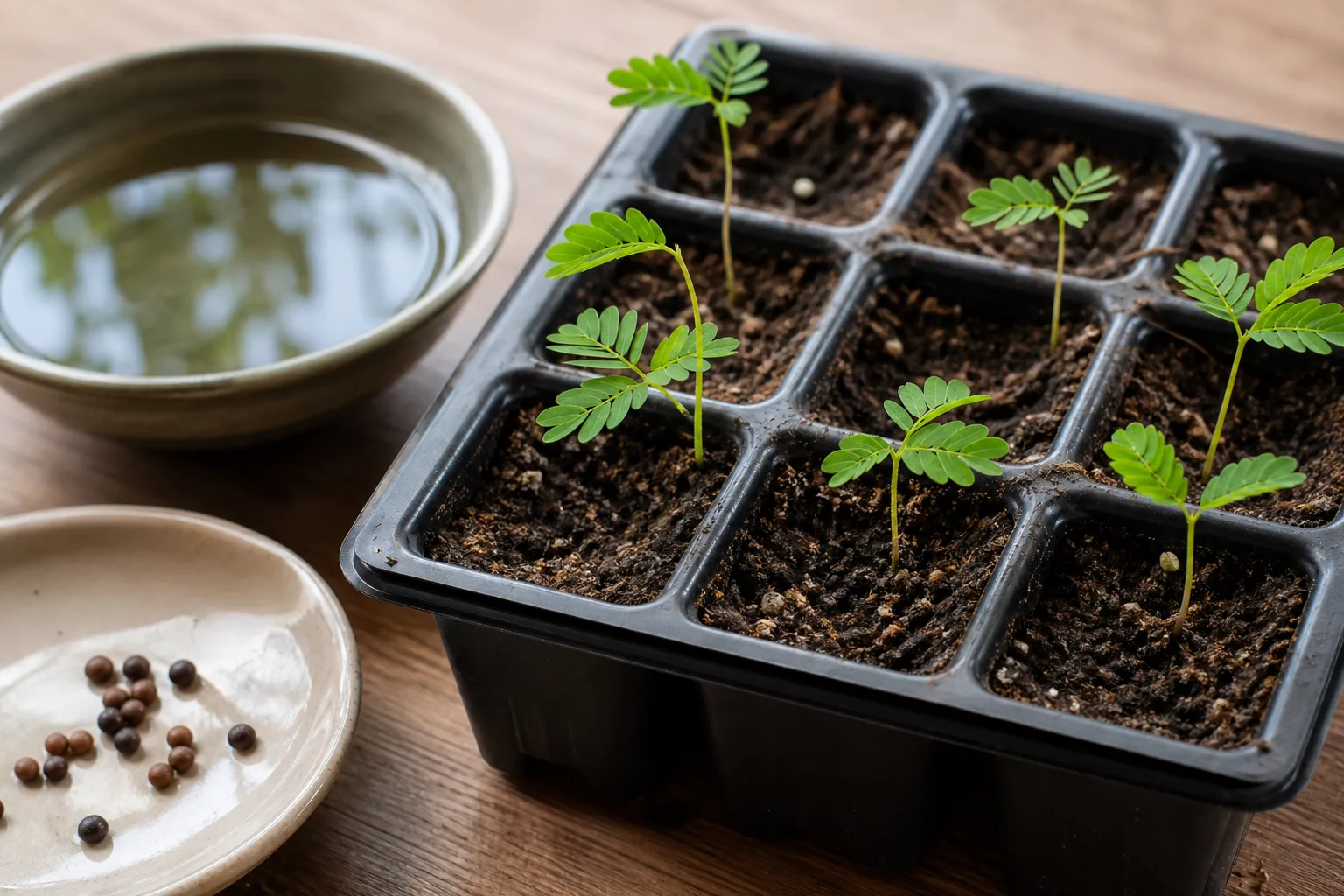
Keep seed warm and evenly moist until germination
Inspect the tray once a day rather than watering by the calendar. The surface should remain slightly moist; if the top begins to lighten and dry, mist lightly or water from below, then drain the tray so cells do not sit in standing water. If the mix looks shiny, smells sour, or stays saturated, increase airflow and let excess water escape. Fuzzy growth on the surface can signal stagnant conditions; remove affected debris and improve air movement without letting the seeds dry out.
Under warm, steady conditions, some hibiscus seeds can sprout in roughly one to three weeks, but this range is not a deadline. Seed maturity, viability, temperature, and the success of any pre-soak or scarification affect the result. Gardening Know How’s hibiscus propagation overview also emphasizes consistent warmth and moisture and gives an approximate one-to-two-week germination window. If nothing appears after three weeks, verify the mix temperature and moisture first; continue monitoring viable seeds for longer rather than throwing them out on a fixed day.
As soon as seedlings emerge, remove the cover gradually over a few days. Give them bright light, such as a sunny window or a grow light positioned according to its manufacturer’s distance guidance. Rotate the tray if light comes from one side. Long, pale stems usually mean the seedlings need stronger light; algae or mold at the surface usually points to excess moisture and poor airflow. Keep seedlings warm, but do not place them against a cold window at night.
Pot up seedlings after true leaves appear
The first pair of leaves are cotyledons, the seed’s initial food leaves. Wait for true leaves—the next leaves that resemble the plant’s normal foliage—before judging growth or handling the seedlings. When roots begin to hold the plug together and a seedling has a few true leaves, move it to an individual small pot filled with fresh, well-draining potting mix. Lifting too early makes the root ball fall apart; leaving a crowded tray too long tangles the roots and slows growth.
Water the tray shortly before transplanting so roots are flexible. Loosen a plug from underneath with a label or narrow tool, then lift the seedling by a leaf rather than pinching its tender stem. Set it at the same depth it was growing, firm the mix gently, and water to settle it. Keep the pot in bright, indirect light for a few days while roots recover. Do not fertilize a newly moved seedling at full strength; wait for active new growth and follow a diluted label rate if the potting mix contains little or no fertilizer.
Harden seedlings before planting outdoors
Indoor seedlings have not experienced direct sun, wind, or changing outdoor temperatures. Gradually harden them off over about a week: begin in a sheltered bright-shade spot for a short period, increase outdoor time each day, and introduce morning sun before stronger afternoon sun. Bring tender tropical hibiscus back indoors if nights are cool or frost is possible. Hardy rose mallow seedlings can tolerate more outdoor exposure as they acclimate, but young plants still benefit from protection from wind and sudden temperature swings.
Plant hardy hibiscus after the danger of frost has passed and the soil is workable, matching spacing and moisture to the species or cultivar. Tropical H. rosa-sinensis belongs outside only in frost-safe weather; in colder regions, keep it in a movable pot and bring it in before cold damages it. Water the new plant thoroughly, then keep the root zone evenly moist while it establishes. For species-specific siting and routine care, use the hibiscus growing guide rather than assuming all plants called hibiscus have identical needs.
Use cuttings when you want an exact copy
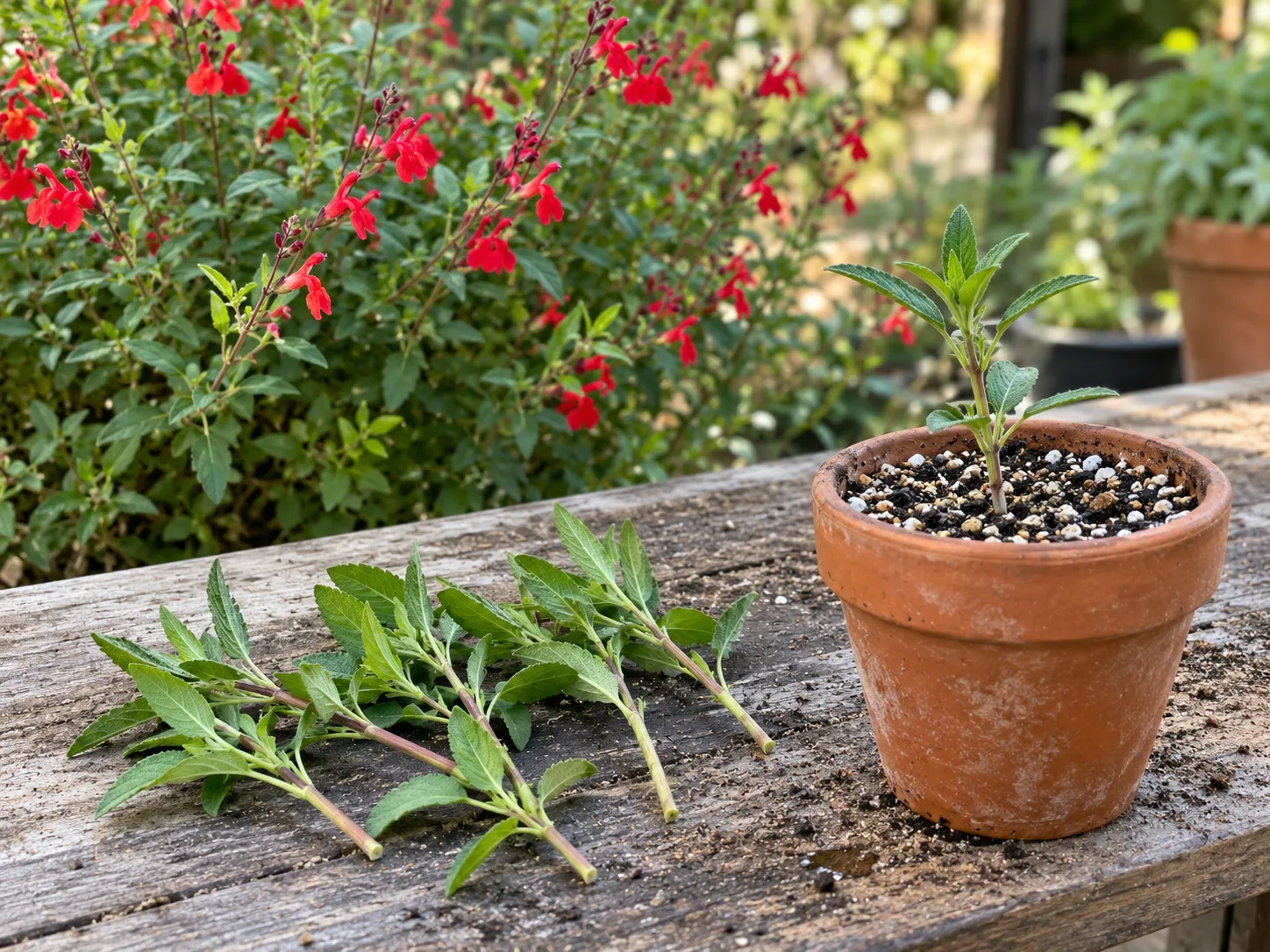
Softwood cuttings are the practical choice for cloning a named hibiscus. Take firm, healthy new growth during active growth in spring or early summer, when the parent plant can recover and the stem is not yet woody. NC State Extension’s Chinese hibiscus profile lists stem cuttings as the propagation method, and the professional-gardener advice gathered by Homes & Gardens likewise points to fresh softwood shoots for tropical and hardy types.
As a concise starting point, use clean shears to take a 4- to 6-inch cutting below a node, remove the leaves from its lower portion, and insert it into a pre-moistened, airy rooting mix. Rooting hormone is optional but can help; if using it, decant a small amount rather than dipping the stem into the original container. Cover loosely to hold humidity, keep the leaves from touching plastic, and provide warmth with bright indirect light. The medium should stay slightly moist, not swampy. A cutting is ready to pot when it resists a gentle tug or has visible roots, not merely because new leaves appeared. For the full setup, including humidity, rooting checks, and transplant care, see the hibiscus softwood-cutting guide.
Troubleshoot seed and cutting problems
If seeds have not sprouted, check viability, warmth, and moisture before increasing water. Old or immature seed may fail even when the method is sound. A hard seed coat may need an overnight soak or very light abrasion, but deep cutting can destroy the embryo. A cold tray slows germination; a saturated tray deprives seeds of oxygen and encourages rot. Start a few extra seeds when the source is uncertain, but label them so you can compare batches.
If a seedling collapses at soil level, remove it and let the surface dry slightly between checks; crowded, damp seedlings may be vulnerable to damping-off. If it is tall and thin, improve light and avoid excess fertilizer. If many seedlings emerge but look unlike the parent, that is genetic variation rather than a care failure. If you need an exact cultivar, switch to a cutting instead of trying to correct flower color with fertilizer or pruning.
For cuttings, blackening at the base usually signals rot from a waterlogged mix, stale air, or an overly tender stem. A cutting that wilts quickly may have too much leaf area, low humidity, or excessive direct sun. Use several cuttings if the cultivar is valuable because not every stem roots, and do not pull repeatedly to check. The RHS guide to semi-ripe cuttings reinforces the basic balance: a suitable young stem, clean tools, a porous medium, and steady moisture with ventilation.
Set realistic timing for growth and first flowers
Seed propagation is not a shortcut to a mature shrub. Seedlings need time to develop true leaves, roots, and a stable root ball before they can grow outdoors. Some hardy rose mallows started early may flower in the first season, as Clemson Extension notes, but other seedlings may need longer. Tropical seedlings may take longer to reach flowering size than a rooted cutting. A young plant can also skip bloom while it invests in roots and stems; that does not by itself mean the propagation failed.
Keep a simple record: parent plant or seed source, species or cultivar, sowing or cutting date, treatment, temperature, and the date roots or true leaves appeared. That record helps you adjust next time without guessing. If the outcome is important—such as repeating a specific display—make a cutting as insurance while experimenting with seed. When the plant is established, shift to the relevant hibiscus care guide for light, watering, and seasonal maintenance.
Conclusion
For a hibiscus that must match its parent, start with a healthy cutting. For a hardy rose mallow you are willing to grow with variation, seed can produce vigorous new plants and sometimes first-year flowers. Identify the species, collect only mature seed, soak and scarify conservatively, maintain warmth without waterlogging, and transplant after true leaves form. Then acclimate the young plant to outdoor conditions that suit its hardiness. Those choices make propagation more predictable while leaving room for the surprises that make seed-grown hibiscus rewarding.