Monstera Deliciosa Care: Light, Water & Support
Learn Monstera deliciosa care with practical guidance on light, watering, soil, humidity, support, propagation, repotting, pests, and yellow leaves.
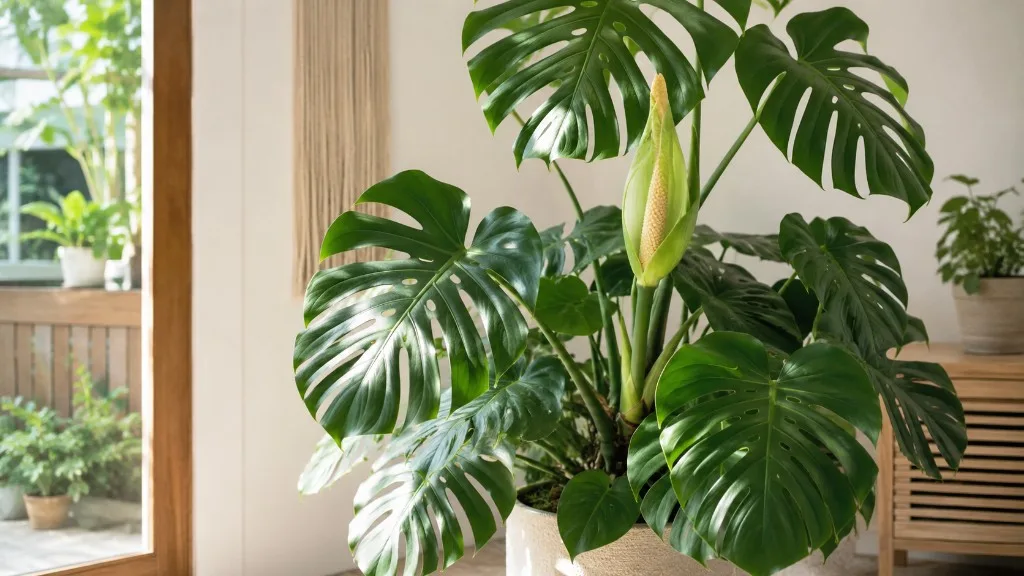
Monstera deliciosa is forgiving when its roots can breathe, its leaves receive usable filtered light, and its climbing habit has somewhere to go. It struggles when a calendar dictates watering, a dim corner is mistaken for shade, or a large decorative pot holds wet soil for weeks. A good routine is therefore less about memorizing a schedule and more about reading the plant and its root zone.
What makes Monstera deliciosa different
Monstera deliciosa is a tropical aroid in the Araceae family, native from Mexico through Central America. In the forest it begins near the ground and climbs toward light, using aerial roots to attach to supports. Indoors, that same plant may reach roughly 6–8 feet with support, while an unsupported vine often becomes sprawled, sparse, or heavy at one side. Penn State Extension’s houseplant profile for Monstera explains why the plant’s juvenile and mature leaves can look so different: young leaves may be whole, while mature leaves develop the familiar splits and holes. The Royal Horticultural Society’s Monstera deliciosa details are another useful reference for its identity and growing habit.
Those openings are called fenestrations. They are not a sign that a leaf is damaged, and they do not appear because someone cut the leaf. A young plant may produce several entire leaves before it is mature enough, bright enough, and well supported enough to make fenestrated growth. Judge progress by the newest leaves, not by trying to change an older leaf after it has unfurled.
Start with the Monstera deliciosa plant profile if you want cultivar details, then use the routine below to make day-to-day decisions. Variegated forms such as ‘Albo’ and ‘Thai Constellation’ generally need especially consistent bright light, but their pale tissue can scorch more readily, so acclimation matters.
Start with the right light
Give Monstera deliciosa bright, indirect or filtered light for much of the day. A few feet from an unobstructed east window is often a gentle starting point; a bright north or lightly shaded south or west exposure can also work. The goal is enough light to support sturdy new growth without allowing intense midday rays to sit on the leaves through glass.
NC State Extension’s Monstera deliciosa profile describes it as a moderate-light plant that prefers dappled or partial shade rather than harsh direct exposure. In a home, “indirect” does not mean dark. If the plant is several feet into a room and the leaves are small, widely spaced, or consistently turned toward the window, the room may be too dim even if it feels bright to you.
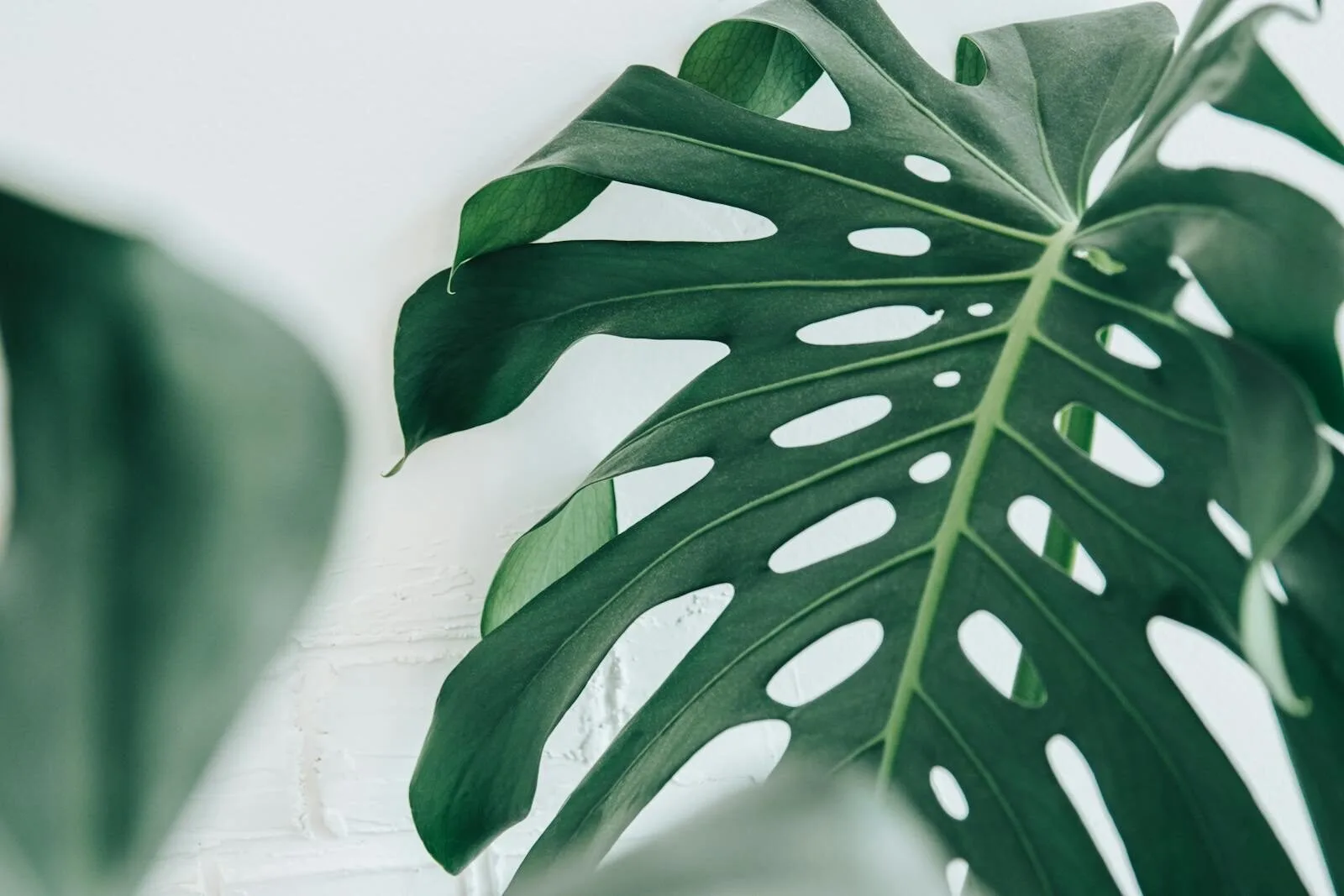
Watch the newest growth to adjust placement. Long gaps between leaves, thin stems, slow unfurling, and a plant that leans sharply toward one direction all suggest that light is not reaching the canopy evenly. Move it closer to the window in small increments, turn the pot a quarter turn every week or two, or add a grow light if the season or room makes a brighter location impractical.
Acclimate a Monstera to brighter light gradually. Do not take a plant from a dim shop or interior corner and place it immediately in strong sun. Increase exposure over a week or two, beginning with bright reflected light and a short period of gentle morning sun if appropriate. Pale bleached patches, tan crispy areas, or a sudden washed-out appearance mean the change was too abrupt or the rays are too intense. Light also changes the watering demand. A plant close to a bright window may use water faster than the same plant in winter or in a dim room. Treat light as one of the variables that changes the root-zone check, not as a reason to water automatically.
Water and soil: manage the root zone
Monstera deliciosa wants moisture followed by air, not roots sitting in a saturated block. Use a pot with a real drainage opening and a loose, well-drained mix. Then wait until the upper portion of the mix has dried before watering thoroughly. Penn State Extension recommends watering after the top 1–2 inches dry, while NC State and UConn describe checking the upper quarter to third or roughly 2–3 inches. These ranges are useful starting points; a small pot in bright light may need water sooner than a large pot in a cool, dim room.
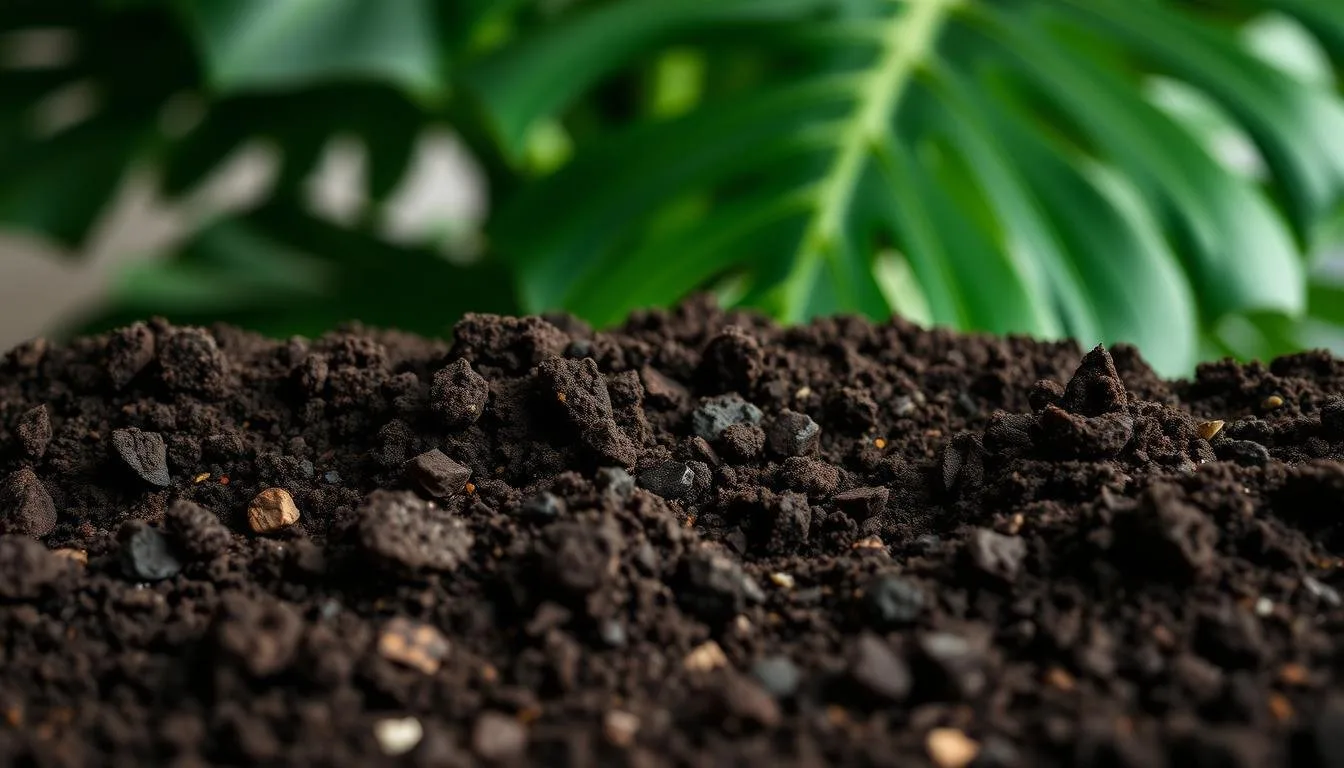
A practical indoor mix can begin with quality houseplant potting soil, then be opened up with perlite and orchid bark. The finished medium should hold some moisture while allowing excess water to move away from the roots. If a handful stays compressed like mud after watering, or if the pot remains wet long after the plant has used the water, improve the mix and check whether the container is too large.
Use this watering check.
- Push a finger or wooden stick 2–3 inches into the mix, checking more than the surface crust.
- Feel the pot’s weight if you know what it feels like after a full watering. A noticeably lighter pot usually signals that more of the root zone has dried.
- If the upper layer is dry but the lower mix is still cool and wet, wait and check again in a few days. If the root zone is dry through most of the pot, water slowly until a little drains from the bottom.
- Empty the saucer or cachepot. Do not let the pot stand in runoff, because a drainage hole cannot protect roots if the container is sitting in water.
Water the soil rather than making frequent light passes over the leaves. Occasional leaf cleaning with plain water is useful because dust reduces the effective leaf surface, but routine misting is not a substitute for root-zone watering and can keep foliage wet long enough to encourage spotting in poorly ventilated rooms.
Use the plant’s conditions to refine the interval. In a warm, bright growing season, checking weekly may be reasonable; in winter, a large pot may take two weeks or more to dry. The correct schedule is the one that repeatedly finds the upper root zone dry enough before a thorough watering without allowing the whole plant to wilt. The practical Monstera care notes from My Tasteful Space make the same useful point: light, pot size, humidity, and season all change how quickly a plant uses water.
Balance temperature and humidity
Aim for steady household warmth, roughly 65–85°F, and keep the plant away from cold drafts, air-conditioner blasts, and heat vents. Penn State Extension and NC State Extension both place Monstera in a warm, humid tropical range. A short dip is different from prolonged chill, but freezing temperatures can damage leaves and stems quickly.
Moderate indoor humidity is usually enough when watering, temperature, and light are also appropriate. A humidifier is more dependable than repeated misting if the air is persistently dry. Grouping plants can raise local humidity slightly, but leave enough space for airflow around the leaves. A pebble tray may add a small local effect only when the pot sits above the water rather than in it.
Humidity cannot compensate for a waterlogged root zone. If the room is humid and the mix is slow to dry, reduce watering frequency and improve airflow before adding more moisture. Conversely, brown tips in a very dry, hot room may reflect rapid water loss, but they can also come from salt buildup, inconsistent watering, root damage, or intense sun. Check the entire setup before changing only the humidity.
Fertilize without salt buildup
Feed during active growth with a balanced houseplant fertilizer used according to its label. A healthy plant in fresh, nutrient-containing mix may need little supplemental fertilizer at first. Once new growth is steady, a diluted application every few weeks is a reasonable starting point; reduce or pause feeding when growth slows in low light or cool winter conditions.
More fertilizer does not produce faster, healthier fenestration. Excess soluble salts can damage roots and appear as brown tips or a pale, stressed canopy. If you see a crust on the mix, repeated edge burn, or a plant that declines soon after feeding, pause fertilizer, water thoroughly so runoff can carry salts out, and make sure the pot drains freely. Do not fertilize a severely wilted, freshly repotted, diseased, or root-rotted plant until its roots are functioning again.
Train the vine and handle aerial roots
Give a climbing Monstera a sturdy moss pole, coir pole, trellis, or another support that can hold a mature vine. Place the support close to the main stem at repotting or secure it gently while the plant is still flexible. Loosely attach the stem with soft ties; do not cinch around a node or crush the petioles.
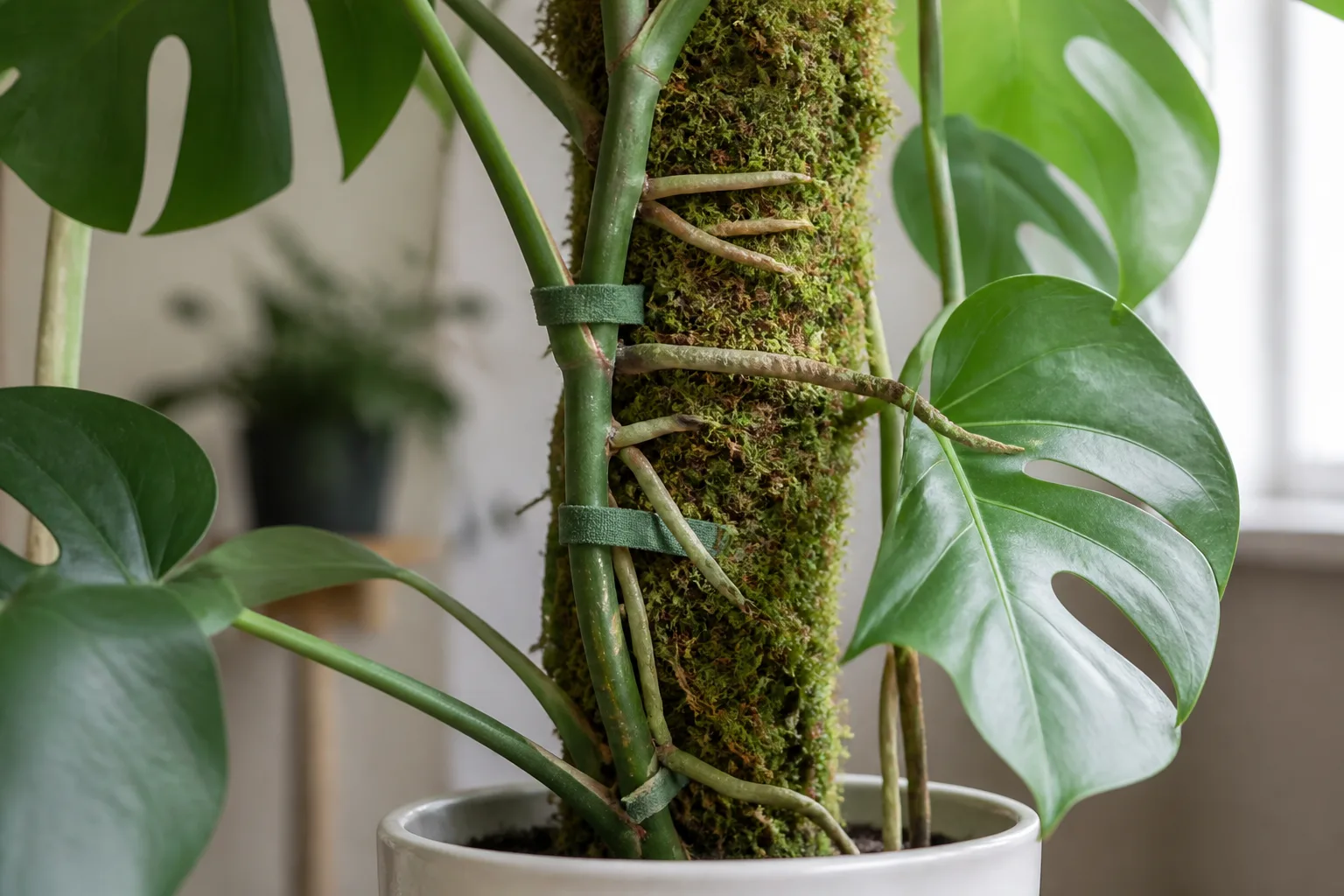
Support changes more than the silhouette. As the plant climbs, new leaves often have a better chance of maturing than leaves on a trailing, poorly lit vine. A moss pole can also give aerial roots a surface to contact. Keep the pole appropriately moist if the material and plant setup call for it, but do not turn the potting mix into a permanently wet reservoir just because the pole is damp.
Aerial roots are normal structures, not automatically a problem. They help the vine anchor and seek moisture or support. Guide a flexible root toward the moss pole or into the top layer of the potting mix if it will settle there naturally. Leave a root alone if it is not causing trouble; cutting every aerial root removes useful growth without making the plant neater for long.
If an aerial root is dead, broken, or interfering with a doorway, trim only that root with clean shears. Avoid cutting into the stem, a node, or the base of a leaf. An aerial root that is brown and firm can be old and harmless; a root that is black, soft, or slimy deserves the same root-health investigation as any other mushy tissue.
Prune only when it solves a problem
Prune to remove dead or diseased tissue, correct a dangerously uneven shape, control a vine that has outgrown its space, or collect material for propagation. Use clean, sharp shears and make a deliberate cut just above a node when shortening a stem. The node is the growth point; cutting a leaf blade halfway will not make that damaged leaf regrow.
For routine shaping, early spring is convenient because the plant is entering active growth. A pest- or disease-damaged section can be removed whenever necessary. Take a conservative approach and avoid removing a large share of the canopy in one session, especially if the plant is already stressed. Keep at least several healthy leaves on a stem so it can continue photosynthesizing.
The pruning guidance from Epic Gardening’s Monstera pruning overview is useful for one practical distinction: cut at a stem or node to direct future growth, rather than making cosmetic cuts through the middle of a leaf. After pruning, restore good light and avoid compensating with extra fertilizer or water.
Repot when the pot becomes the constraint
Repot when roots circle densely, emerge repeatedly from the drainage opening, the mix has broken down and stays wet, or the plant dries unusually fast because the root mass fills the container. A calendar reminder of every two years can prompt an inspection, but the roots and mix should make the decision. UConn notes that Monstera generally handles being somewhat pot-bound better than being placed in an oversized pot full of wet soil.
Choose a container only a little larger than the current root ball, with drainage. Slide the plant out, inspect the roots, and remove only loose, mushy, or clearly dead material. Set the stem at the same depth; burying more stem to make a tall plant look shorter can invite rot. Backfill with fresh airy mix, water it in, and return the plant to bright filtered light while it settles.
Repotting is also the easiest time to add a support. Position the pole or trellis before the new mix is packed so you do not stab through the root ball later. If the plant has healthy aerial roots, guide them gently rather than forcing them into sharp bends.
Propagate a cutting with a node
A successful Monstera cutting needs a node, the section of stem where a leaf and often an aerial root emerge. A leaf by itself can stay green in water for a while but cannot reliably produce a new vine without a node. Select a healthy stem with at least one node and, ideally, an aerial root; a leaf helps the cutting fuel root and shoot development.
Make the cut with clean shears a short distance below the node. Avoid crushing the stem. Let the cut surface dry briefly if it is very wet, then place the node in a clean propagation setup while keeping the leaf above the water or rooting medium. Bright indirect light and warmth help, but direct sun can heat a jar and stress the cutting.
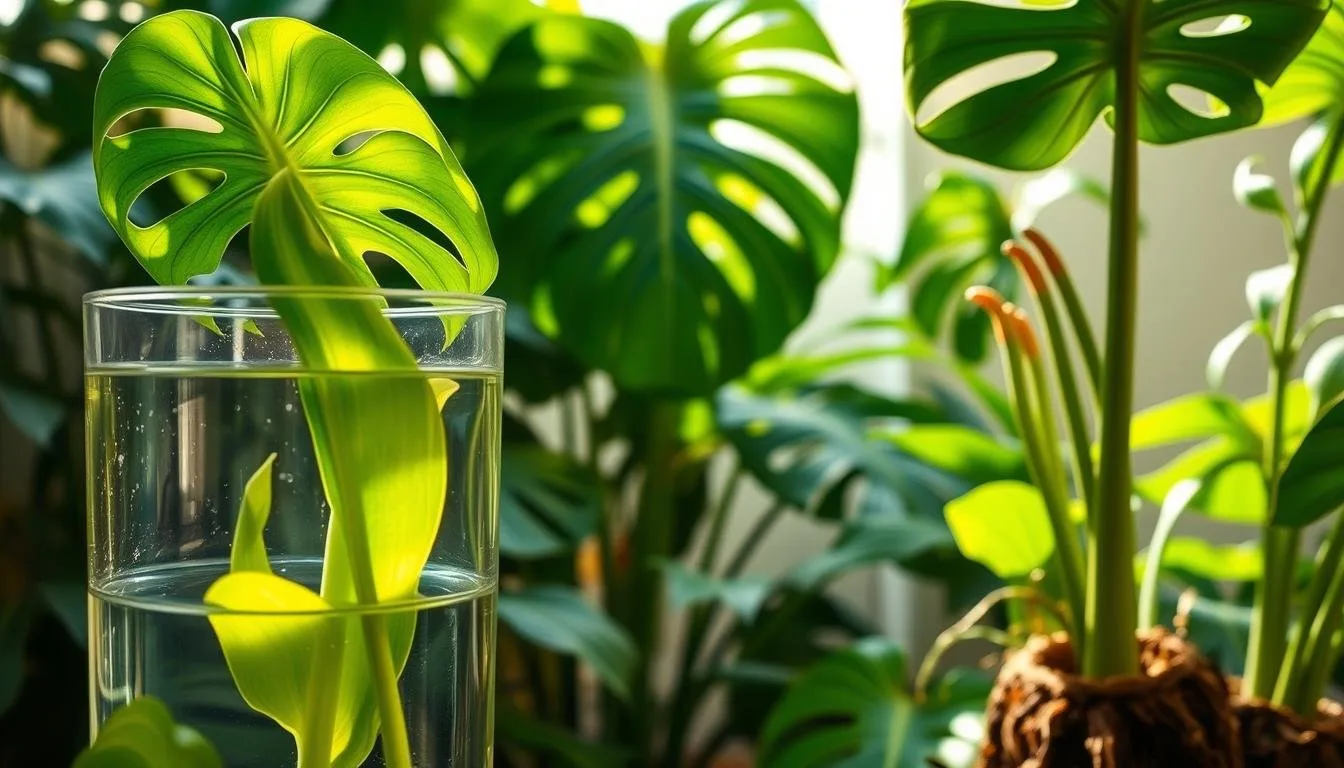
Water propagation
Put the node and any aerial root in clean water, leaving the leaf and most of the stem above the waterline. Change the water every few days or whenever it becomes cloudy, rinse the container, and watch for firm white or cream roots. Rooting may take weeks or longer, so do not pot up simply because a small bump appears.
Once the new roots have several inches of branching growth, move the cutting into a small container of airy, lightly moist mix. Keep the mix a little more evenly moist than you would for an established plant during the transition, but never leave it saturated. New leaf growth is a better sign of establishment than one long water root.
Air layering
Air layering is helpful when a large vine already has a node and you want it to root before separating it. Wrap a moist pad of sphagnum moss around the node, cover it loosely with clear plastic or another breathable setup, and secure it so the moss stays in contact with the stem. Check it regularly for moisture and for roots, while keeping the plant in bright filtered light.
When a visible root system has formed, cut below the rooted node with clean shears and pot it in a well-drained mix. Keep the new plant protected from harsh sun and severe drying while it adapts. Do not bury the growing tip or cover leaves with moss; only the node and roots need the moist rooting environment.
Grow it outdoors only in a warm climate
Monstera deliciosa is best outdoors in a warm, frost-free setting with filtered light or partial shade. NC State places it in USDA hardiness zones 10a–12b, while UF/IFAS describes it as a tropical plant that can become a very large vine in favorable conditions. A patio plant can enjoy summer warmth if it is sheltered from intense afternoon sun, strong wind, and sudden cold.
Acclimate an indoor plant gradually before leaving it outdoors. Start under bright shade, then increase exposure only if the leaves remain healthy. Bring it back inside before cold nights rather than waiting for visible damage. Freezing temperatures can kill foliage, and a sudden move from protected indoor light to full sun can scorch leaves even when the air is warm.
Outdoors, provide a support that can handle the plant’s mature weight and keep the root zone from staying flooded after rain. A ground-planted Monstera may climb trees or structures and become difficult to control, so choose its location with the eventual vine in mind. UF/IFAS guidance describes how large this tropical vine can become in suitable outdoor conditions. The edible fruit is rarely produced by an indoor plant; never taste an unripe fruit, because immature tissue contains irritating oxalate crystals and must be fully ripe before consideration as food.
Keep pests and disease from becoming a setback
Inspect the undersides of leaves, petioles, and stem joints whenever you water. Quarantine a new plant for a short observation period, wipe dust from leaves, and avoid crowding plants so that pests and leaf diseases have fewer opportunities to spread. Common sap-feeding pests include mealybugs, scale, aphids, thrips, and spider mites; fungus gnats are more closely associated with persistently wet mix.
Look for the pest itself as well as its pattern. Cottony clusters suggest mealybugs, fixed bumps suggest scale, fine stippling or webbing can indicate mites, and silvery scarring with dark specks can point to thrips. Isolate the plant, wash accessible pests away with a firm but gentle stream of water, and use a registered insecticidal soap, horticultural oil, or other labelled product exactly as directed. Repeat inspections matter because one treatment rarely reaches every life stage.
Disease problems often begin with the same conditions that cause root stress: poor drainage, standing water, cool wet mix, crowded foliage, or leaves that remain wet without airflow. UConn’s Monstera disease and pest guidance distinguishes bacterial leaf spot from root or stem rot and recommends sanitation, airflow, and dry foliage rather than casually reaching for a chemical spray. Remove badly affected leaves with clean tools, keep them out of the compost if disease is suspected, and correct the environment before treating symptoms.
Troubleshoot yellow, brown, curling, and black leaves
Symptoms overlap, so diagnose from the pattern, the newest growth, the root-zone moisture, and recent changes. Check one variable at a time and give the plant enough time to respond. A single old leaf turning yellow is less urgent than several leaves changing quickly, a soft stem, or a foul-smelling pot.
Yellowing and slow growth
Uniform yellowing on older leaves with slow growth often points to roots staying too wet, insufficient light, or a natural turnover of an old leaf. Check the mix below the surface before watering again, then inspect roots if the pot remains wet for an unusually long time. Brown or black mushy roots, a soft stem base, and a sour smell are stronger evidence of rot than yellow color alone.
If the root zone is healthy but growth is weak and internodes are long, improve light gradually. If the plant is actively growing in good light and the mix is depleted, resume a weak labelled fertilizer routine rather than applying a concentrated dose. Do not remove every yellow leaf at once; remove a leaf when it is mostly spent or clearly diseased.
Brown tips, curling, and drooping
Crispy brown tips can follow dry air, a missed watering, intense direct sun, salt accumulation, or damaged roots. Feel the mix, review the last few weeks of watering and feeding, and look for a sharp change in light. Trim only the dead edge for appearance, leaving a narrow brown margin rather than cutting into green tissue.
Curling leaves can be a temporary response to water stress or heat, but persistent curling with dry mix means the plant is losing water faster than the roots can supply it. Persistent curling in wet mix suggests the roots may be compromised. Correct the root-zone problem instead of watering repeatedly on top of it.
Dramatic drooping after a move can also reflect cold, root disturbance, or a damaged stem. Support the vine, keep conditions steady, and check for pests at the nodes. Give a recently repotted plant time to reestablish; extra fertilizer is not a recovery treatment.
Black or water-soaked spots
Black, expanding, or water-soaked spots deserve faster attention than a dry brown edge. Isolate the plant, keep leaves dry, increase gentle airflow, and remove affected tissue with sterilized shears if the spot is spreading. Avoid splashing water from one leaf to another and do not crowd the plant against other foliage.
Inspect the roots and stem base if blackening is accompanied by wilt or a wet mix that never dries. Healthy roots are generally firm; soft, dark, collapsing roots need to be removed before repotting into fresh, well-drained media. If spotting continues despite drier foliage and better airflow, seek help from a local extension service because bacterial and fungal problems can look similar in a photograph.
Protect pets, children, and your own hands
Keep Monstera deliciosa away from pets and from young children who may chew leaves or stems. The ASPCA plant safety listing identifies Swiss cheese plant, or Monstera deliciosa, as toxic to dogs and cats because of insoluble calcium oxalates. Chewing can cause intense mouth irritation, drooling, vomiting, or difficulty swallowing.
Place the pot where a curious animal cannot reach it, collect fallen leaves, and wash tools after pruning. The sap can irritate skin in some people, so gloves are sensible when cutting stems or handling a damaged plant. If a pet has chewed the plant, contact a veterinarian or the ASPCA Animal Poison Control Center at 888-426-4435 rather than waiting for symptoms to worsen. Never offer unripe Monstera fruit as food.
Conclusion
The most reliable Monstera deliciosa routine is a sequence: provide bright filtered light, let the upper root zone dry before watering deeply, use an airy mix and a draining pot, keep warmth steady, and give the vine a support it can actually climb. Then inspect the plant before every intervention. Aerial roots usually need guidance rather than removal, propagation requires a node, and yellow or brown leaves are clues rather than diagnoses.
When the plant has good light, breathable roots, and stable conditions, mature leaves and fenestrations become a natural result of growth. Make changes gradually, correct the root zone before adding more water or fertilizer, and keep the plant separated from pets and small children.