How to Grow and Care for Cypress Vine (Ipomoea quamoclit)
Grow cypress vine from seed, choose a light and support it can use, troubleshoot missing blooms, and keep volunteer seedlings from taking over nearby plants.
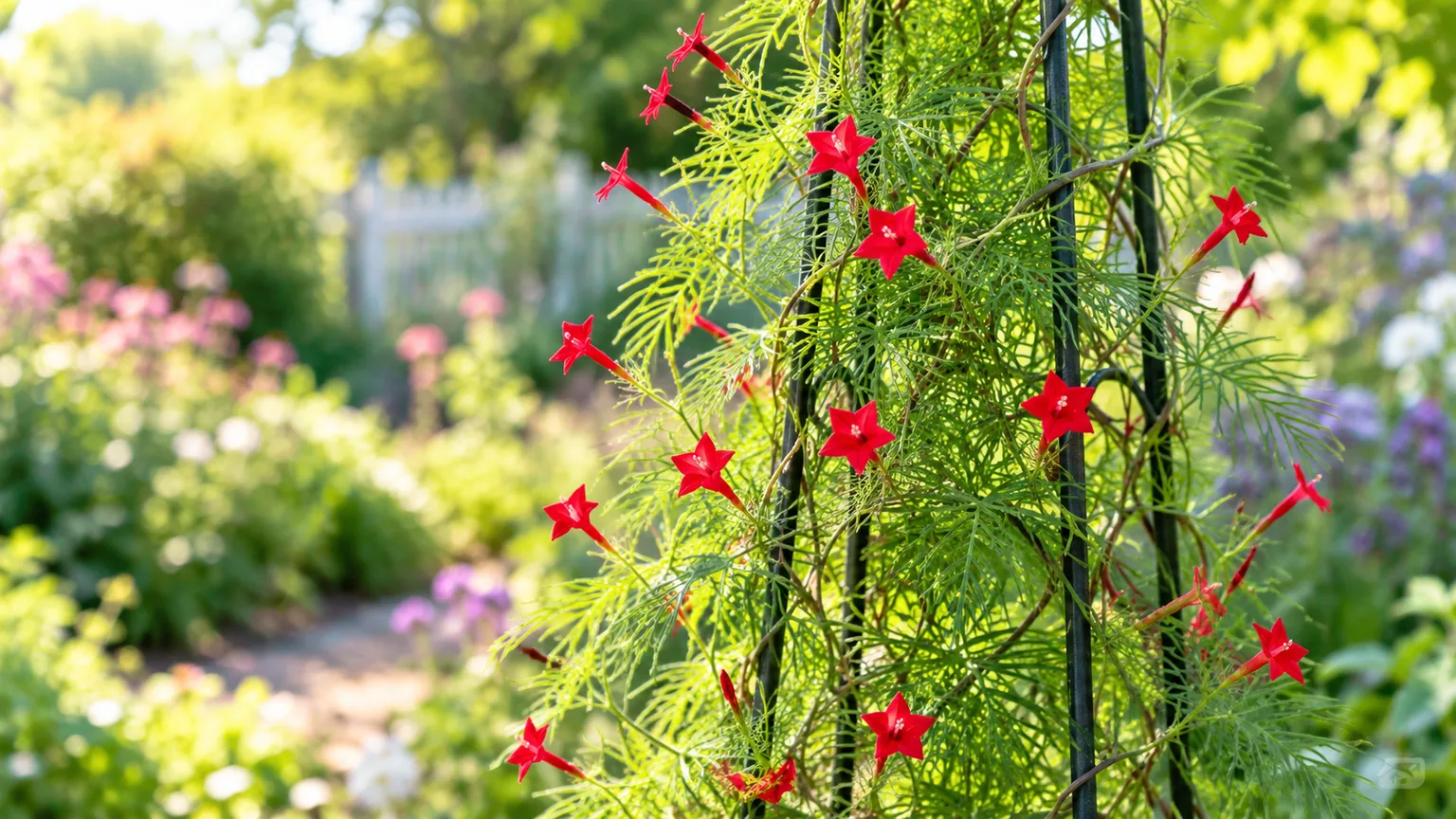
Cypress vine (Ipomoea quamoclit) is a tender, fast-growing annual climber with finely divided, fern-like leaves and small scarlet flowers shaped like five-pointed stars. Give it sun, a vertical support, and warm soil, and it can cover a trellis through summer; give it no boundary plan, and its capsules can scatter seed for next season. The two most useful decisions happen before planting: confirm that the packet is the species you want, and choose a place where you can manage the stems and seed.
The vine is grown primarily from seed. NC State Extension describes it as an annual that can reach roughly 10 to 20 feet in favorable conditions, while its plant profile specifies full sun and good drainage. Because cypress vine is frost-sensitive, gardeners in cold-winter climates usually grow it as a warm-season annual rather than expecting the original plant to return. NC State Extension’s species profile is a useful reference for its growth habit, wildlife value, and seed preparation.
| Care detail | What to expect |
|---|---|
| Botanical name | Ipomoea quamoclit |
| Growth habit | Twining annual vine |
| Mature reach | Often about 10–20 feet in a long, warm season; shorter in a pot or cool summer |
| Light | Full sun; aim for at least six hours of direct light |
| Soil | Average, well-drained soil with steady moisture during establishment |
| Bloom period | Summer into fall, ending with frost in cold climates |
| Main support | Fine mesh, wire, string, or a narrow trellis the stems can wrap around |
| Main management issue | Self-sown seedlings; local invasive status varies |
| Safety | Seeds and plant material should not be eaten; protect pets and children from seed pods |
Cypress Vine at a Glance
This vine suits a gardener who wants a light, seasonal screen, a quick cover for a narrow trellis, or flowers that draw hummingbirds and butterflies. It is less suitable for a small bed next to delicate plants if you cannot check the tendrils and seed pods regularly. NC State Extension lists the species as a twining climber with bright red flowers and notes that it can self-seed; UF/IFAS documents that it has escaped cultivation and is considered high risk in Florida natural areas, so location matters. The University of Florida’s species profile gives a clear example of why local guidance should shape the planting decision.
In frost-free or very warm climates, a plant may persist longer or reseed readily, but that does not make it a dependable perennial everywhere. In regions with freezing winters, the original vine usually dies and any spring growth comes from seed that survived. This distinction matters when you plan a trellis: allocate space for one season’s growth and decide in advance whether you want volunteers next year.
Identify Cypress Vine Before You Buy or Sow It
Look for the scientific name Ipomoea quamoclit on the seed packet or nursery label. Its most distinctive feature is the foliage: each leaf is divided into many narrow, threadlike segments, giving the vine a soft, feathery appearance. The flowers are usually small and scarlet, with a star-shaped outline; white forms are also sold. A plant with broad, heart-shaped leaves may be another morning glory, not cypress vine.
Common names overlap. “Cardinal climber” is used for more than one Ipomoea, including I. quamoclit in some listings and the hybrid I. × multifida in others. NC State Extension notes that cypress vine is confused with the hybrid, so compare the Latin name and leaf shape instead of relying on the common name alone. If you want the finely cut foliage and small star flowers, choose a packet that explicitly names I. quamoclit.
Choose a Site That Gives the Vine Room and Sun
Light, soil, and drainage
Choose a position that receives at least six hours of direct sun, preferably more in a short-summer climate. Cypress vine tolerates some variation, but shade tends to produce a longer, leafier plant with fewer flowers, especially when combined with rich soil or heavy feeding. If a nearby shrub, fence, or building casts afternoon shade, observe the site through the day before sowing; morning brightness alone may not mean the plant receives enough direct light.
The soil does not need to be unusually rich. Average garden soil is adequate as long as excess water can drain away. Improve heavy ground by planting in a raised bed or container with open drainage rather than digging a small pocket of loose mix into dense clay, which can hold water like a basin. A thin mulch layer helps soil stay evenly moist after seedlings establish, but keep mulch from covering emerging sprouts.
NC State Extension describes the plant as growing in average soil with good drainage and adequate moisture. Fine Gardening’s plant guide similarly recommends moderately fertile, well-drained soil and shelter from cold, drying winds. Those points work together: cypress vine needs enough moisture to build stems, but soggy roots and a cold, exposed site can undermine a plant that otherwise grows quickly. Fine Gardening’s cypress vine profile also notes that the species is a twining climber and needs support.
Set the support before the stems start climbing
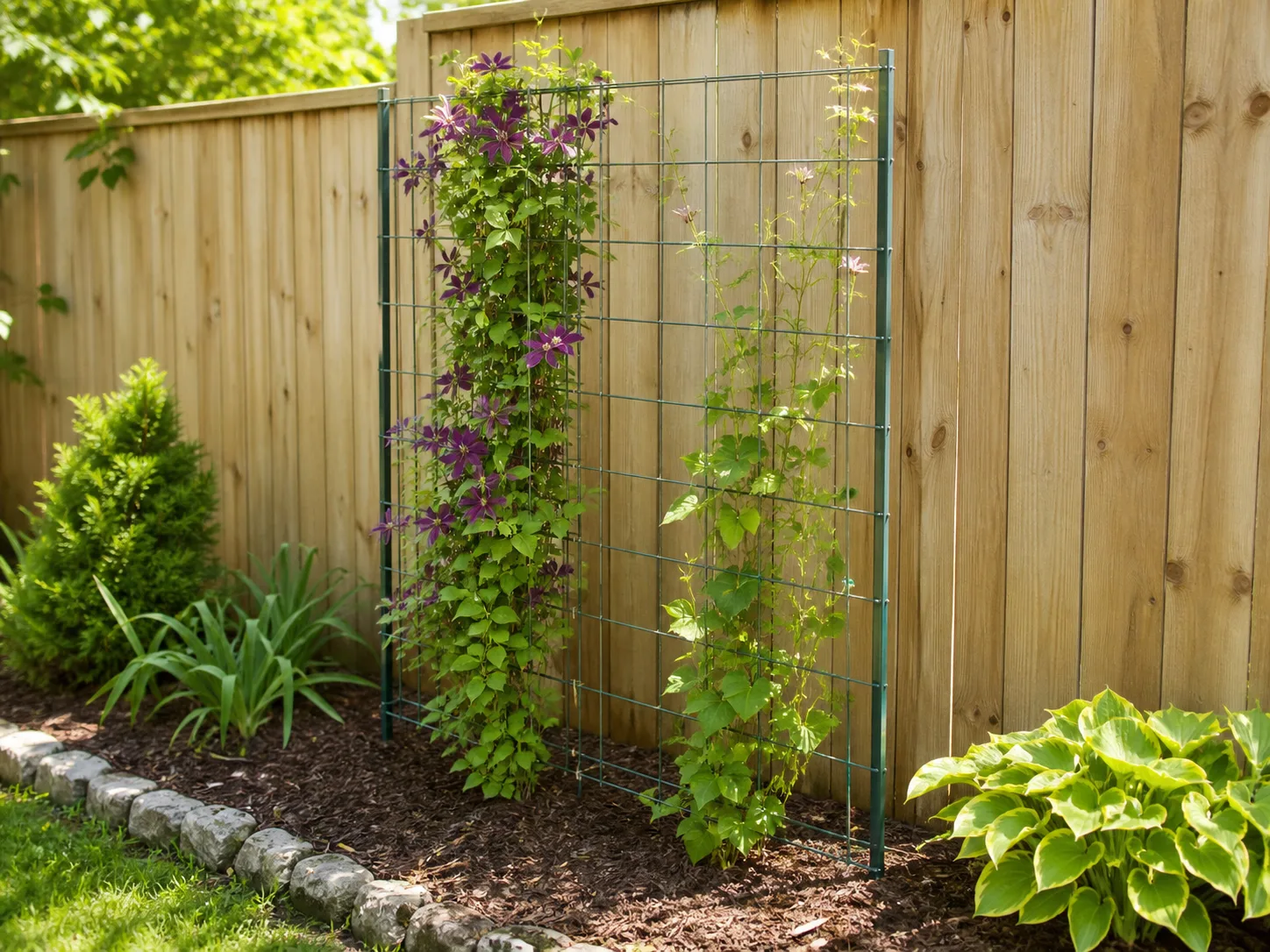
Put the trellis, strings, or mesh in place before sowing or transplanting. Cypress vine climbs by twining its stems around narrow objects; it does not cling to a blank wall with adhesive roots. A trellis with close wires, garden netting, or taut vertical strings gives the young stems something to wrap around. A broad post by itself may be too large for a thin stem to grip.
Allow for the plant’s potential reach. NC State Extension lists a height of 15 to 20 feet, and actual growth depends on warmth, sun, water, and season length. You can guide a vine along a fence or arch, but do not plant it where it will be difficult to reach the upper growth or where it can smother neighboring perennials. A trellis panel that can be inspected from both sides is easier to manage than a vine woven into a shrub.
Install supports firmly enough to handle wind and wet foliage, and avoid leaning them against fragile structures. If you are using a pot, attach a compact trellis to the container or set it securely behind the pot before the vine grows. The first stems are delicate; place the support close to the seedling rather than trying to untangle a long vine after it has wrapped around another plant.
Start Cypress Vine From Seed
Cypress vine is most often started from seed, and the hard outer coat can make germination uneven if seeds are sown dry into cool soil. You can sow outdoors after frost or start indoors when your growing season is short. The better method depends on how much summer heat remains after your last frost and whether the seedlings can be transplanted while still small.
Direct sow after frost or start indoors for an earlier display
For direct sowing, wait until frost danger has passed and the soil has warmed. In cold regions, sowing into cold spring ground can leave the seed sitting for weeks or encourage it to rot before it sprouts. Direct sowing avoids transplant disturbance and is a simple choice when the outdoor season is long enough for the vine to grow and flower.
If your summers are short, start seeds indoors about four to six weeks before the expected last frost. Use individual small pots so each seedling can be moved with its root ball intact, and give the young plants bright light as soon as they emerge. Do not start them months too early: a rapidly growing vine can become tangled indoors and be awkward to transplant before outdoor conditions are suitable.
Stephen Albert’s Harvest to Table guide to growing Ipomoea recommends putting supports in place at sowing and notes that morning-glory seedlings can tangle when they lack something to climb. That advice is especially useful for cypress vine because the fine stems begin reaching for nearby supports soon after they emerge. Put the trellis at the final planting spot rather than trying to add it later through a mass of stems.
Nick or soak the hard seed coat, then sow carefully

Before sowing, choose one seed-coat treatment: soak the seeds in room-temperature water for about 12 to 24 hours, or gently nick one spot on the coat with a nail file. NC State Extension and Fine Gardening both list soaking or chipping as ways to help germination. A nick should expose the coat without cutting deep into the inner seed; if you are unsure, soak instead.
After soaking, sow promptly into moist seed-starting mix, about a quarter-inch deep. Keep the mix warm and lightly moist, not waterlogged. A warm indoor location near 70 to 75°F is a practical target for germination; check the tray rather than watering by the calendar, because covered containers lose moisture more slowly. Some Ipomoea seeds sprout within a week, while others take longer, so do not discard the pot after only a few days.
For outdoor sowing, place seeds at the same shallow depth near the support and water the area gently so the seed does not wash away. Thin crowded seedlings while they are small, leaving the strongest plant or plants at a distance that matches the support. If several seedlings emerge close together, lifting and moving them later can damage their young roots; thinning is usually the lower-risk option.
Once seedlings have several true leaves, keep them in strong light and water when the surface begins to dry. Harden indoor starts outdoors gradually over about a week, bringing them in if nights remain cold. Transplant on a mild day, keep the root ball intact, and guide the first stem loosely toward the trellis; do not wind or tie a brittle stem tightly around it.
Grow Cypress Vine in a Container
A container can make cypress vine easier to contain because you can remove seed heads and monitor seedlings in one spot. Choose a pot with several drainage holes and enough volume to buffer hot-weather drying; a pot about 12 inches wide is a practical starting point for one vine, but larger is easier to manage in a windy, exposed location. A small pot can support a young seedling but will dry quickly as roots fill it.
Use fresh, free-draining potting mix rather than dense garden soil. Place the trellis in the pot at planting time or anchor it immediately beside the container. Keep the assembly stable: a tall vine catches wind, and a lightweight pot can tip once stems cover a broad area. A heavier container or a secured trellis reduces the chance of pulling the plant over.
Set the pot where the vine receives full sun for most of the day. Containers heat and dry faster than garden beds, so check moisture more often during hot or windy weather. Water deeply enough for the mix to become evenly moist, then let excess water drain; do not leave the pot standing in a saucer of water. Container growing is not a reliable way to keep the vine indoors year-round, because it still needs strong outdoor light and room for long stems.
Water and Feed for Steady Growth Without Excess Leaves
While seedlings are establishing, keep the root zone evenly moist. Once the vine is rooted and growing, water when the top inch or two of soil begins to dry, adjusting for rainfall, heat, and the container’s size. A wilting plant in a dry pot needs water; a wilting plant in wet soil may have damaged roots, and more water can worsen the problem. Check the soil before deciding.
Garden-bed vines need less frequent attention than potted ones because their roots can explore a larger volume of soil. A mulch layer can reduce evaporation, but do not cover the stem base or let mulch keep a poorly drained bed constantly wet. During a prolonged dry spell, water the soil at the base rather than repeatedly wetting dense foliage late in the day.
Feed lightly, if at all. Cypress vine can grow vigorously without a heavy fertilizer program, and too much nitrogen may favor stems and leaves over flowers. If the bed is poor or a container plant looks pale despite appropriate watering and sun, use a balanced fertilizer according to its label rather than applying repeated high-nitrogen doses. Stephen Albert’s Harvest to Table guide advises limiting fertilizer for Ipomoea because excess feeding can produce foliage at the expense of flowers.
Avoid trying to correct every setback with fertilizer. A vine that has plenty of leaves but few buds is more likely to need better light, less nitrogen, or more time than a stronger dose of food. Change one factor at a time so you can tell whether the plant responds.
Train, Prune, and Deadhead the Twining Stems
Check new growth every few days while the vine is young. Guide a stem toward the trellis and let it wrap loosely; if it heads toward a neighboring shrub, redirect it while it is still short and flexible. Cypress vine can be damaged by rough handling, so move the growing tip gently rather than pulling the whole vine free from a support.
Once the plant fills its allotted space, trim back runners that cross into paths, shrubs, or nearby plants. Use clean pruners and make a cut just above a leaf node. Regular, light corrections are easier on the plant and the gardener than a severe cut after the vine has tangled through a larger structure.
Deadheading is optional if you want the vine to reseed. If you do not want volunteers, remove spent flower clusters before seed capsules dry and split. Do not wait until the pod is already open: seeds may have dropped among other plants, where they are harder to find. Put removed pods in household trash if local guidance does not allow seed-bearing material in municipal compost.
The goal is not to shear the whole plant repeatedly. Cypress vine produces flowers on new growth through the season, but constant hard pruning can remove buds and leave a thin display. Focus cuts on wandering stems, damaged growth, or seed heads you do not want to mature.
Flowering Season and What to Do When Blooms Are Sparse
Cypress vine typically flowers through the warm part of the year, often continuing into fall until cold weather ends growth. Individual flowers are small and short-lived, but the plant can make new buds as it extends. A trellis covered in feathery foliage may look lush before the first flowers appear, especially if the vine was sown late or spent early growth establishing roots.
NC State Extension notes that the scarlet flowers attract hummingbirds and butterflies. They are also the plant’s main source of seed, so a gardener trying to contain the vine should let the display happen but remove developing pods before they disperse. The trade-off is simple: leave some pods only if you deliberately want to collect seed or invite a controlled patch of volunteers.
Check sun, nitrogen, timing, and drainage first
If the plant is leafy but flowerless, check conditions in this order. First confirm it receives six or more hours of direct light; then consider whether it was planted late, is still young, has been heavily fertilized, or is growing in soil that stays wet. Correct the limiting condition rather than cutting back the vine or feeding it automatically.
If buds form but fail to open well, look for stress from repeated drying or a waterlogged root zone, and check whether the plant has been tied or bent too tightly. A vine with short, weak growth may need more sun; a very lush vine with no buds points more strongly toward shade or excess nitrogen. A single cloudy day or a few days of heat do not prove that the plant has failed, so assess the pattern over a week or two.
Troubleshoot Yellow Leaves, Wilting, and Fungal Problems
Most problems are easier to solve when you read the pattern before changing care. Is the whole vine limp, only the upper tips, or just a few older leaves near the base? Is the soil dry, evenly moist, or staying wet several days after watering? Those observations narrow the cause far better than a calendar-based watering rule.
Use the soil and leaf pattern to diagnose stress
For wilting, test the soil near the root zone. If it is dry and pulls away from the container edge, water slowly until the root ball is moistened and let it drain. If soil is already wet, pause watering and confirm that the container holes are open or that the bed does not hold standing water; root stress can look like thirst even when there is excess moisture.
Yellowing across many leaves can follow waterlogged roots, low light, or a nutritional problem, while one older leaf yellowing at the base may simply be age. If only leaves on the sunniest exposed side look stressed after a sudden hot spell, check moisture and wind exposure before adding fertilizer. A pale vine with slow growth in a shaded place will not be fixed by adding more water.
The fine foliage may also change posture as light shifts. NC State Extension describes the leaves as recoiling in direct sunlight and expanding again after sundown; a brief change in leaf position is not by itself proof of dehydration. Look at the stems and soil, and see whether the plant recovers in the evening, before treating it as a serious problem.
Improve airflow before reaching for a treatment
If spots, rust-like marks, or a soft stem appear, remove badly affected material and check whether the vine is crowded or remains damp for long periods. Fine Gardening lists fungal leaf spots, rust, wilt, and stem rot among possible problems, although serious pest and disease issues are not typical in well-sited plants. Spacing seedlings, avoiding overhead watering late in the day, and thinning tangled growth can improve airflow.
Do not spray a pesticide or fungicide based only on a vague symptom. Identify the problem first, follow the product label, and check with a local extension office if the damage is spreading or the diagnosis is unclear. If the soil is chronically wet, correcting drainage is more useful than treating the leaves while the roots remain stressed.
Keep Cypress Vine From Reseeding Beyond Its Place
Cypress vine spreads mainly through seed, not by sending underground runners across the garden. That distinction makes it manageable in a contained location, but a single plant can still produce many seed capsules. A self-sown seedling in a garden bed can look like a welcome bonus until it winds through other plants and becomes difficult to pull without damage.
Before planting, check your state or regional invasive-species resources and ask your local extension service about natural-area concerns. UF/IFAS lists cypress vine as high invasion risk in Florida and notes that it has escaped cultivation in multiple regions; that assessment should not be generalized automatically to every state or county. NC State’s profile describes the species as naturalized in some areas but not a threat to native plants in its assessment. These differences make local guidance more useful than a blanket claim that the vine is harmless or invasive everywhere.
For a home garden where planting is appropriate, limit spread with three habits: grow it where you can reach it, remove seed capsules before they open, and pull unwanted seedlings while they are small. In Florida natural areas or any place where local authorities advise against planting, choose a different vine rather than relying on deadheading as a substitute for that guidance. UF/IFAS recommends prevention and hand-pulling new sprouts in spring as cultural control.
If you want a small number of seedlings next year, collect only a few mature capsules from a plant that can be monitored, label the seed, and discard the rest before they split. Do not shake pods over the garden or leave them on a compost pile where seeds may survive. Keep the selected seed sealed and stored out of reach; the safety section below is especially important when children or pets use the same space.
Handle Seed Safety and the End of the Season
Treat cypress vine seed as poisonous and do not use it as food, even though descriptions of toxicity severity vary. NC State Extension classifies the human poison severity as low but lists vomiting and notes that large amounts of seed may cause hallucinations; Fine Gardening describes the seeds as highly toxic if ingested. UF/IFAS lists toxicity concerns for dogs, cats, and horses. Because these sources do not use identical wording, the practical choice is to prevent ingestion rather than infer that a small seed is safe.
Store seed packets in a closed container, remove seed pods before children or pets can reach them, and wash hands after handling seed. If someone may have swallowed seeds, contact a poison-control service or medical professional; if a pet may have eaten them, call a veterinarian or animal poison-control service promptly and bring the plant or seed packet information. Do not induce vomiting unless a professional tells you to.
When frost browns the foliage, cut the vine at the base and remove it from the support. In a cold-winter climate, the original plant is not expected to overwinter outdoors; the question is whether seed has been left behind. If you want a clean reset, inspect nearby soil and containers in spring and remove seedlings as soon as they are recognizable. In a frost-free region, continue to monitor growth and seed production rather than assuming the plant will stay within the same footprint.
Conclusion
Grow cypress vine where full sun, a fine support, and regular access for pruning and seed removal come together. Start with Ipomoea quamoclit seed, pre-soak or lightly nick the coat, and keep young roots evenly moist without leaving them waterlogged. Once the vine climbs, guide it early, feed sparingly, and diagnose sparse blooms by checking light and nitrogen before making drastic changes.
Its fast growth and volunteer seedlings are benefits only when you have room and a containment plan. Confirm local invasive guidance, keep seeds away from pets and children, and remove pods before they split if you do not want a second generation. With those boundaries set, the vine can deliver a long run of airy foliage and bright flowers without turning a small trellis into an unplanned patch.