How to Dispose of Light Bulbs Safely by Type at Home
Find the right way to dispose of light bulbs, clean up a broken CFL, and confirm whether a local recycler or retailer accepts your exact lamp before a trip.

A bulb’s shape does not tell you which bin it belongs in. A spiral CFL, a long fluorescent tube, a screw-in LED, and a halogen spotlight can all fit the same household fixture, but their materials and local disposal routes differ. This guide focuses on U.S. household bulbs; outside the United States, follow your municipality’s local waste rules. Identify the lamp first, then check the rules for your city or waste hauler before you put it in a curbside cart or drive to a store.
For most households, the short version is: keep fluorescent and CFL lamps out of ordinary glass recycling and take them to a lamp-recycling or household hazardous-waste program when available; use an e-waste collection for LEDs if your local program accepts them; and protect incandescent or halogen bulbs before putting them in trash where local instructions allow. Do not put any bulb in a bottle-and-jar recycling bin unless the program explicitly lists that exact lamp type. Lamp glass, caps, filaments, phosphors, and electronic parts are not processed like food-container glass.
Start With the Bulb, Not the Bin
A good disposal decision has three steps: identify the lamp, match it to an accepting program, and package it for the trip. It is easy to reverse that order by starting with the nearest blue cart or a familiar retailer, but a bin that accepts bottles, cardboard, or small electronics may reject lamps. A rejected bulb can become a breakage hazard for collection workers, so “recyclable” and “accepted here” are two separate questions.
The U.S. EPA’s guidance on recycling and disposing of mercury-containing bulbs directs people toward appropriate collection rather than treating CFLs and fluorescent lamps as ordinary glass. State and local rules can add requirements or provide different collection options. For example, a New Hampshire state energy-management guide describes the state’s approach to fluorescent lamps and separates those instructions from its advice for incandescent, LED, halogen, and specialty lamps. Use such state guidance as a starting point for that jurisdiction, not as a nationwide rule.
If you are disposing of a bulb from a workplace, school, rental-property maintenance operation, or renovation, pause before using the household route. Businesses can be subject to different hazardous-waste and universal-waste requirements, and a fixture contractor may have its own approved collection process. Ask the organization’s environmental-health-and-safety contact or local environmental agency which stream applies to the quantity and source.
Identify Your Bulb in Under a Minute
Start with the old packaging, the writing printed near the screw base, or a model number on the lamp. Look for terms such as LED, CFL, fluorescent, halogen, metal halide, high-pressure sodium, or mercury vapor. A marking such as “Hg” is a clue that mercury is present, but the absence of a visible mark does not prove that a specialty lamp is mercury-free; use its model information or ask the waste program if you cannot identify it.
Use Shape, Base, and Markings Together
A spiral or folded glass tube with a screw base is usually a CFL; a long glass tube with pins at both ends is a linear fluorescent lamp. A bulb with a solid plastic or frosted dome and an electronic-looking base is usually an LED. A visible filament suggests an incandescent lamp, while small clear reflector lamps and capsules may be halogen. These visual clues help you sort ordinary household examples, but they do not identify every commercial, automotive, projector, germicidal, or specialty lamp.
If the type remains uncertain, do not break the lamp open to inspect it. Keep it intact, photograph the printing on the base, and give the model number to the local waste authority or the recycler. A two-minute identification call is safer and more reliable than guessing from color, brightness, or the shape of the glass envelope.
Choose a Disposal Route by Bulb Type
Use this table as a first pass, not a substitute for your local program’s current rules. “Special collection” may mean a city household hazardous-waste site, a fluorescent-lamp recycler, an e-waste event, an approved retail take-back bin, or a mail-back kit that accepts the lamp you have.
| Bulb type | Typical household route | What to confirm |
|---|---|---|
| LED | E-waste or lamp collection if accepted; otherwise follow local trash guidance | Whether LEDs are accepted and any limit on quantity |
| Incandescent | Often household trash, protected against breakage | Whether the local authority has a special collection option |
| Halogen | Often household trash if local rules allow; specialty collection may be available | Whether the program treats it as a lamp, hazardous item, or trash |
| CFL | Dedicated fluorescent-lamp or household hazardous-waste collection | Intact versus broken-lamp instructions and packaging |
| Linear fluorescent tube | Lamp recycler or designated household hazardous-waste collection | Tube length, drop-off packaging, and quantity limit |
| HID / metal halide / mercury vapor | Call a specialty lamp recycler or hazardous-waste program | Exact lamp chemistry and whether household quantities are accepted |
| Holiday string lights | Dedicated string-light or electronics collection when available | Whether the program accepts the whole string and its plug |
A state page or a manufacturer’s general guide cannot tell you what your hauler will accept today. Collection points change, programs can impose a per-visit limit, and some retail bins accept only compact lamps rather than long tubes. Verify the bulb category and physical condition before leaving home.
Dispose of LED Bulbs as E-Waste When Accepted
Most household LED bulbs do not contain mercury, but they contain electronic components and mixed materials that make them a poor fit for ordinary bottle-and-jar recycling. If your city or a certified electronics recycler has a lamp stream that explicitly accepts LEDs, use it; this gives the recycler a chance to recover components instead of sending the whole bulb through a glass-sorting line. A recent GreenCitizen recycling guide also treats LED collection as a specialized recycling option, while emphasizing that program acceptance varies.
When no local collection accepts household LEDs, follow your waste authority’s current instructions; in many places, a whole LED bulb may go in regular trash. Put a broken LED in a rigid container or wrap it so the small glass or plastic pieces cannot cut someone, and do not sweep it into a mixed recyclables cart. Do not assume a general e-waste bin takes LEDs simply because it accepts computers or batteries. Some programs exclude bulbs, and others have a separate lamp bin or fee.
A sealed LED fixture, smart bulb, or integrated LED strip is different from a simple screw-in bulb. If a fixture contains wiring, a driver, a battery, a sensor, or a connected control module, check the electronics program’s rules for the complete device instead of separating parts with tools. Do not dismantle a lamp to make it fit a recycling bin; the recycler should tell you whether to bring it intact.
Wrap Incandescent and Halogen Bulbs Before Trash
A standard incandescent bulb has a thin glass envelope, metal screw base, and internal filament. A halogen bulb may be a capsule or reflector lamp and has an internal filament in a halogen gas environment. These ordinary household lamps are often allowed in trash, but neither belongs in a bottle-and-jar recycling cart unless a local program specifically lists it. The New Hampshire energy-management guide is one example of a state resource that distinguishes incandescent and halogen handling from fluorescent lamps; check your own jurisdiction for the applicable rule.
Let a recently used bulb cool fully, then place it in its original sleeve or wrap it in newspaper, a paper bag, or a small cardboard box before putting it in the trash. A thin grocery bag alone can tear if the glass breaks. Do not crush the bulb to save space, and do not put loose glass in a recycling cart, where a worker may reach into it or automated sorting may send it through equipment designed for containers.
For a broken incandescent or halogen bulb, keep people and pets away, wear shoes, and use stiff paper or cardboard to gather larger fragments. Wrap or box the pieces so they cannot pierce a collection bag; use a damp disposable towel for tiny fragments on a hard surface, then follow local trash instructions. If the bulb broke inside a fixture, switch power off at the wall or breaker before touching the fixture and do not reach into a live socket.
Recycle CFLs and Fluorescent Tubes Separately
CFLs and linear fluorescent lamps contain mercury, so their recommended route is a collection program that handles mercury-containing lamps. The EPA identifies recycling as a way to recover lamp materials and avoid treating them as ordinary glass; its mercury-bulb disposal page points households toward local agencies and other appropriate collection options. Rules differ by state and locality: some prohibit putting these lamps in household trash, while other areas provide a household hazardous-waste drop-off and specify what to do if no collection is available.
Do not use the regular curbside glass bin, even if the tube looks like glass. Fluorescent lamps use a different glass formulation and contain metal ends and phosphor coating; a bottle-recycling line is not designed to process them. Ask whether your waste authority has a household hazardous-waste site, whether a local lamp recycler serves residents, and whether a retailer’s current take-back program accepts your exact bulb. A Keys Energy Services resource citing Florida environmental guidance likewise points residents toward fluorescent-lamp recycling and local collection instructions.
Pack Intact Lamps So They Stay Whole
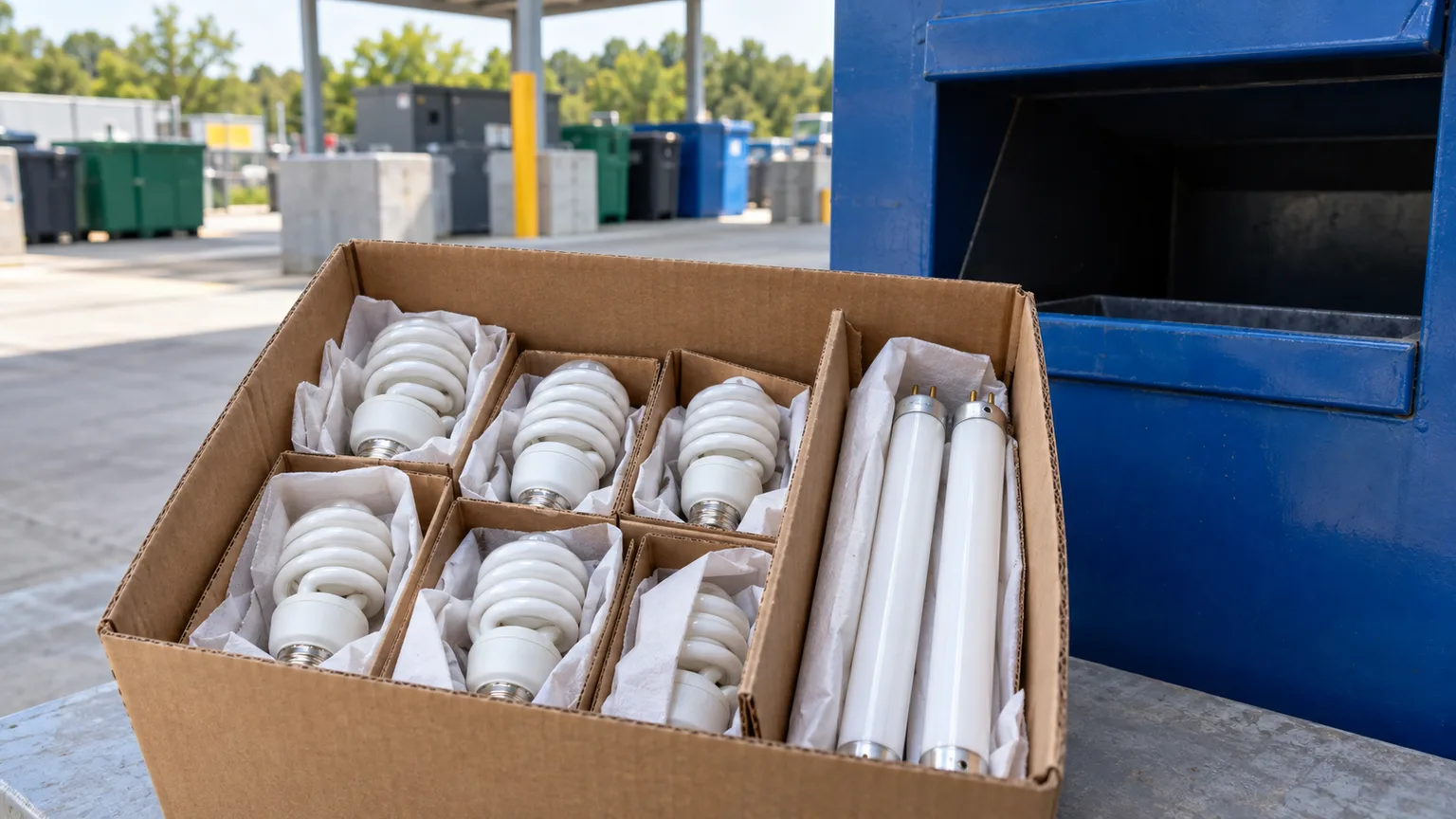
Keep each lamp intact. Return a CFL to its retail carton if you still have it, or place it in a padded, rigid box where it cannot roll or strike another bulb. Separate different lamp types rather than mixing them loose in a shopping bag. For long tubes, use the original sleeve or a long rigid box and support the tube across its length; a tube balanced diagonally across a car seat can roll when you brake.
Call the program before bringing a damaged lamp. A site may accept intact CFLs but send broken mercury-containing lamps to a different area, require them to be sealed, or ask residents to leave the material in a specific container. A lighting retailer’s disposal overview gives practical packaging advice, but its store and law examples are not a substitute for current local instructions. Follow the receiving site’s directions if they differ from generic packing advice.
Handle HID and Other Specialty Lamps Carefully
High-intensity discharge lamps include types such as metal halide, mercury vapor, and some high-pressure sodium lamps. You may find them in older outdoor fixtures, commercial buildings, projectors, vehicle systems, or specialty growing equipment. Their labels and construction vary; a professional-looking fixture or a large bulb does not tell you whether the lamp contains mercury or what collection stream it needs.
Keep specialty lamps whole and do not dismantle or mail them in a general household lamp kit until the recycler confirms acceptance. Read the manufacturer’s label and note the complete lamp code, then call the local hazardous-waste authority or a lamp recycler that lists HID lamps specifically. The EPA’s mercury-containing lamp guidance is a useful baseline, while the exact route depends on lamp type and local program capacity. If the bulb came from a business or contractor job, use the organization’s waste procedure rather than assuming a household collection event can accept it.
What to Do if a CFL or Tube Breaks
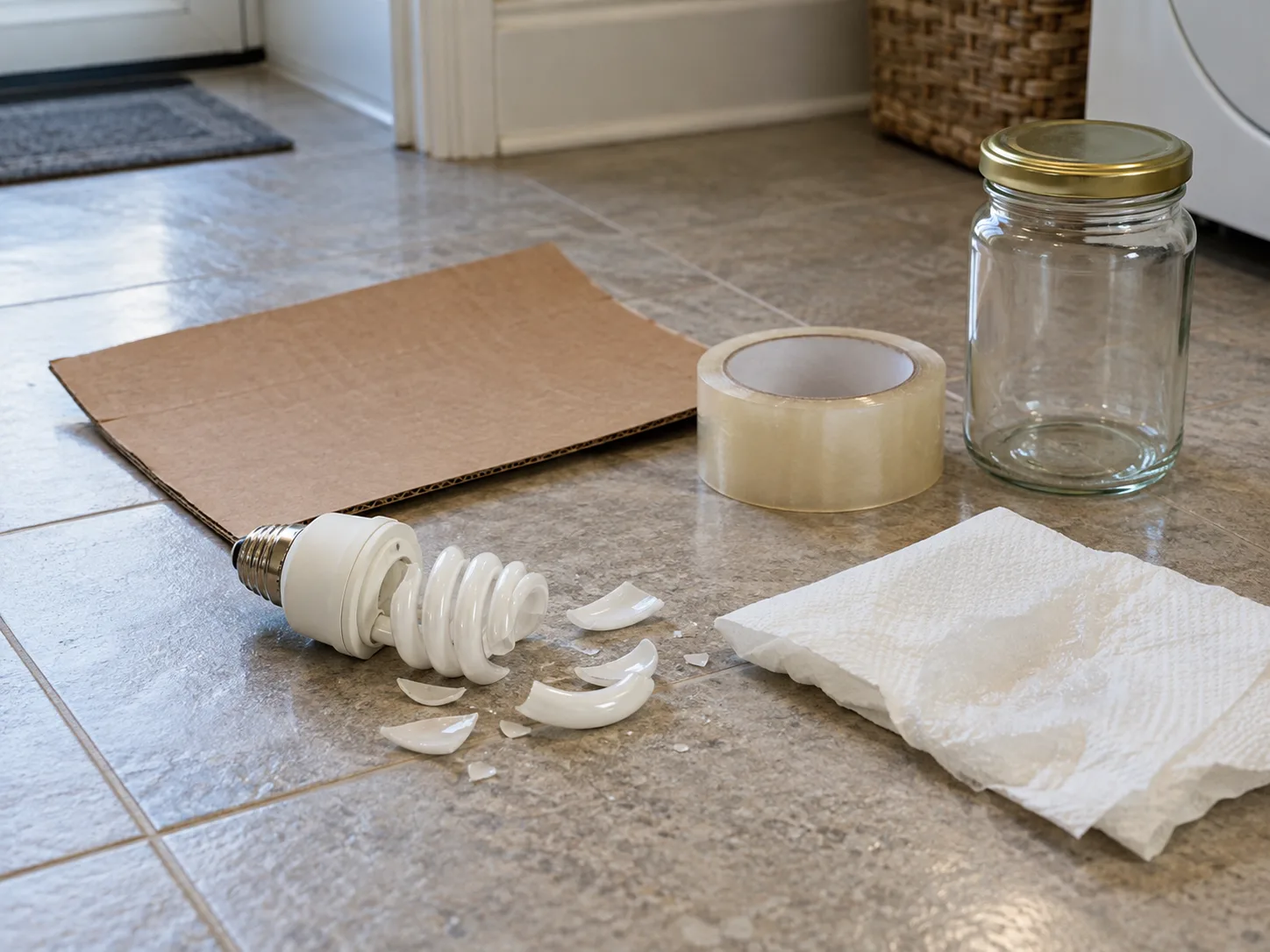
A broken fluorescent lamp deserves careful cleanup because it releases glass fragments and a small amount of mercury-containing material. The aim is to keep people from tracking fragments through the home, reduce airborne dust, and contain the debris until you know which disposal route your local program requires. A single broken lamp is a manageable household cleanup; avoid both casual sweeping and dramatic measures that can spread debris farther.
Air Out the Room Before Cleanup
Move people and pets out of the immediate area, and keep others from walking through it. Open an exterior window or door to ventilate the room and, if you can do so without crossing the fragments, turn off a forced-air heating or cooling system that could circulate air from that room. The EPA’s broken-CFL cleanup instructions recommend ventilating before cleanup and avoiding vacuuming during the initial response.
Let the room air out for several minutes before collecting anything. Do not touch the fragments with bare hands, and do not use a broom or vacuum right away. A broom can spread fine residue and a vacuum can distribute it through the vacuum or room. If the break happened on carpet, upholstery, or a surface that cannot be wiped, follow the EPA’s specific instructions for that surface and ask your local waste authority how to handle the waste.
Gather Fragments Without Vacuuming First
Use stiff cardboard or paper to scoop visible glass and powder gently into a container. Press sticky tape onto the remaining fine pieces, then use a damp disposable paper towel or wipe on a hard surface. Put the bulb fragments and cleanup materials into a sealable container or bag as directed by the applicable cleanup instructions; keep it away from children and pets while you contact the local hazardous-waste or lamp-recycling program.
Do not pour the debris into a sink, flush it, or add the fragments to mixed recycling. Ask the local program whether it wants the sealed debris at a household hazardous-waste site, a fluorescent-lamp recycler, or another designated destination. The official EPA page is the best source for the current cleanup sequence and any surface-specific direction; use local instructions for the final collection point because acceptance rules are not identical everywhere.
Recycle Holiday String Lights as a Separate Item
Holiday string lights are not the same item as a pile of individual household bulbs. A strand combines wire, sockets, a plug, and many small lamps; a dedicated string-light recycler may recover copper and other materials, while a local e-waste program may have its own limits. Do not put a light strand in a curbside glass container or a mixed plastic bin, and do not assume that a program accepting LED bulbs accepts a whole strand.
Before recycling, unplug the strand and remove detachable decorations or packaging if the collection site asks you to. Leave sockets and wire attached unless the program explicitly asks for separation; cutting a cord can create sharp wire ends and does not guarantee that the pieces will be accepted. Search your city’s seasonal recycling page or call the waste authority with the product in hand. If the strand contains a replaceable glass bulb, ask whether the string-light program accepts it intact or wants the bulbs removed and sorted separately.
Find a Collection Site That Accepts Your Exact Bulb
Start with your city or county solid-waste website and search for the full bulb type, not just “recycling.” Useful terms include “CFL,” “fluorescent tubes,” “mercury lamps,” “HID lamps,” “household hazardous waste,” and “light strings.” A state environmental agency may list permanent facilities or event rules; a waste hauler can confirm curbside restrictions; and a local recycling directory can help find private lamp recyclers. GreenCitizen’s light-bulb recycling overview describes recycler, take-back, event, and mail-back routes, but the provider’s own acceptance list should decide what you bring.
A retailer name printed on an older web page is not proof that the nearest store still accepts lamps. Bins may be removed, limited to a certain size or bulb type, or intended for products sold by that chain. A quick call or current store-program page can save a long trip and keep a mercury lamp from sitting in a hot car while you search for another location.
Ask These Questions Before You Go
Give the location the exact lamp type and quantity. Ask whether it accepts intact bulbs only, whether it accepts broken bulbs, whether long fluorescent tubes have a length limit, whether household customers are eligible, whether there is a fee, and whether you need an appointment. If the lamp is from a business, ask for its commercial acceptance policy rather than presenting it as household waste.
Also ask how the lamp must be packaged and where to place it once you arrive. Some programs want residents to hand bulbs to staff instead of placing them in a public bin; some mail-back boxes accept only the types listed on their label. Keep the answer with the lamp if you are storing several bulbs, and do not mix a rejected lamp into another stream to avoid carrying it home.
Transport Bulbs Without Breakage
For a few CFLs, use the original cartons or a divided box with padding between lamps. For tubes, support the length in a rigid container and secure the box so it cannot slide or roll in the vehicle. Keep the package out of direct sun and away from loose cargo; do not place heavy items on top or leave a long tube wedged where a door can crush it.
If the recycling site has a collection day rather than a permanent drop-off, store whole lamps in a dry, protected place until that date. Keep them out of children’s play areas and label the box in a way household members understand without writing directly on the bulb. If you break a lamp while packing, stop and use the broken-lamp cleanup procedure before moving the material.
Avoid These Disposal Mistakes
The most common error is putting a bulb into the same cart as glass bottles because both are made partly of glass. Lamp glass can have a different composition and may contain a metal cap, filament, coating, or electronics; curbside container glass sorting does not imply lamp acceptance. The second error is assuming that a retailer or recycling center takes all bulbs just because it accepts CFLs, batteries, or electronics. Verify the exact material list.
Other avoidable problems are packing fluorescent tubes loose, mailing a lamp in an ordinary box, sweeping up a broken CFL with a household broom, vacuuming the spill first, or following a state-specific disposal rule after moving somewhere else. Never tape a bulb directly to another bulb, break a lamp to fit a container, or remove electronic or mercury-containing parts yourself. A short check with the receiving program is more useful than relying on a broad “all bulbs can be recycled” claim.
Remember the household-versus-business distinction too. A few bulbs from a home fixture are not automatically managed the same way as a box of lamps from an office or job site. If you are clearing a building, replacing many tubes, or handling bulbs as part of paid work, ask the local environmental authority about generator status, approved storage, and transport requirements before consolidating the lamps.
Conclusion
To dispose of light bulbs properly, identify the type, keep it out of curbside glass unless the local program explicitly accepts it, and confirm the destination before you travel. Fluorescent tubes and CFLs should go through a mercury-lamp collection route when one is available; LEDs may fit an e-waste or lamp program, while intact incandescent and halogen bulbs are often handled as protected household trash where local rules allow. Specialty HID lamps and broken mercury-containing bulbs deserve a direct call to the waste authority or recycler.
Pack intact lamps so they cannot roll or crack, and use the EPA’s cleanup steps if a CFL or fluorescent tube breaks. The safest useful rule is simple: match the bulb to a program that accepts that exact type and condition, then follow that program’s packaging and drop-off instructions.



