How to Deadhead Petunias for Fuller, Longer Blooms
Learn how to deadhead petunias without clipping new buds. Find the right flower base, pinch or snip cleanly, and know when a leggy plant needs a cutback.
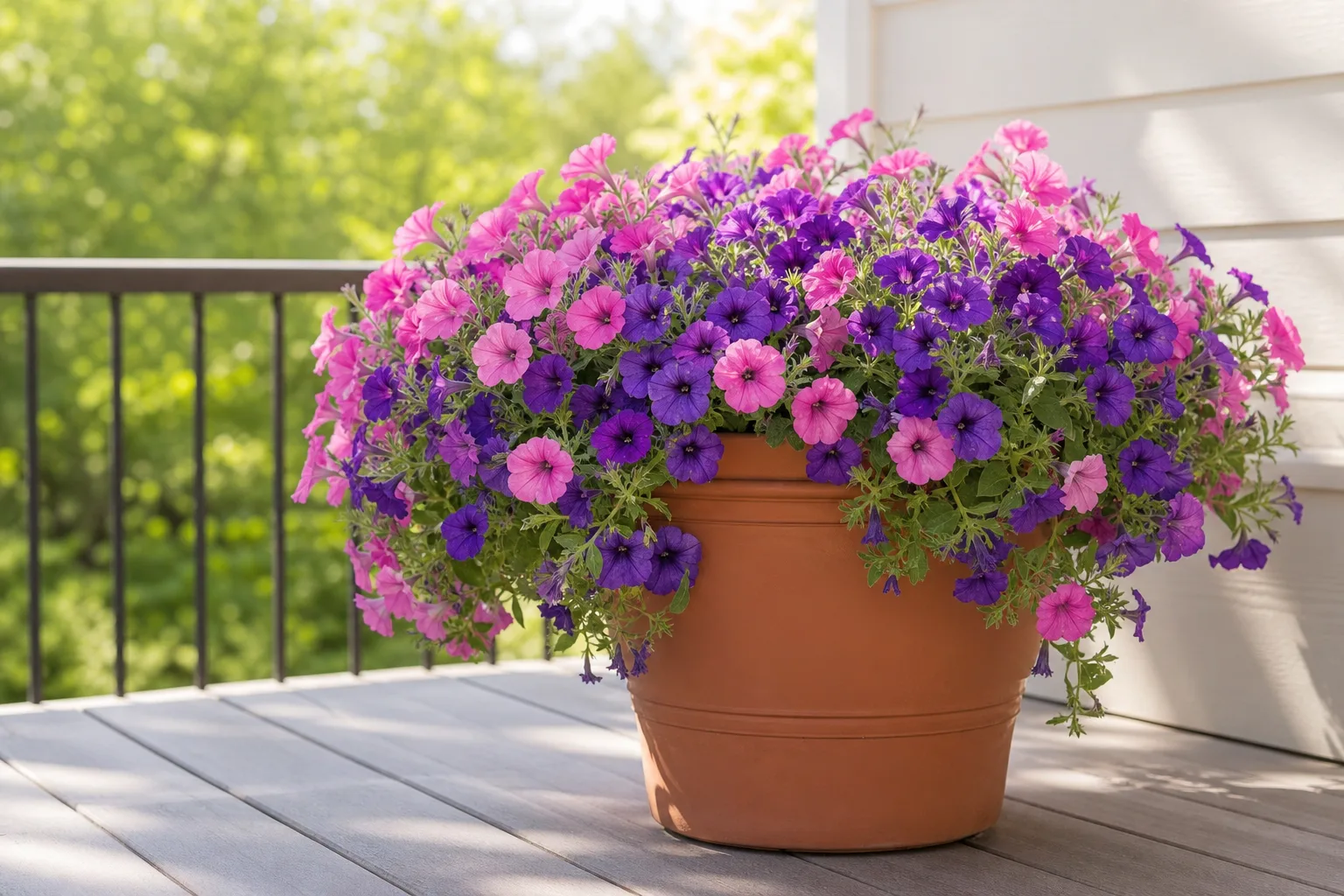
To deadhead a petunia, remove the faded flower and the small green seed-forming base beneath it, not just the loose petals. Pinch or snip the flower stalk back to the nearest healthy leaf junction, taking care not to catch the fresh buds clustered nearby. For a plant that is simply untidy, remove individual blooms; save a larger cutback for long, bare stems that have stopped carrying flowers well.
That distinction keeps the job quick and prevents a common mistake: stripping the plant when all it needs is a few small pinches. Most petunias benefit from regular cleanup, but self-cleaning cultivars such as many Wave and Supertunia types can keep flowering without routine deadheading. If your plant is making fewer blooms despite cleanup, check its growing conditions before removing more foliage.
Deadheading interrupts seed formation for an individual flower and keeps a container or bed looking tidy, but it cannot force a new flush on an exhausted or poorly placed plant. Penn State Extension explains that timing varies with a bloom’s lifespan and weather; treat the plant in front of you as the guide, not a promise that every pinch will produce another flower.
The 30-second answer
Look for a bloom that has faded, wilted, or begun to crumple. Follow its short stalk down until you find the green base behind the petals, then pinch or snip just below that seed-forming part and above a healthy leaf junction; collect the clipping and repeat only for flowers that have finished.
A petunia can hold new buds close to an old flower, especially in a dense basket, so take a moment to separate the stems before cutting. If you cannot tell whether a bloom is finished, leave it for a day: removing one late is less costly than cutting a bud that was about to open. A quick glance while watering is usually enough to decide whether to remove anything; you do not need to comb through every stem on every visit.
When a petunia bloom is ready to remove
Petunia flowers usually begin to fade before the plant looks dramatically untidy. A spent bloom loses its vivid color, folds or droops, and may feel limp where a fresh flower is firm; after rain or heat, it can turn papery or brown quickly.
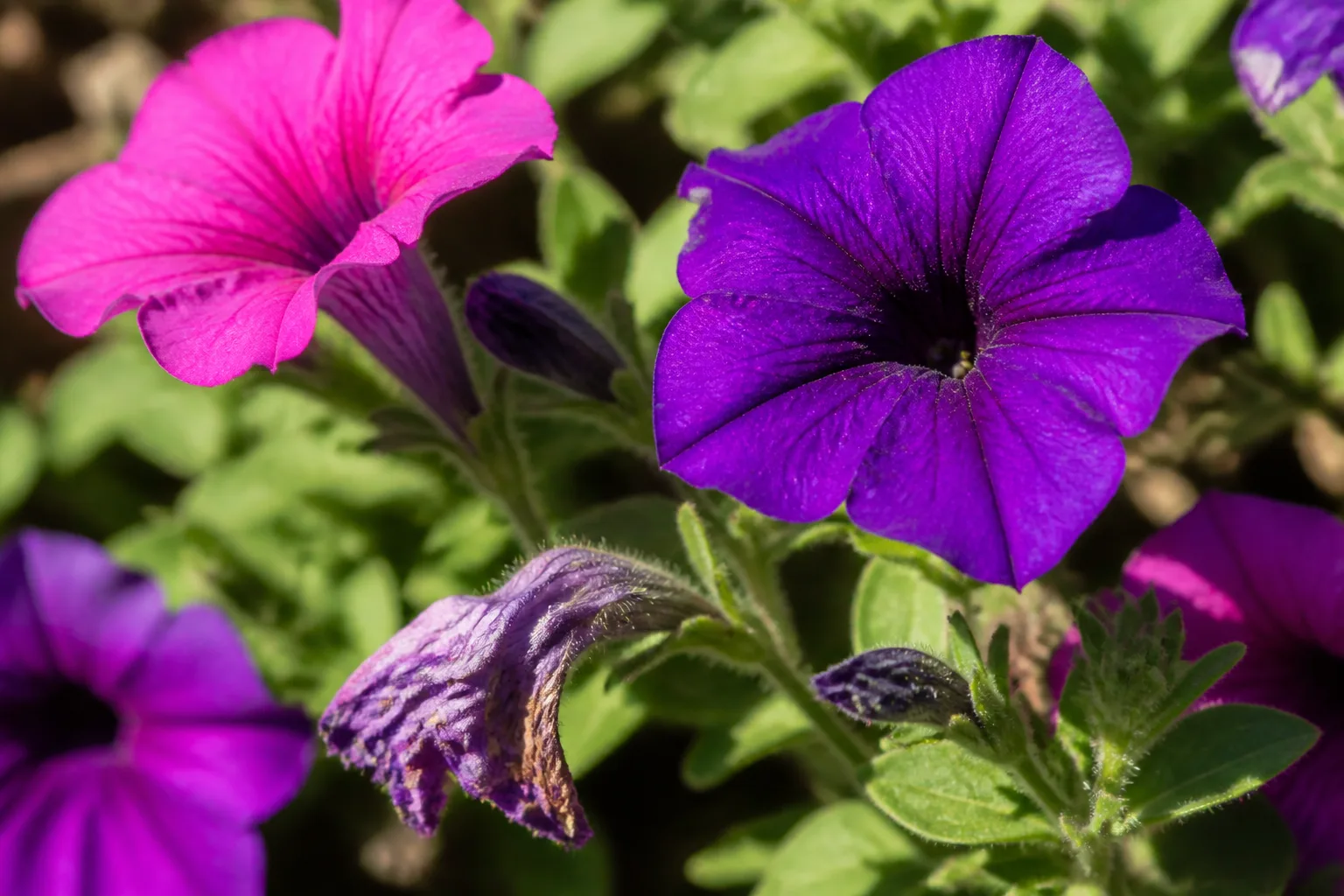
Do not use color alone as your test. Some varieties naturally have pale or patterned flowers, while a newly opening trumpet may still look creased and slightly folded; a fresh bud remains firm, tightly closed, and attached to green growth, whereas a spent flower is soft, limp, or dry and has already opened.
Spent flower or unopened bud?
Start by looking at the flower’s shape and feel. A newly opening petunia often has a folded, crinkled outline, but its petals are still resilient and its color is clear; an old bloom hangs loosely, feels papery, or has lost much of its color after opening.
Then check the stem rather than tugging on the flower head. Petunias can carry a new bud beside or just below an older flower, so part the foliage gently and trace each stalk to its own junction; if the stem you intend to remove also supports an unopened bud, follow it farther down and isolate only the spent flower’s stalk.
The green structure beneath the petals matters because the flower’s ovary can develop into a seed capsule after petals fall. If the petals have dropped on their own, inspect the plant for a small green pod on the short flower stalk; removing that pod and its stalk completes the cleanup, while leaving the plant intact is fine if the cultivar sheds spent flowers and you do not mind the appearance.
How to deadhead petunias without stripping new growth
You do not need special equipment for most petunias. Clean fingers work well on tender stems; small, sharp snips give you more control when flowers are sticky, branches are crowded, or you are reaching into a hanging basket.
- Choose one spent flower. Hold back nearby foliage and buds so you can see where that flower’s stalk joins the rest of the plant. Avoid grabbing a whole cluster and pulling, since petunia stems can tear below the point you intend to remove.
- Trace the stalk to its base. Find the green flower base and the short stem attached to it, then look for the nearest healthy leaves or side shoot below. This gives you a clear stopping point without cutting an entire trailing branch.
- Pinch or snip below the seed-forming base. Remove the faded corolla, the green base, and a short portion of the stalk. Leave the leaf node and any healthy buds in place so the plant can continue growing from them.
- Check your cut before moving on. The remaining stem should be green and undamaged, with no shriveled flower base still attached. Drop the clipping into a container rather than letting old petals collect in the foliage.
For a small plant, the entire check may take only a minute; a mature basket takes longer because flowers hide beneath overlapping leaves. Work around the outside first, then gently lift a few trailing stems to inspect the center. Stop once you have cleared the visible spent blooms and seed capsules rather than trying to make every branch look freshly groomed.
Pinch small, soft stems
To pinch a small bloom, hold the stem between thumb and forefinger just below the flower base and use your thumbnail to sever it cleanly. The goal is a crisp break at the stalk, not a hard tug that pulls a longer section of vine from the plant.
Pinching is fast for bedding petunias or smaller pots where you can reach every flower. If your fingertips become sticky, wipe them as you work or switch to snips; sticky sap is a nuisance, not a sign that the plant is diseased, and there is no benefit to forcing a bare-handed method.
Snip sticky stems or crowded baskets
Use clean, sharp scissors or bypass pruners when the stem is too tough to pinch, several flower stalks overlap, or a basket is too dense for accurate finger work. Open the foliage enough to see the target, place the blades below its green base, and make one clean cut rather than sawing or pulling.
If a plant is diseased or you have been removing visibly moldy material, clean the blades before moving to another plant. Gloves are optional, but they can make a long deadheading session more comfortable for gardeners who dislike the sticky residue; do not use gloves so bulky that you lose the ability to distinguish a bud from a spent flower.
Where to cut: remove the seedpod, not a length of vine
The bloom sits at the end of a short flower stalk. Just behind the petals is a green, leaflike collar called the calyx; at its base, the flower’s ovary can swell into the seed capsule. When you remove only the petals, that green base can remain and continue toward seed formation, so pinch or snip below it.
For routine cleanup, make the cut just below the green base and close to the nearest healthy leaf pair or side shoot. You may remove a short piece of stem with the flower, but there is no need to shorten a long trailing branch every time one bloom fades; that would remove healthy leaves and future flowering sites along with the spent flower.
Penn State Extension describes deadheading as removing faded flowers and seed heads, with the cut made below the spent bloom and just above healthy leaves. North Carolina Extension likewise notes that deadheading improves performance and flower-bud production, while leggy plants call for a separate pinch-back. Those are useful rules of thumb, not a guarantee that every cultivar or stressed plant will respond in exactly the same way.
How often to check petunias
Start checking once flowers begin to fade, then use the plant’s size and your schedule to set a routine. A quick weekly inspection is a practical baseline for most home gardens; a large container or hanging basket in peak bloom may look better if you scan it every few days, but you do not need to remove every flower the moment it droops.
A small petunia in a bed may need only a few pinches at a time, while a mature basket can hide old blooms inside its foliage and along the back. Turn the pot or rotate the basket when possible, and check the lower, shaded side where flowers and seed capsules can disappear from view.
Weather changes how often you will find faded flowers, not the underlying rule. Hot spells and heavy rain can shorten the display of individual blooms, so a walk past the basket while watering can be a convenient reminder; there is no universal daily schedule that applies to every petunia cultivar and climate.
If you are leaving for a week, remove the most obvious faded flowers before you go, but do not give the plant a deep trim just to make it look clean until you return. A healthy petunia can carry a few old blooms without being harmed; the main trade-off is appearance and, for a flower left to mature, seed formation. During peak bloom, several small passes are usually easier on the plant than one aggressive cleanup.
Self-cleaning petunias: Wave and Supertunia
Some modern petunias shed their spent blooms more readily than older types. Many Wave and Supertunia cultivars are described as self-cleaning, meaning the petals drop without requiring you to pinch every old flower; the plant can continue flowering even when you do not keep up with manual cleanup.
Self-cleaning does not mean that a plant never needs attention. A dropped corolla may leave a green seed-forming base behind, and old petals can look messy when they collect in a basket or stay wet among the leaves; remove those remnants when appearance or plant health calls for it, and use the plant label for cultivar-specific maintenance advice.
North Carolina Extension lists Wave and Supertunia among the many petunia groups and describes their growth habits, but it does not classify every named selection as self-cleaning. Garden Design and Homes & Gardens discuss the lower deadheading needs of vigorous or self-cleaning types, yet the exact behavior varies across products and hybrids. If the label is missing, observe the plant for a week: if blooms fall cleanly and new flowers keep coming, reserve hand cleanup for seed pods and untidy sections.
Growth habit gives another clue but does not identify every cultivar. Trailing petunias are often sold for baskets and window boxes, while mounding and compact types are common in pots and beds; the North Carolina Extension profile groups hybrids by habit and flower size, not by a single universal deadheading rule. Read the variety tag when possible, then use observed bloom production to decide how much hand cleanup is worth your time.
Deadheading vs. cutting back a leggy plant
Deadheading removes one finished bloom and its short stalk. Cutting back shortens a much longer branch to encourage branching and restore a more compact outline; it is the right tool when stems have stretched, the outer growth is thin, or flowers appear mainly at the tips while the center looks bare.
Do not mistake one faded flower for a leggy plant. If most stems remain leafy and buds are forming, keep removing only spent blooms; a broad trim will sacrifice current flowers and may not solve the reason growth is sparse. If the plant is healthy but sprawled, shorten only the longest stems rather than shearing the whole plant into a uniform mound.
A conservative midsummer reset
When a petunia has become uneven or bare in the middle, first remove spent flowers so you can see the living structure. Then choose the longest, weakest-looking stems and cut them back to a leafy node, keeping the cut above green foliage and avoiding any branch that already has a strong new bud you want to preserve.
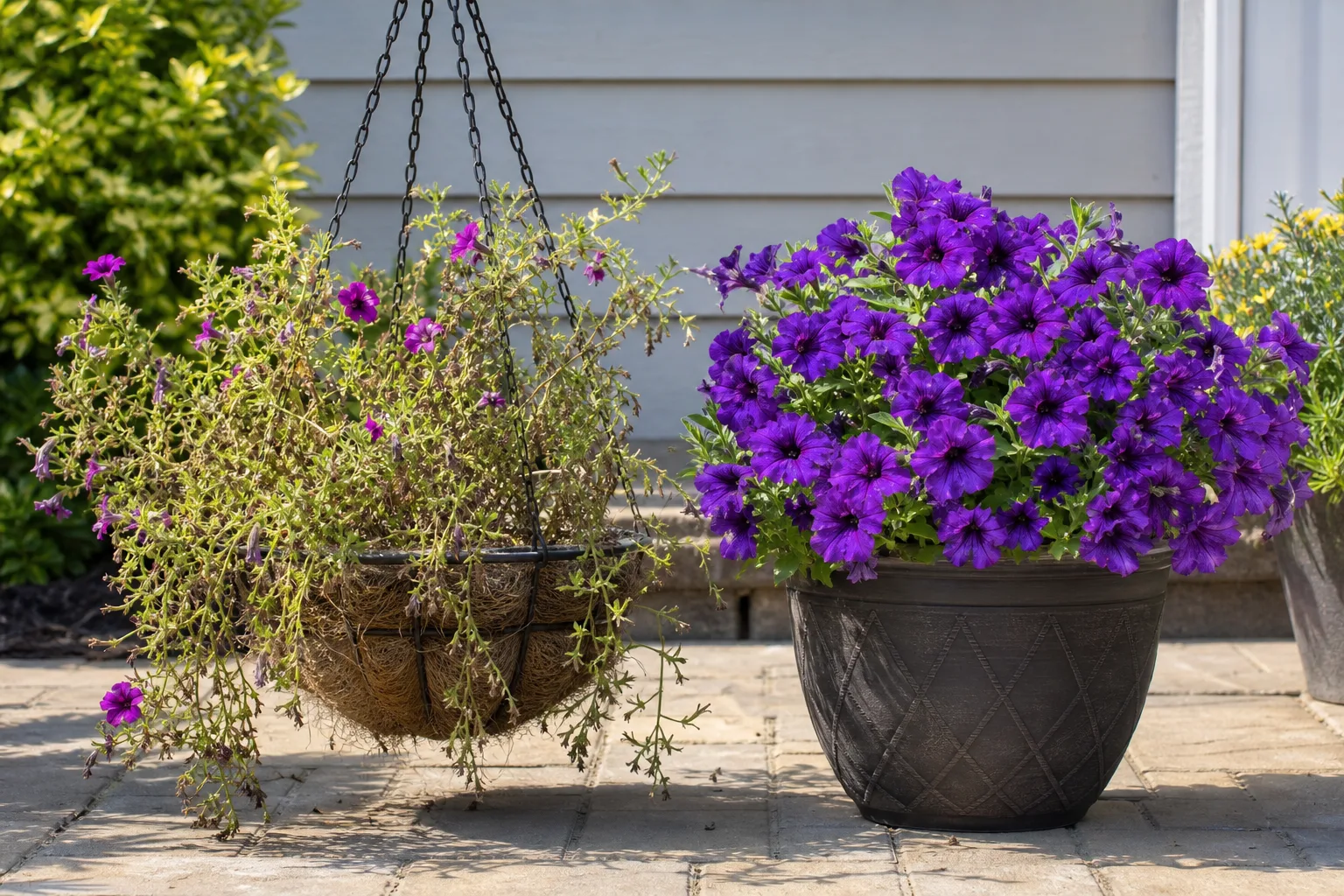
A light, selective trim is easier for the plant to recover from than a drastic haircut, especially in hot weather. If several stems need attention, stagger the work over a few days and avoid removing more than about one-third of the plant’s leafy growth at once; this is a cautious ceiling, not a target, and compact cultivars may need no reset at all.
After pruning, water the root zone if the soil is dry and give the plant a few days to respond before deciding it needs more fertilizer or another cut. North Carolina Extension advises pinching back leggy petunias, and Garden Design’s pruning guide advises limiting a shaping pass to roughly one-third of the stems. Use that as a cautious upper limit, not a target or a fixed calendar prescription; the plant’s condition matters more than the date.
In a warm region with a long frost-free season, a healthy petunia may have time to make fresh shoots and flowers after a midsummer trim. In a cooler garden where frost is approaching, a severe cut can remove blooms that would otherwise finish the season, so keep shaping modest and use the remaining warm weeks as your deadline. Petunias are tender perennials in their warm hardiness range but are grown as annuals in colder climates; no amount of deadheading or pruning can protect them from a killing frost.
Adjust the routine for pots, beds, and hanging baskets
For petunias in a flower bed, start at the edges and work inward, lifting neighboring stems rather than pulling them aside by their tips. A mass planting does not need to be perfectly clean; remove the largest spent flowers and any seed capsules that spoil the display, then stop before the task becomes a broad shearing job.
A pot on a table is usually the easiest to inspect because you can turn it and see its branches from above. In a hanging basket, support the container with one hand if it moves, check the underside and center, and use scissors for flowers tucked behind trailing stems; do not yank a vine toward you to make a hidden bloom reachable.
Petunias can feel tacky after handling, and dense growth can hold damp petals against leaves. Clear away the clippings, especially material that is soggy or visibly decaying, and water the soil rather than repeatedly wetting the foliage when possible; a tidy canopy dries more quickly and makes the next inspection easier.
Why petunias may not rebloom after deadheading
Removing the spent bloom helps prevent that flower from finishing a seed capsule, but deadheading does not create flowers by itself. New buds depend on a living plant that has enough light, functioning roots, moisture, and suitable temperatures; if one of those is limiting, extra pinching will only remove more growth.
Before increasing pruning or fertilizer, identify whether the whole plant is slowing down or only a few stems have finished. Heat stress, deep shade, a dry root ball, waterlogged soil, or a recently disturbed plant can all reduce flowering, and each calls for a different correction than removing a dead flower.
Use the pattern to narrow the cause. A plant with plenty of leaves but few buds may need brighter light or a review of its feeding, while flowers that collapse quickly during hot weather point to stress rather than a deadheading error. A container that wilts soon after watering may have a crowded root ball or poor drainage; check the pot and growing medium before adding more water or fertilizer.
Check light, moisture, heat, and nutrition
Petunias generally flower best in sun; North Carolina Extension notes that they tolerate partial shade but bloom less well in heavy shade. If the plant gets only a short stretch of direct light, move a container gradually to a brighter location where it can receive several hours of sun, while protecting it from the hottest reflected afternoon conditions in extreme heat.
Feel the growing medium before watering rather than following a fixed daily schedule. Containers and hanging baskets dry faster than beds, but petunias still need drainage; water thoroughly when the surface begins to dry, then let excess drain instead of leaving roots in a full saucer. Wilting in afternoon heat can be temporary, while a plant that remains limp in the morning may need a closer check of its root-zone moisture.
Feed according to the fertilizer label and the potting mix, not as an automatic reward for every deadheading session. Container-grown petunias can use available nutrients over a long flowering season, but excess feeding does not correct shade, root problems, or heat stress and can push foliage at the expense of a balanced display. If leaves yellow, growth stalls, or buds abort, diagnose the broader care issue before adding fertilizer.
Common mistakes that waste blooms
- Pulling instead of pinching or cutting: a tug can tear a longer vine and disturb nearby buds. Hold the target stalk close to its base and make a controlled pinch or snip.
- Removing only loose petals: the green base may remain and develop into a seed capsule. Check below the corolla and remove the short stalk with it.
- Mistaking a folded bud for a spent flower: fresh petunia trumpets can look crinkled as they open. Confirm that the flower is limp, faded, or dry before cutting.
- Cutting the entire branch during routine cleanup: that removes healthy leaves and unopened blooms. Reserve stem shortening for a plant that is genuinely stretched or bare.
- Expecting deadheading to fix every bloom problem: a plant in deep shade, heat stress, or unhealthy soil may not respond with more flowers. Correct the limiting condition and give new growth time to develop.
These mistakes share one cause: treating every imperfect flower as a reason to make a large cut. If you remove only the spent flower parts and leave healthy leaves and buds alone, you preserve more of the plant’s ability to keep growing while still improving its appearance.
Conclusion: remove only the spent flower
For routine petunia deadheading, wait until the flower is unmistakably faded, trace its stalk to the green base, and pinch or snip just below it without pulling on the vine. Leave nearby buds and healthy leaves in place; that small, precise cut is enough for ordinary cleanup.
Check weekly, adjust more often when a basket is in peak bloom, and treat self-cleaning cultivars as lower-maintenance rather than maintenance-free. When stems are long and bare, use a separate selective cutback, and if flowering remains slow, investigate sunlight, heat, water, and roots before taking more off.