4 DIY Fly Traps Indoors That Use What You Have
Catch tiny kitchen flies with four simple DIY fly traps, then stop the source. Get exact bait amounts, placement tips, safety guidance, and troubleshooting.
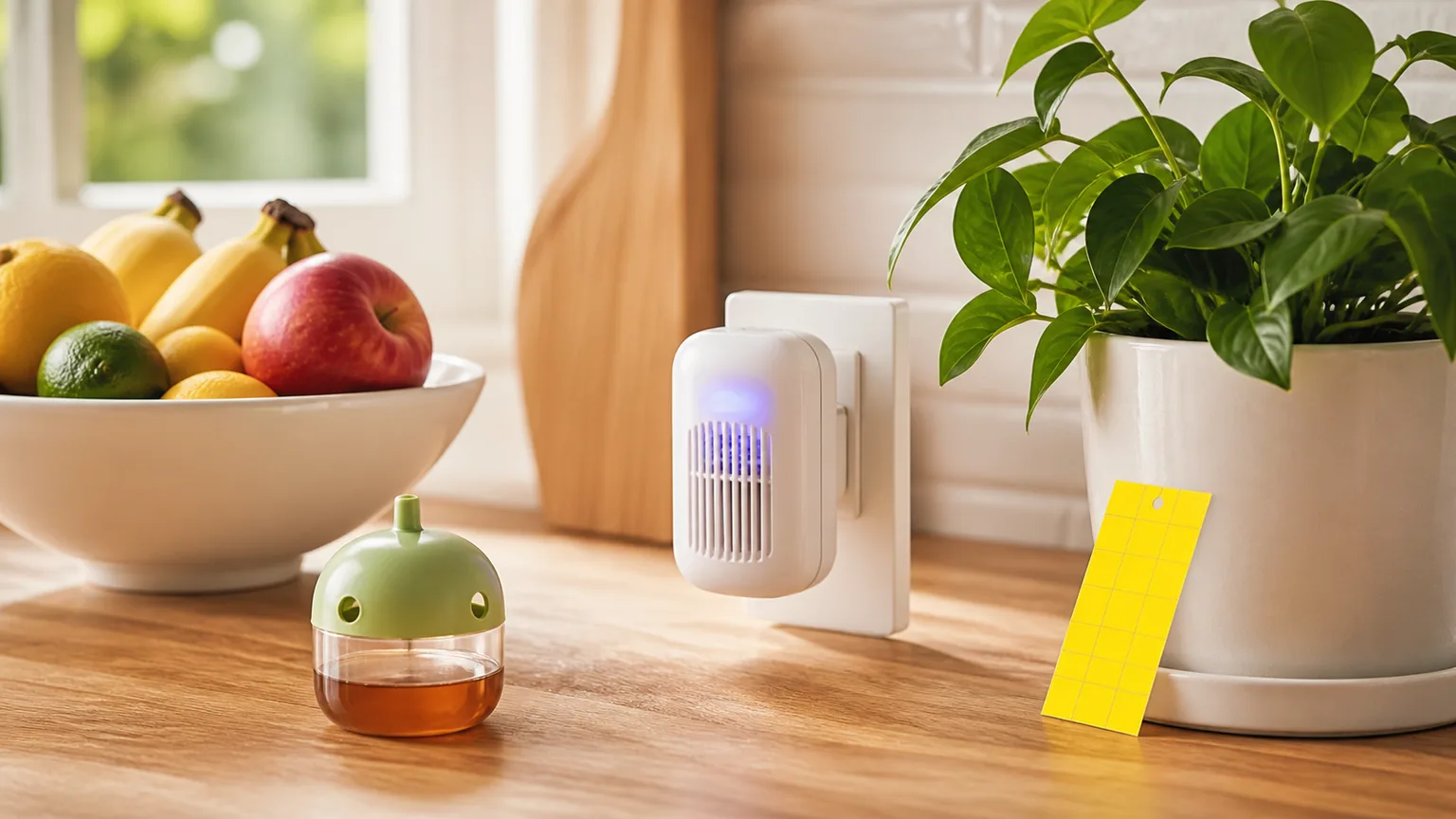
Tiny flies hovering around a fruit bowl call for a different response than large gray flies landing on the wall. Start by identifying the insect, remove what is feeding it, then use a trap to catch the adults that remain. That order matters: a bait cup can reduce the visible swarm, but it cannot clean a drain film, empty a forgotten bin, or seal a torn screen.
The four DIY fly traps below use a shallow bowl, jar, paper, plastic wrap, or a clean bottle. The liquid versions are primarily for fruit flies, also called vinegar flies. A house fly may investigate sweet or fermenting odors, but a vinegar trap is not a dependable solution for a larger infestation; for those flies, sanitation, exclusion, a swatter, or a purpose-built trap usually matters more.
First, identify the fly at your sink
“Flies” is a broad label for insects with very different habits. Integrated pest management starts with inspection and identification, followed by source reduction, exclusion, control, and evaluation (CDC IPM). A thirty-second look at size and behavior can save you from setting an attractive bait beside the wrong problem.
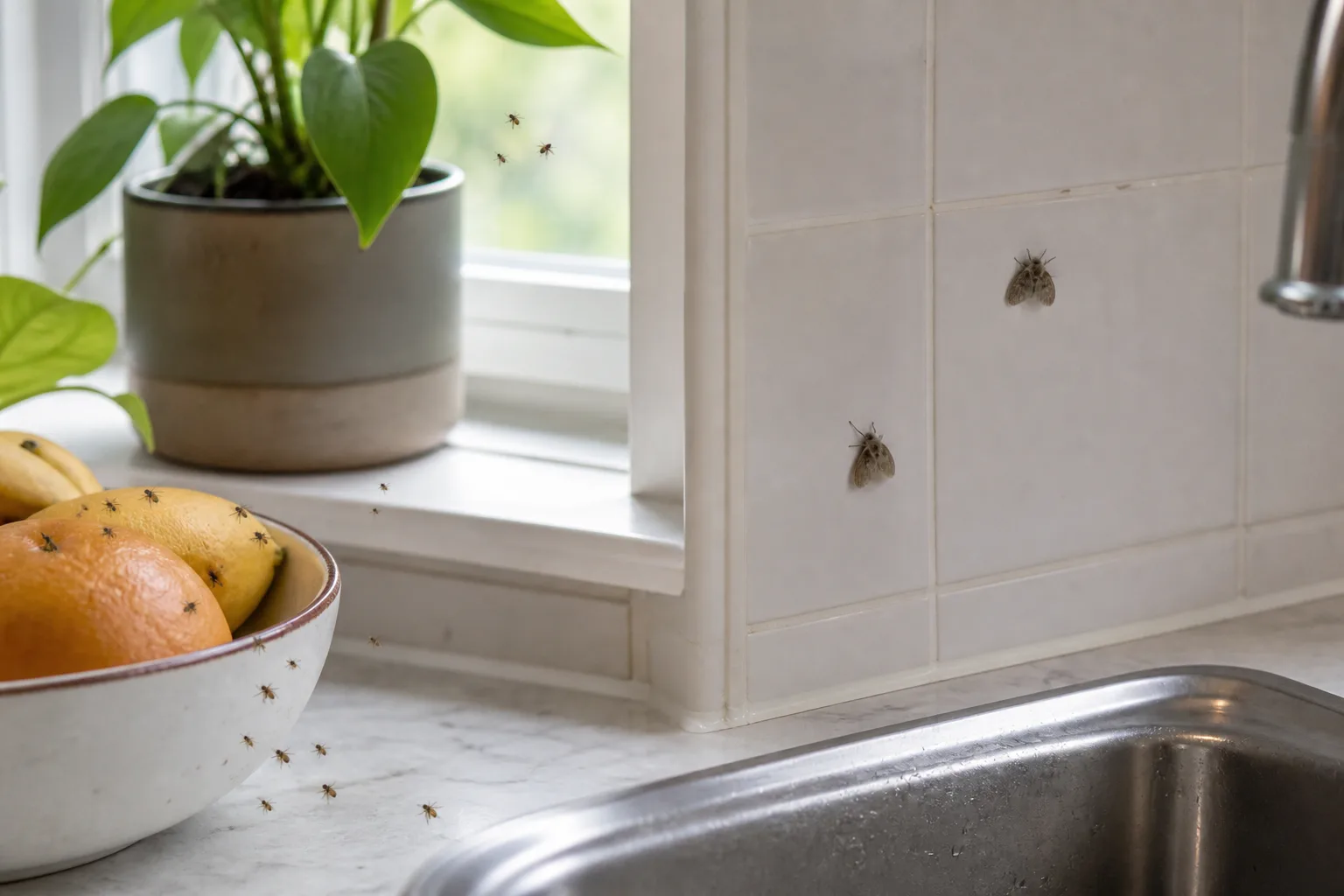
| What you see | Likely insect | What usually helps first |
|---|---|---|
| Pinhead-sized tan or brown flies circling fruit, recycling, wine, or the sink | Fruit or vinegar flies | Remove fermenting material, clean drains, and use an apple cider vinegar trap |
| Larger dull-gray fly resting on walls, windows, or food | House fly | Remove garbage or decaying material, repair screens, close doors, and use a swatter or commercial trap |
| Small, fuzzy, moth-like flies sitting on a drain or bathroom wall | Drain flies | Clean the organic film inside the drain; a bait trap alone will not reach the breeding site |
| Tiny black flies rising from the soil of a houseplant | Fungus gnats | Let the soil surface dry appropriately and address the potting mix; vinegar bait is a poor match |
Fruit or vinegar flies
Fruit flies are the best match for the liquid traps in this guide. They are very small—about one-sixth of an inch in the practical identification guidance from Gardening Know How—and are associated with ripe or overripe produce, fermenting liquids, drains, moist mop heads, and similar damp food residues (Gardening Know How). They often hover rather than make the fast, straight-line flights that make house flies so hard to catch.
Look first at bananas, tomatoes, onions, potatoes, fruit scraps, recycling containers, wine or beer bottles, the underside of a trash-can lid, and the garbage-disposal splash guard. One forgotten onion or a sticky ring under a bottle can compete with a trap all day.
House flies
A house fly is much larger and more substantial than a fruit fly. University of Minnesota Extension describes it as a dull-gray fly about 1/6 to 1/4 inch long with four narrow dark stripes on the thorax; it does not bite, but it is associated with waste and decaying matter and can potentially carry disease-causing bacteria (University of Minnesota Extension).
If the flies are house flies, do not keep adding sugar, syrup, fruit, and vinegar to the kitchen while leaving a full trash can or open back door in place. House flies seldom reproduce inside an ordinary clean home; repeated appearances usually point to an entry route or a nearby source such as garbage, animal waste, a dead animal, or decaying organic material (Peer-reviewed house-fly review).
Drain flies and fungus gnats
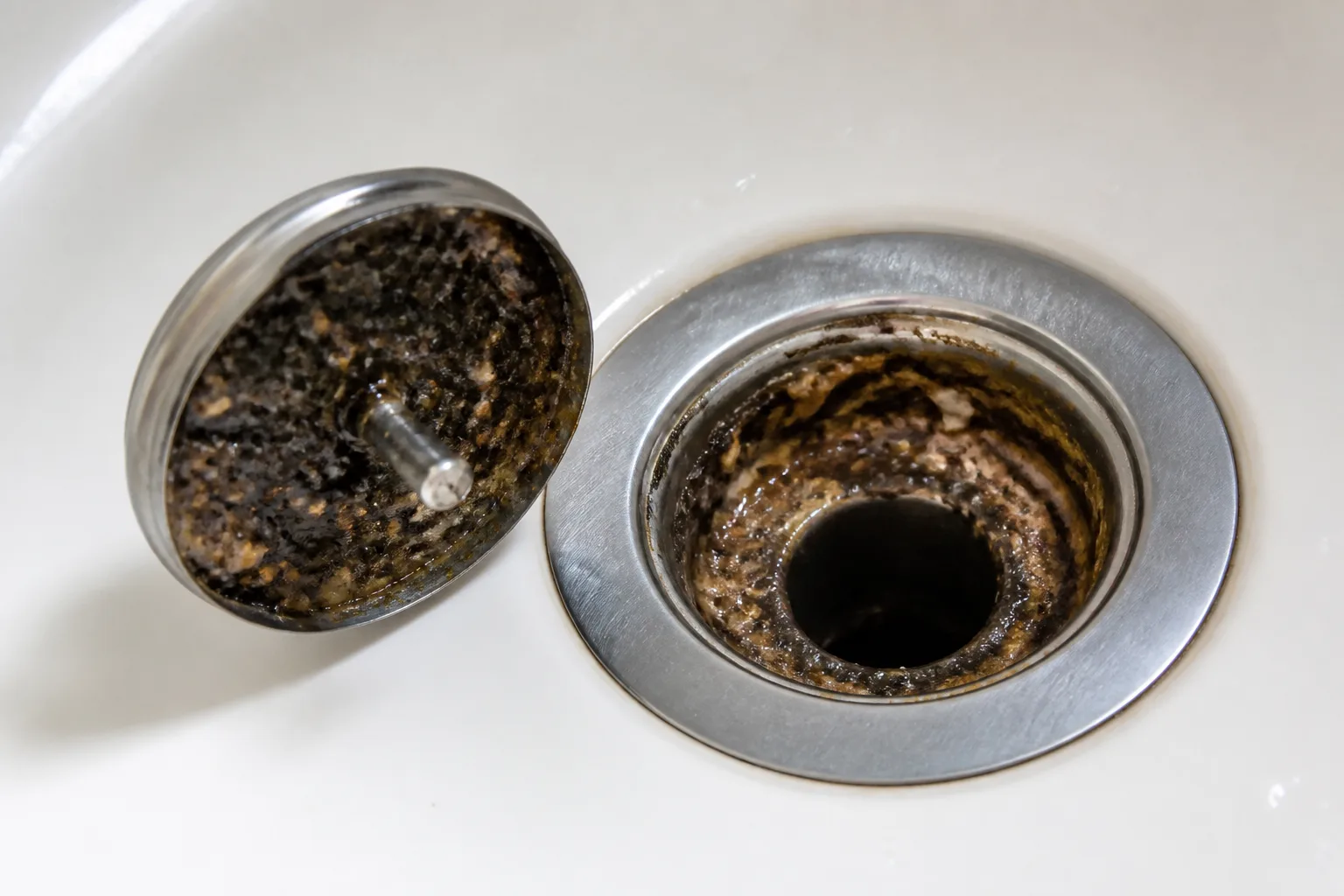
Drain flies are fuzzy and moth-like, not shiny, narrow-bodied fruit flies. They develop in the gelatinous organic film inside drains and traps, so a cup of vinegar may catch a few adults without solving the problem. Clean the drain opening, stopper, overflow, and accessible trap according to your plumbing setup, then monitor; avoid pouring improvised pesticide mixtures into a food-preparation sink.
Fungus gnats are usually tied to consistently damp potting soil, not the fruit bowl. If flies lift off when you disturb a houseplant, move the plant away from food-preparation areas, check the soil and drainage, and use a plant-specific approach rather than baiting the kitchen.
Stop the source before you set a trap
A trap is a cleanup tool for the adults you can see. The lasting reduction comes from removing food, moisture, shelter, and entry points—the same environmental logic behind IPM (CDC IPM). Do the quick reset first; otherwise the strongest competing odor in the room may be the one you are trying to eliminate.
Reset the kitchen and food storage
Put ripe produce in the refrigerator or a sealed container while you are dealing with an active fruit-fly problem. Discard cracked or rotting pieces, rinse cans and bottles before recycling, empty food scraps promptly, and wash the inside of the trash can and its lid if there is residue. Gardening Know How likewise emphasizes tied trash, clean counters and drains, and getting damaged produce out of the room (Gardening Know How).
Clean the places that receive invisible drips: under the toaster, beside the coffee maker, under a fruit bowl, around the disposal splash guard, and beneath the refrigerator if a spill reached the floor. Wipe with an appropriate kitchen cleaner, rinse food-contact surfaces as directed by the product, and let them dry. Never mix vinegar with bleach, ammonia, or other cleaning chemicals.
If you compost indoors or keep a worm bin, bury food scraps and keep the system covered and appropriately moist. Overfeeding, exposed food, and overly wet bedding can support fruit flies; practical vermicompost guidance recommends smaller pieces, covering the feed, and reducing excess moisture rather than adding more bait to the room (Gardening Know How).
Close entry points and competing attractants
Repair holes in window and door screens, close doors that open directly onto a patio or trash area, and move a countertop fruit bowl away from a bright window while the trap is working. House-fly management research identifies screens and closed doors as important exclusion tools, with trapping reserved for adults that still enter (Peer-reviewed house-fly review).
Do not rely on mint, essential oils, or another strong scent as your main control. A peer-reviewed review notes that many popular odor-based repellents have not been adequately evaluated for effectiveness or safety, and a strong smell is not a reliable barrier when a fly can reach suitable food (Peer-reviewed house-fly review).
1. Apple cider vinegar and dish-soap bowl
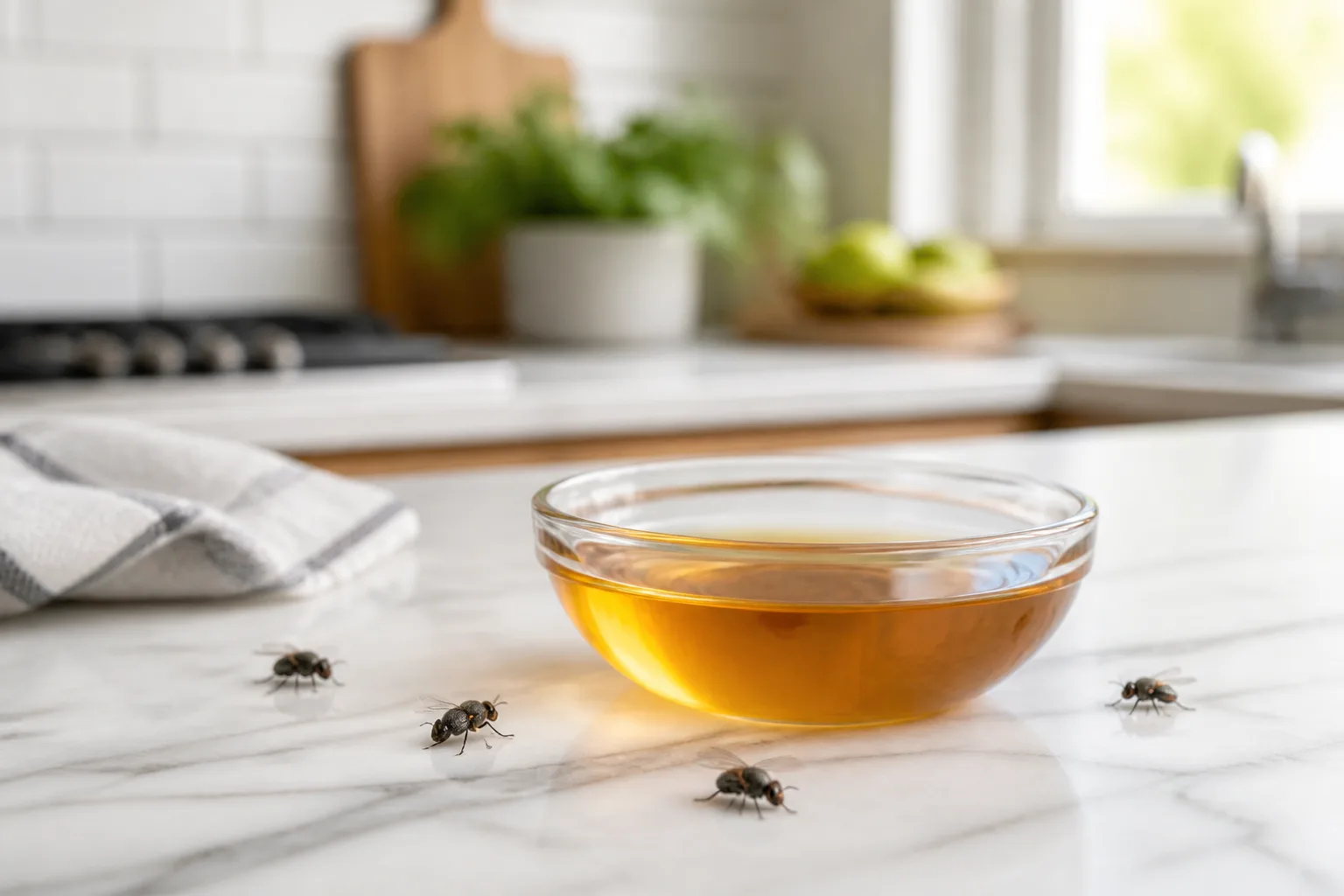
This is the simplest first test for tiny fruit or vinegar flies. The vinegar supplies a fruity, fermented odor, while a small amount of dish soap helps the liquid trap work by reducing surface tension; it is not a magic chemical that kills every type of fly.
How to make and refresh it
- Pour about 1/2 inch of apple cider vinegar into a shallow bowl or small glass. A small amount gives flies access to the odor without creating a deep, messy container.
- Add one or two drops of liquid dish soap. Stir once, gently, so you do not create a thick layer of foam.
- Put the bowl beside the fruit bowl, recycling container, or sink where you see the most tiny flies—not across the room where the scent is weaker.
- Leave it undisturbed for a day. Replace the mixture when it is cloudy, contaminated, dry, or no longer smells fresh; during an active problem, every one to two days is a reasonable starting rhythm.
Do not add a large spoonful of sugar just because a recipe includes it. Sugar can strengthen the lure, but it also makes the bait more attractive if the bowl is tipped, left near food, or forgotten after the flies are gone. If the plain vinegar version catches nothing within 24 to 48 hours, identify the insects again before increasing the bait.
2. Paper-funnel jar trap
A paper funnel gives fruit flies a narrow route toward a small bait reservoir and makes the container less open than a bowl. It is useful when you want a contained setup on a counter, but the opening must remain clear and the funnel must not touch the liquid.

How to make and place it
- Add 1/4 to 1/2 cup of apple cider vinegar, a little wine, or another fermented drink to the bottom of a clean jar. Use only enough to cover the base.
- Roll a piece of plain paper into a cone with a small opening at the bottom. Tape the outside seam, leaving the tip open.
- Set the funnel into the jar so the tip hangs above the bait. If the paper tip touches the liquid, the flies may use it as a bridge out of the trap.
- Place the jar near the active source, on a saucer or tray that can catch drips. Keep it away from a cutting board, pet bowl, child’s reach, and any place where the jar can be knocked over.
The paper cone is a physical escape barrier, not a guarantee. If the jar catches a few flies but the room remains busy, the source is probably stronger than the trap. Remove the jar, clean the competing source, and set a fresh one after the surface is dry.
3. Covered bowl with fruit bait
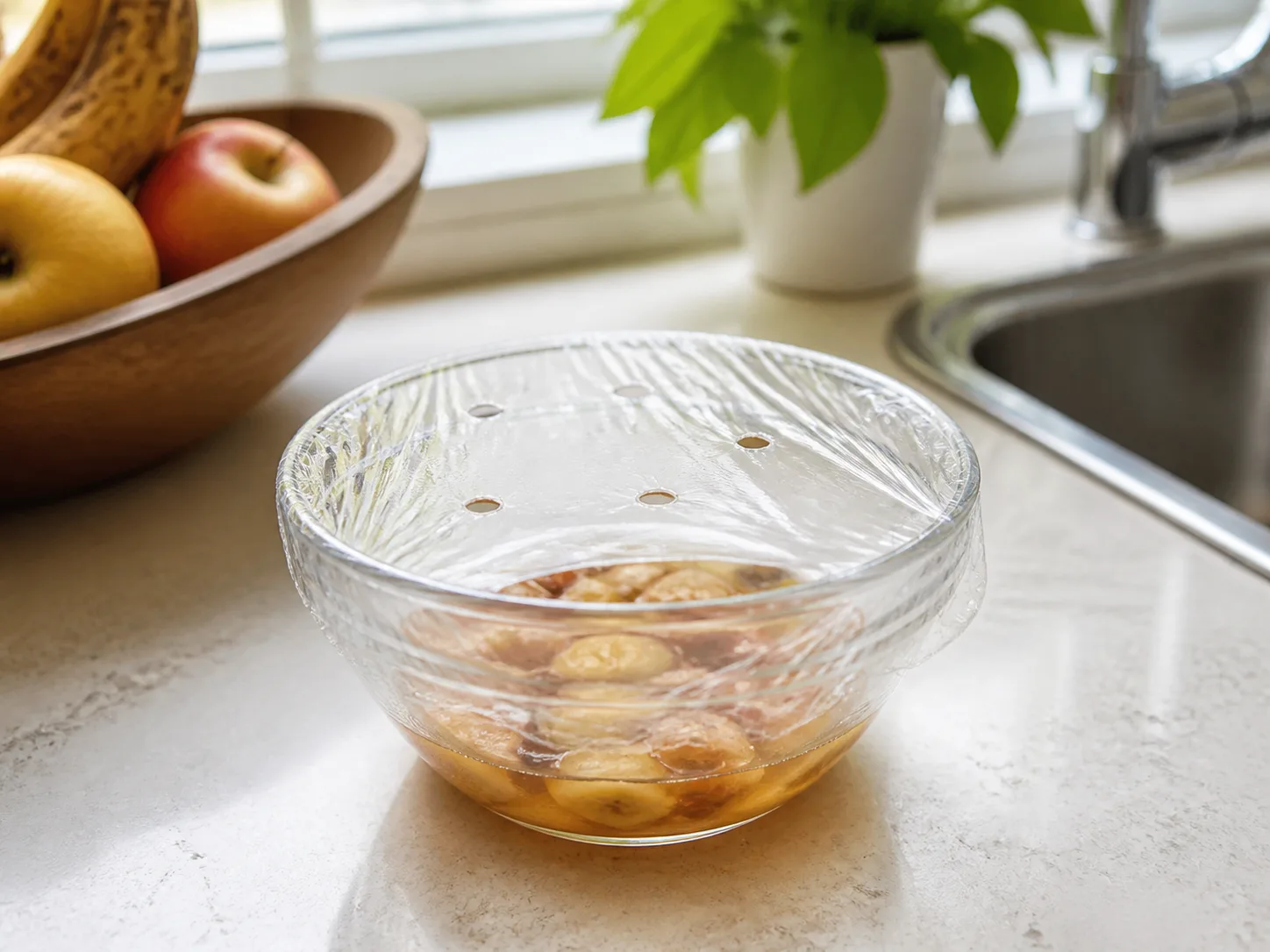
Use this option when overripe fruit is clearly drawing the flies and you want the bait under a cover. A small piece of banana, melon, apple, or another softening fruit can provide a strong odor, but it should be treated as a short-term lure, not left on the counter indefinitely.
How to make it without creating a new lure
- Put one or two tablespoons of overripe fruit in a small bowl. Choose a piece that is already being discarded; do not sacrifice fresh produce for a trap.
- Add a splash of apple cider vinegar or fermented drink and one drop of dish soap if there is enough liquid to wet the surface.
- Stretch plastic wrap tightly over the bowl and secure it. Poke four to six small holes with a toothpick; make them large enough for the tiny flies but not so large that the bowl becomes an open feeding station.
- Set it beside the original source for no more than a day at a time. When the bait is full of flies, dry, or foul-smelling, cover the bowl before carrying it to the trash, wash the container, and wipe the surrounding counter.
The cover does not make this trap food-safe. Label it mentally—or with a non-food marker placed on the outside—and keep it away from ingredients, children, and pets. If fruit flies disappear, remove the bait rather than continuing to maintain an attractive fermenting cup.
4. Bottle-funnel trap for a larger catch
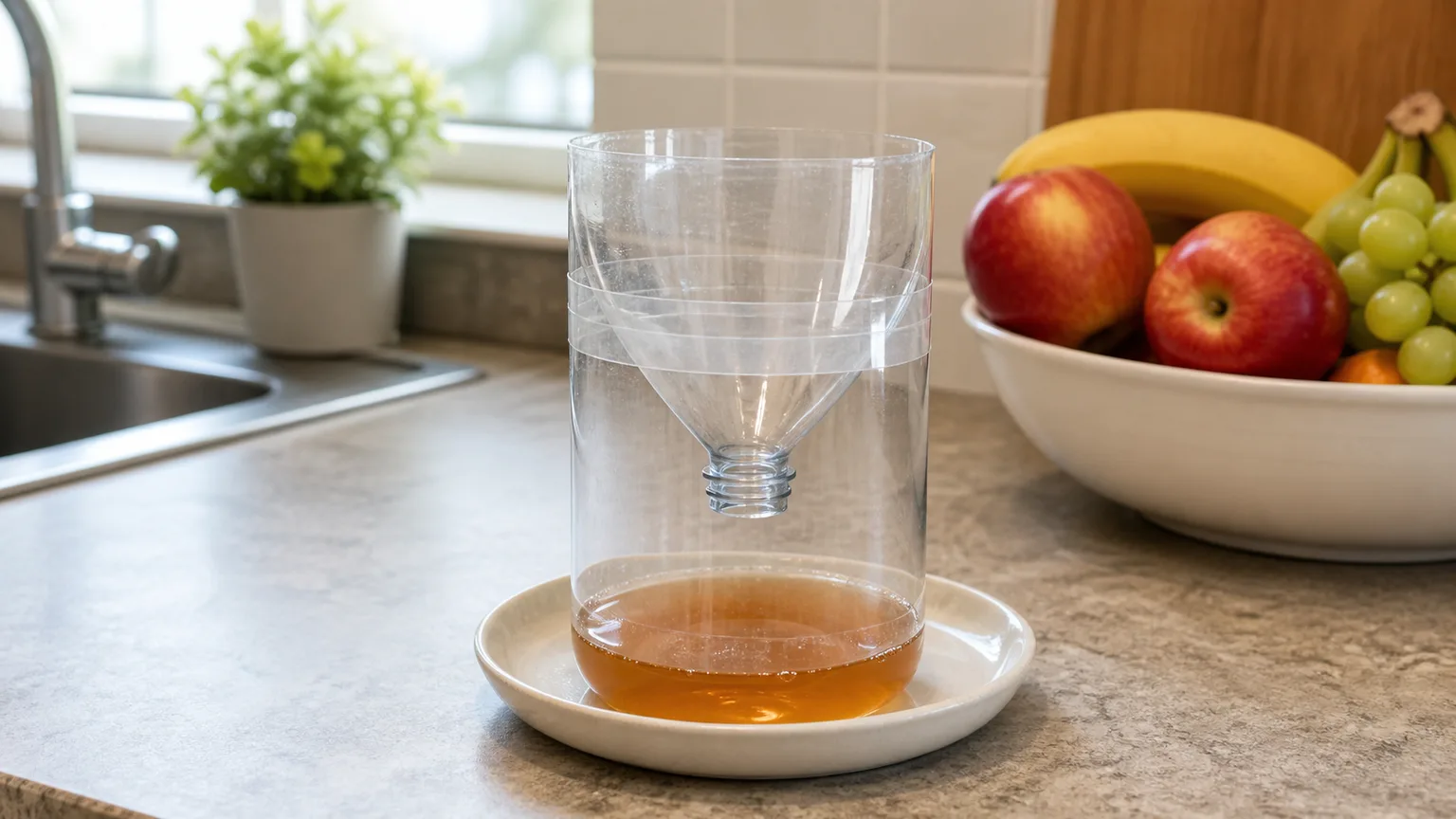
A clean plastic drink bottle can hold more bait and create a deeper funnel than a jar. It is another fruit-fly setup, not a dependable solution for large house flies, and it is best used on a stable tray so the cut plastic and liquid stay contained.
How to assemble it safely
- Rinse and dry a clean plastic drink bottle. Remove the label and check that no sharp, jagged edge will be exposed where someone can brush against it.
- Cut the bottle across its upper third. If an adult is doing the cutting, trim or cover the edge with tape; do not leave a knife or scissors beside the finished trap.
- Pour about 1/2 cup of apple cider vinegar or a fermented drink into the bottom section, then add one or two drops of dish soap.
- Turn the top section upside down and fit it into the lower section as a funnel. Tape around the join so the funnel cannot slide or fall into the liquid.
- Set the trap near the active fruit-fly area, away from heat, flames, food, children, and pets. Replace it when the bait is stale or the container is crowded, and discard the whole setup rather than opening it over the sink.
The large volume does not make the bait more selective. If you are seeing house flies, blow flies, or wasps, a bottle full of sweet liquid can become an unnecessary attractant. Switch to source removal, closed waste, screens, and an appropriate commercial or mechanical trap instead.
Place and monitor DIY fly traps safely
Location often matters more than adding another ingredient. Put one or two traps beside the strongest activity—near the sink for tiny flies, by recycling for fermenting odors, or beside a covered trash can after the source has been removed. Do not scatter bait cups through every room; concentrated placement makes the result easier to read and limits exposure.
Keep all liquid and fruit bait off food-preparation surfaces. A saucer under the jar helps with drips, but it does not turn the trap into a sanitary container. Wash hands after handling a used trap, wipe nearby counters, and keep open bait inaccessible to pets and children; if a pet can drink it or knock it over, use a covered commercial product or another control method instead.
Check the trap at the same time each day and record only three things: what insect you see, where it is most active, and whether the trap caught any. A good result is not an overflowing cup; it is fewer flies after the source has been removed. When activity stays low for several days, remove the bait and keep the prevention routine rather than leaving a permanent lure indoors.
If the traps catch nothing
Zero catches are useful information. Work through these checks before making the bait stronger:
- The insect is wrong: House flies, drain flies, and fungus gnats do not behave like fruit flies. Use the identification section and switch the first action accordingly.
- A competing source remains: Check produce, recycling, trash lids, disposal splash guards, drains, mop heads, compost, and spilled beverages. A trap cannot outcompete a full container of ripe fruit.
- The trap is in the wrong place: Move it to the actual flight path or source area. A bowl beside a sunny window may miss insects concentrated under the sink.
- The bait is stale or diluted: Refresh a small batch. Do not keep topping up a dirty bowl, and do not add so much soap that the surface becomes foam.
- Adults are emerging from a hidden site: Drain flies need drain cleaning; fungus gnats need a soil and moisture correction; fruit flies may be coming from a damp scrap bin or a forgotten bottle.
- The problem is an entry problem: If large flies appear near a door or window, inspect screens, gaps, and nearby outdoor waste instead of running more kitchen bait.
If you keep seeing large numbers after a careful cleanup, look for a dead animal in an inaccessible wall or attic, a leak under a cabinet, or a nearby waste source. Do not open walls or handle unknown waste yourself; persistent or foul-smelling infestations deserve professional identification.
When DIY traps are the wrong tool
DIY liquid traps are a sensible low-cost experiment for a small fruit-fly problem. They are a poor fit for a swarm of house flies, flies around food service, flies emerging from a wall, or any situation where you cannot find the source. A trap that only removes a few adults can create false reassurance while the breeding material remains.
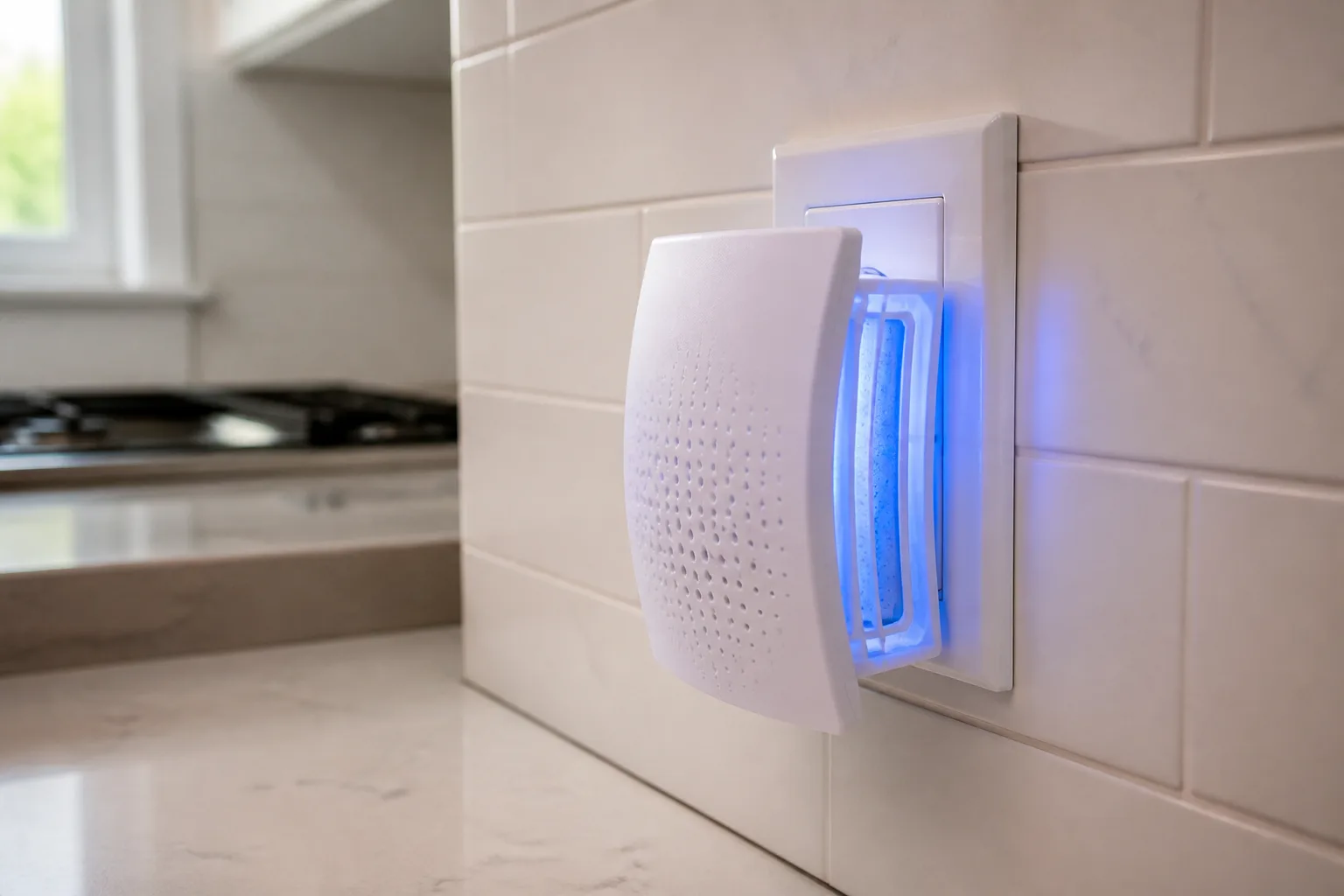
For a few house flies, a fly swatter and repaired screens may be enough. For repeated activity, a labeled sticky window trap, food-based lure trap, or UV trap can provide better monitoring, but follow the product directions and keep it away from food preparation. Research on indoor house-fly management describes glue-board light traps as a way to capture flies without the airborne fragments associated with some electrocution devices, which is one reason placement and trap design matter near food areas (Peer-reviewed house-fly review).
Avoid homemade pesticide sprays, undocumented essential-oil recipes, and any product used contrary to its label. If there are flies in a commercial kitchen, a rental with a building-wide issue, or a home with an unexplained persistent infestation, contact a licensed pest professional and ask for species identification and source control—not just a quick spray.
Conclusion
For tiny fruit flies, start with the apple cider vinegar and dish-soap bowl, then move to a paper funnel, covered fruit bait, or bottle funnel if you need a more contained setup. Give the trap a fair 24- to 48-hour test, but spend equal effort on the fruit, recycling, drain, trash, compost, and screens that keep the adults coming back.
The right result is not simply a bowl full of flies. It is a clean, dry source area, fewer insects over several days, and no reason to keep an attractive bait sitting beside your food.