How to Grow and Care for False Aralia Indoors
Learn how to grow false aralia indoors with a practical plan for bright filtered light, steady moisture, humidity, pruning, repotting, and leaf-drop fixes.
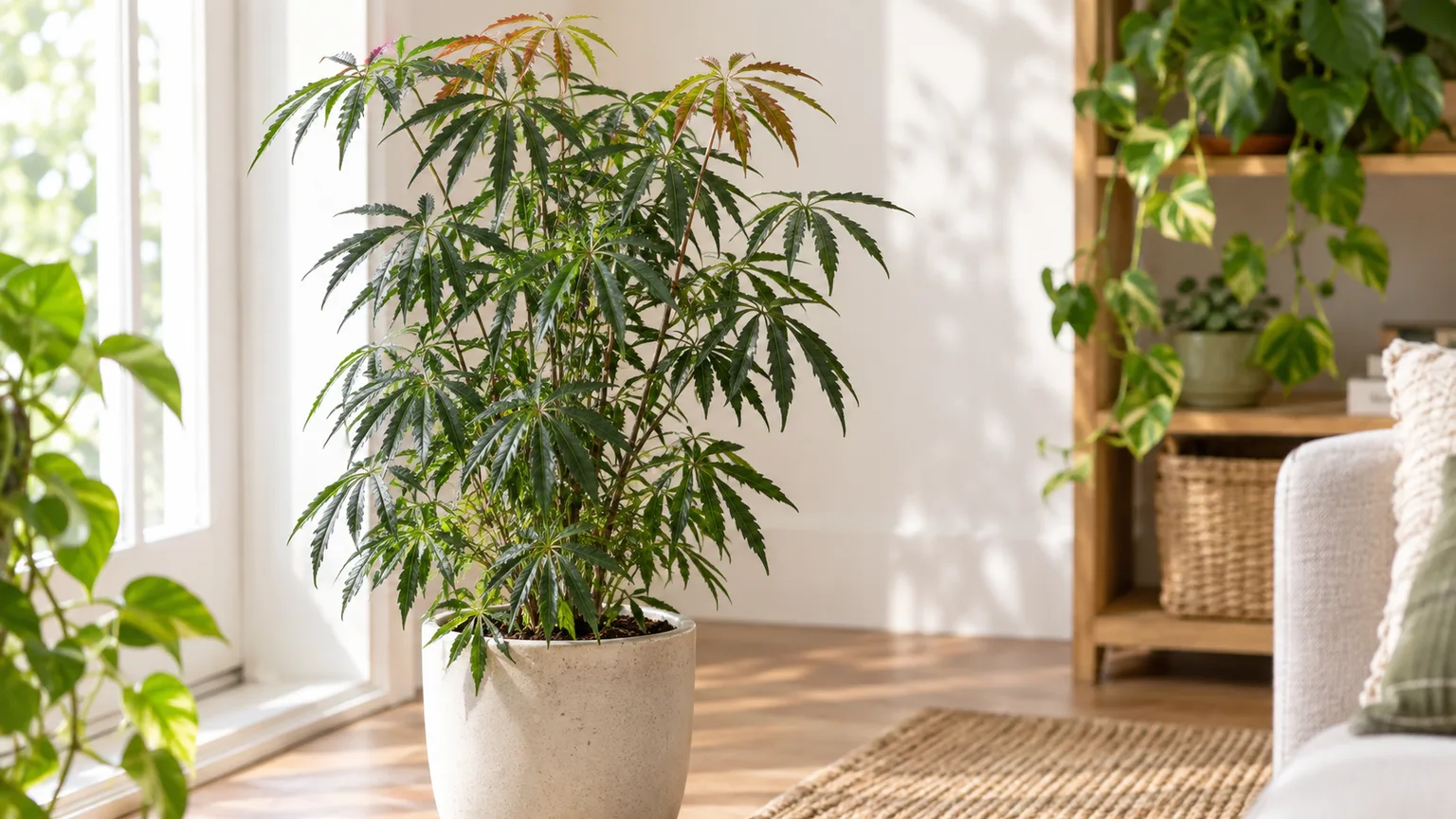
False aralia is a slow-growing tropical shrub with finely divided leaves that can look almost fernlike from across a room. It is also less forgiving of cold drafts, waterlogged roots, and abrupt changes than its delicate foliage suggests. A reliable routine is simple: give it bright filtered light, warm steady conditions, a mix that stays lightly moist but drains freely, and time to adjust after any move.
The plant does not need a rigid weekly schedule. Its water use changes with light, warmth, humidity, pot size, and the season, so the most useful habit is to check the soil and the plant together. The sections below explain how to read those signals and what to change first when growth stalls or leaves fall.
Identify False Aralia and the Names on Plant Labels
The plant currently listed as Plerandra elegantissima is often sold as false aralia, threadleaf aralia, or spider aralia. Nursery labels may instead use the older names Schefflera elegantissima or Dizygotheca elegantissima. North Carolina State Extension records all three names and describes the plant as an evergreen shrub or small tree in the Araliaceae family, native to southeastern New Caledonia. The NC State Extension Gardener Plant Toolbox and Missouri Botanical Garden Plant Finder are useful references when a label uses a synonym.
Its leaves are the easiest way to identify it: several narrow, toothed leaflets radiate from one point at the end of a leaf stalk. Young leaves can emerge coppery or bronze and mature toward deep green; this color shift is normal, not a nutrient deficiency. The leaflet shape changes as the plant matures, too, becoming broader and larger on an older woody specimen.
Do not confuse false aralia with the umbrella tree, Heptapleurum actinophyllum (often sold under the former name Schefflera actinophylla), or Ming aralia, Polyscias fruticosa. All are members of the same broad family or related ornamental trade, but they are different plants with different leaf forms. False aralia has particularly slim leaflets with serrated edges; the umbrella tree has broader oval leaflets, while Ming aralia has smaller, more finely divided foliage on a denser branching framework. That distinction matters when you compare care advice online or choose a photo as a reference.
Indoors, false aralia is usually grown as a narrow floor plant or a tall tabletop specimen while young. It grows slowly, but established plants can eventually reach several feet, so leave headroom and room for the leaves to spread. Flowering is uncommon in a home, and an owner should not treat the absence of flowers as a care problem.
Choose Light by Watching the Leaves and Growth
Set false aralia in bright, filtered light for most of the day. An east-facing window is often a good starting point, as is a bright west or south window softened by a sheer curtain or set back from the hottest rays. The Royal Horticultural Society recommends bright filtered or indirect light for growing the plant under glass, while the Missouri Botanical Garden notes that it grows well in bright positions with protection from hot afternoon sun. RHS plant profile
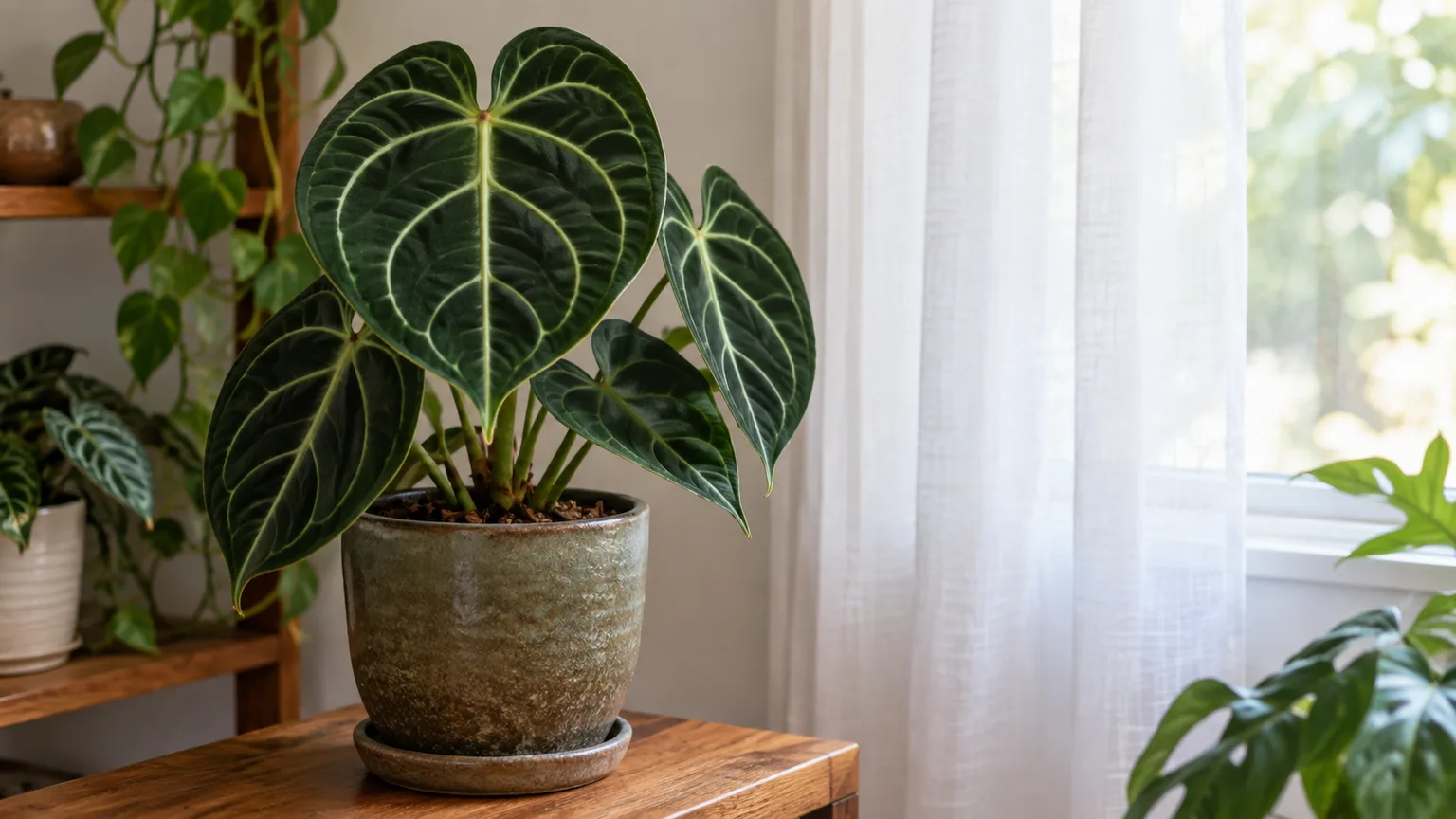
A short period of gentle morning sun can be useful, especially in a dim home, but do not jump from a shaded nursery shelf to hot direct afternoon sun. Watch the newest growth after moving the plant: compact leaves and steady extension suggest the light is adequate; long bare stretches between leaf clusters, smaller leaves, or a persistent lean toward the window point to too little light. Rotate the pot a quarter turn every week or two if one side is becoming noticeably fuller.
Leaf color alone is a poor light meter. Mature leaves may darken naturally, while a cultivar with cream or gold edges can hold its pattern in good light. If a leaf develops a bleached, dry patch on the window-facing side, move the plant a little farther from the glass or increase the curtain filtering. Change one factor at a time and give new growth several weeks to show whether the adjustment helped.
Build a Pot and Mix That Drain Without Drying Fast
False aralia needs a balance that sounds contradictory until you look at the roots: the mix should retain some moisture, but it must not stay saturated. Use a quality houseplant potting mix with a loose structure. If the mix compacts into a dense block after watering, amend it with a coarse aerating material such as perlite or pumice. As a practical starting point, blend general potting mix with roughly one-quarter coarse perlite or pumice. The RHS recommends peat-free loam-based compost for plants grown under glass, while Plantura advises loosening a moisture-holding mix; use texture as your test, aiming for a mix that drains freely but still feels lightly moist the next day. RHS plant profile Plantura false aralia guide
Choose a pot with at least one unobstructed drainage hole. A decorative cachepot is fine if the nursery pot can be lifted out for watering and fully drained before it goes back in. A large pot filled with wet mix around a small root ball takes longer to dry and raises the risk of root damage. The new container only needs modestly more room than the existing root ball, not a dramatic jump in diameter; Gardeners’ Path similarly recommends moving up only one size. Gardeners’ Path
A heavy ceramic pot can help stabilize a taller plant, which may be top-heavy as its stems lengthen. Do not put a deep layer of gravel in the bottom as a substitute for drainage holes; the water still needs a clear route out of the pot. Keep the base of the stem at the same soil line it had before repotting, and avoid packing the new mix so tightly that air cannot reach the roots.
Water by Checking the Root Zone, Not the Calendar
False aralia prefers a consistent supply of moisture during active growth, but roots left in waterlogged mix can fail quickly. Practical care sources differ slightly on how far down to let the surface dry: Gardeners’ Path advises checking the top inch, while Plantura advises watering once the top layer is dry. In a smaller pot with an airy mix, the shallower test may be enough; in a larger pot, check deeper before watering. The goal is not a bone-dry root ball or a permanently wet one, but a lightly moist interior with some air between waterings. Gardeners’ Path’s false aralia guide gives a one-inch finger test and warns that both overwatering and underwatering can trigger leaf loss.
Push a clean finger into the mix near the edge of the pot. If the top inch feels dry and the pot is noticeably lighter, check a little deeper; water when the upper layer has dried while the lower mix still feels faintly cool, not sodden. If the lower mix is wet, wait and check again in a few days. If the whole root ball has become very dry and has pulled away from the pot wall, water slowly in two passes so the dry mix can absorb moisture rather than channeling water straight out.
When it is time to water, pour evenly over the surface until water runs freely from the drainage holes. Let the pot drain, then empty the saucer or cachepot so the roots do not sit in collected water. Avoid small daily sips: they wet only part of the root ball and can leave salts concentrated near the surface. In winter, check less often because shorter days and slower growth generally reduce water use; do not stop checking or assume the plant wants to dry completely.
If you are unsure whether a problem is overwatering, compare the soil and the leaves before changing the routine. A drooping plant in damp mix should not automatically receive more water. A drooping plant in very dry mix may need a thorough drink, but a persistently wet, sour-smelling mix points toward poor drainage or root trouble. Keep a brief note of the date, pot weight, and soil feel for a few weeks; that reveals your home’s interval without turning it into a rule the plant must follow year-round.
Keep the Plant Warm and Away From Sudden Drafts
A normal warm living space suits false aralia better than a cool window ledge or an entryway that is repeatedly opened to winter air. A steady range around 65 to 80°F (18 to 27°C) is a comfortable target; sources do not give one universal cutoff. Plantura sets about 59°F (15°C) as a lower limit, while Gardeners’ Path considers anything below 65°F potentially too cool. That spread is a reason to avoid prolonged cold and drafts, not to treat one brief dip as a catastrophe. Plantura Gardeners’ Path
Keep it away from heating vents, air-conditioning outlets, cold glass, and exterior doors. A few cold hours during a delivery or a brief temperature dip are different from repeated exposure to a chilly draft, but abrupt swings can prompt leaf drop even if the room later warms again. If the plant has been beside a door or window, move it to a more stable spot and hold other care conditions steady while it acclimates.
During winter, do not try to force fast growth by increasing fertilizer or watering. Lower light and cooler indoor conditions slow growth, so the plant may use less water. Keep it warm, give it the brightest filtered position available, and make watering decisions from the mix rather than the month.
Manage Humidity With a Measured, Realistic Setup
False aralia is a tropical plant that benefits from higher humidity, especially when indoor heating dries the air. NC State describes it as needing high humidity, but there is no single ideal room reading for every houseplant; a stable 50 to 60 percent relative humidity is a useful practical target for this species, not a hard threshold. If leaf edges repeatedly crisp despite a sound watering routine, place a small hygrometer near the foliage for a few days before changing the room. NC State Extension Penn State Extension
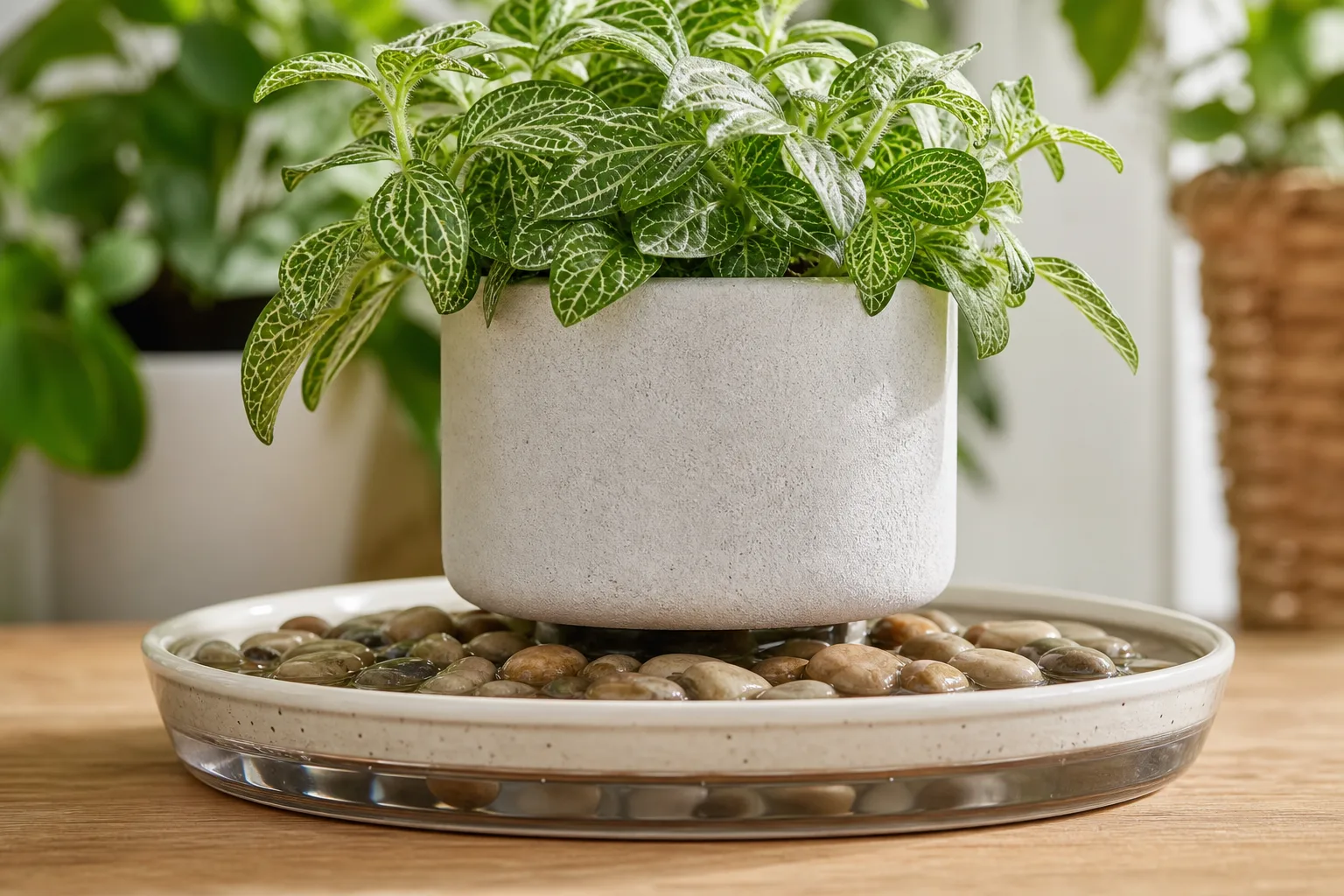
A room humidifier is the most controllable option when measured humidity remains low. Keep it clean, direct mist away from walls and furniture, and avoid placing the plant where warm vapor condenses on leaves or a cold window. Grouping several plants can create a slightly more humid pocket around them, but air should still circulate between leaves so the foliage dries after watering or cleaning.
Plantura suggests misting or a pebble tray as humidity support, but Penn State Extension notes that misting raises humidity only until the water evaporates, often within minutes, and wet-pebble trays have almost no impact on room humidity. For sustained change, measure the room and use a clean humidifier. A tray can still catch runoff and keep the pot elevated, but do not count it as a room humidifier; its waterline must stay below the base and drainage holes. The figure shows that safe clearance. Plantura Penn State Extension
Feed Lightly During Active Growth
False aralia is not a heavy feeder. During spring and summer, when it is producing new leaves, use a balanced liquid houseplant fertilizer at the lower end of the label rate or dilute it to half strength. Apply it to already moist soil rather than a completely dry root ball, and do not add another dose just because a leaf yellows; yellowing is more often connected with root moisture, cold, or light than with a simple lack of fertilizer.
Monthly or every four to six weeks is a reasonable starting interval for a plant making steady new growth. If growth is slow, light is limited, or the plant was recently repotted into fresh mix, feed less often or pause. Stop feeding during the darker part of winter when the plant is barely growing. A white crust on the soil or pot rim can signal accumulated fertilizer salts; flush the mix thoroughly with plain water and let it drain before resuming at a lighter rate.
Prune for Height, Shape, and Branching
Prune to remove dead stems, control a plant that is reaching the ceiling, or encourage a fuller outline. Use clean, sharp pruning shears and cut just above a leaf node or side shoot. Shortening the tallest stem can encourage growth below the cut, but a slow-growing plant may take time to respond, and a single cut does not guarantee a perfectly balanced shape. The RHS lists light pruning for the species, and Plantura recommends spring pruning when new growth is beginning.
A lanky plant often needs a light check before it needs a dramatic haircut. If it has stretched toward a window, move it into brighter filtered light first, then trim the longest bare sections gradually. Removing too much foliage at once reduces the plant’s ability to support new growth, so keep substantial healthy leaves on the plant and reassess after a few weeks.
Remove yellow or fully brown leaves at their base rather than trimming every leaf tip into a new shape. A clean cut looks better than jagged tearing, and it avoids damaging the neighboring stalk. If an older plant has lost leaves low on the stem, pruning the top may stimulate some lower branching, but bare lower wood may remain bare; consider the plant’s existing shape before cutting for a result it may not produce.
Repot When Roots or Old Mix Call for It
False aralia grows slowly enough that repotting by the calendar can do more harm than good. Check the drainage holes and root ball in spring or early summer. Roots circling densely around the pot, water running straight through because the mix has broken down, or a plant drying much faster than it used to are better reasons to repot than a set annual date. A few roots at a drainage hole do not mean the plant is in immediate danger.
Choose a container just one size larger, with drainage holes, and use fresh, airy potting mix. Slide the plant out gently and loosen only the outermost circling roots; there is no need to bare-root a healthy specimen. Set it at its previous depth, fill around the root ball, and water once to settle the mix. Do not leave the repotted plant sitting in runoff, and do not fertilize immediately if the new mix contains starter nutrients.
After repotting, return it to bright indirect light and keep the environment stable. A small amount of leaf loss after root disturbance is possible, but repeated loss paired with wet soil suggests the container is oversized or the mix holds too much water. Missouri Botanical Garden describes the species as a warm, humid houseplant and recommends regular but moderate watering during growth with reduced water use later in the year; that seasonal shift is another reason to choose a pot size that drains predictably. Missouri Botanical Garden Plant Finder
Propagate a False Aralia From a Stem Cutting
False aralia can be propagated from stem cuttings, but success is variable and slower than with many common vines. The RHS lists seed or semi-hardwood cuttings as propagation options; Gardeners’ Path describes spring softwood cuttings, and Plantura cautions that cuttings may root unreliably indoors. A practical compromise is to take a healthy, firm tip cutting during active spring growth and give it warmth, bright indirect light, and steady—not soggy—moisture. RHS propagation guidance
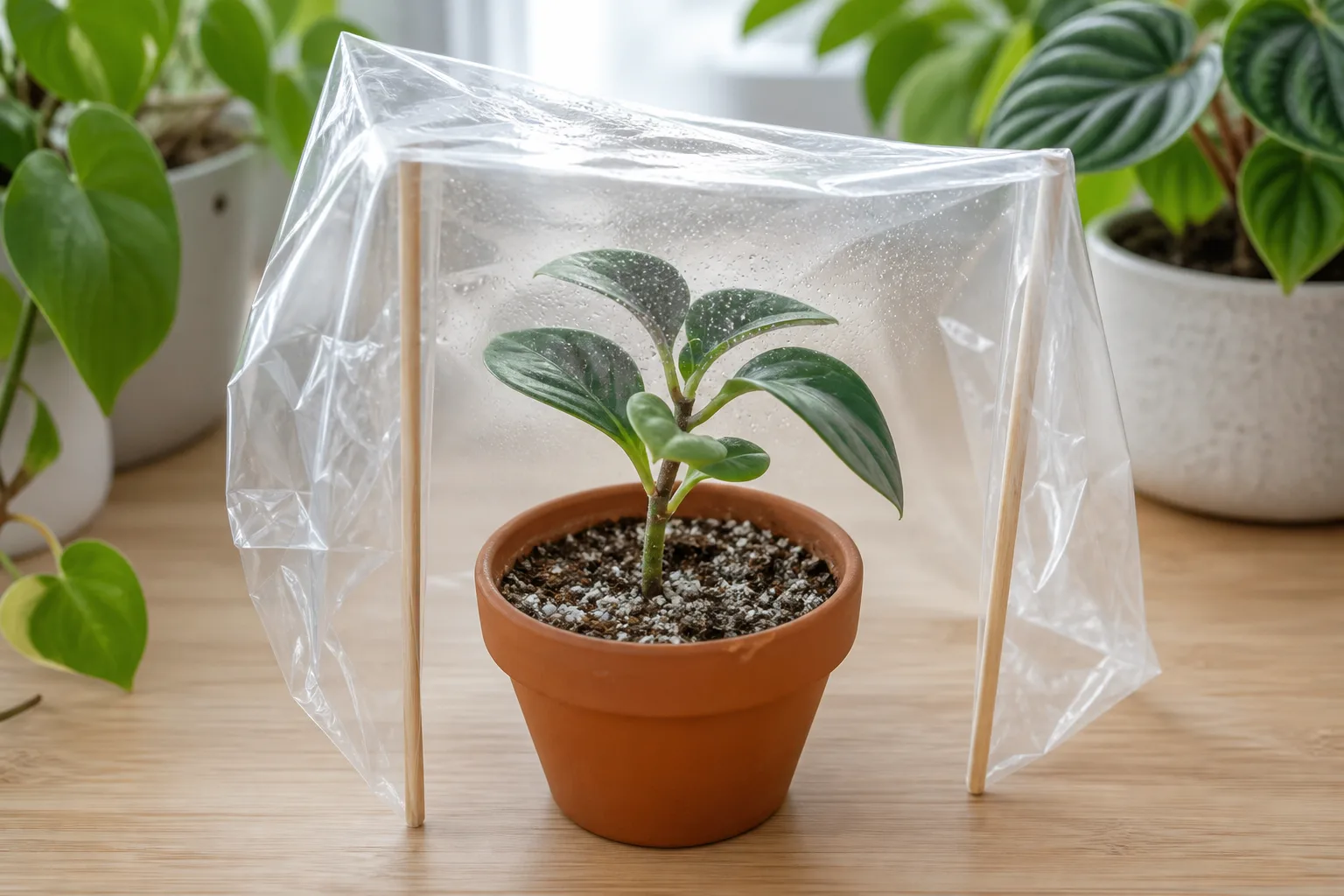
Use a clean blade to take a 4- to 6-inch (10- to 15-centimeter) piece with at least one healthy node. Remove the lower leaves that would sit below the mix, then place the cutting into a small pot of moist, airy propagation medium. The node must be in contact with the medium; leaves buried under soil are likely to decay. A clear cover can slow moisture loss, but it should not press against the leaves or remain sealed without airflow.
Set the pot in warm bright indirect light, out of direct sun. Check the medium every few days: it should feel lightly moist, never waterlogged. Open the cover briefly for fresh air and wipe away heavy condensation. Avoid pulling on the cutting each day to look for roots; wait for fresh growth or gentle resistance before treating it as established. If a cutting fails, that is not proof the parent plant is unhealthy—false aralia is simply not a consistently easy houseplant to propagate.
Inspect and Manage Common Houseplant Pests
Check the undersides of leaflets, the joints where leaves meet stems, and the newest growth when you water. NC State lists mealybugs, aphids, spider mites, thrips, and scale among the pests to watch for. NC State Extension Fine webbing and stippled pale leaves may point to spider mites; cottony clusters suggest mealybugs; sticky residue or distorted new growth can accompany aphids or scale. The small, divided leaves create many hiding places, so a quick look across the top of the canopy is not enough.
If you find pests, move the plant away from other houseplants and inspect nearby plants too. Rinse the foliage gently in a sink or shower, paying attention to the undersides, then wipe stems and leaf stalks with a damp cloth. Remove heavily infested leaves only if the plant can spare them. Repeat the inspection and cleaning every few days because one rinse may miss eggs or insects tucked into leaf joints; Gardeners’ Path also recommends isolating a new plant while you check for pests. Gardeners’ Path
If pests persist, identify them before choosing a treatment. Use only a product labeled for indoor ornamentals and for the pest you have, follow its directions exactly, and test it on a small area first if the label permits. Delicate leaflets can be sensitive to residue or concentrated sprays, and a product intended for outdoor use may not be appropriate indoors. Keep the plant isolated until repeated checks show no new activity.
Diagnose Yellow Leaves, Brown Edges, and Leaf Drop
A single old leaf turning yellow is not enough to diagnose a care failure. Look for a pattern: whether the newest or oldest leaves are affected, whether the mix is wet or dry, whether the plant recently moved, and whether insects are visible. A useful order is to check soil moisture and drainage first, then temperature and drafts, then humidity and light. Changing several conditions at once makes it harder to know which correction helped.
| Symptom pattern | First check | Practical response |
|---|---|---|
| Yellow leaves with wet mix | Is the pot draining, and is water standing in its cachepot? | Let the mix dry somewhat, empty runoff, and check roots if the mix stays wet. |
| Brown, crisp edges | Is the room dry, the root ball very dry, or the plant near a vent? | Check humidity and soil together; move it away from hot or cold airflow. |
| Pale dry patches on the window side | Is direct midday sun reaching the leaves? | Filter the light or shift the plant gradually. |
| Sudden leaf drop after moving | Did light, temperature, or airflow change quickly? | Return it to a stable bright spot and avoid further moves while it adjusts. |
| Wilting while the mix is wet | Does the pot smell sour or feel heavy for days? | Suspect damaged roots or poor drainage; inspect the root ball rather than adding water. |
| Long gaps between leaf clusters | Is the plant leaning or stretching toward a window? | Increase filtered light before pruning the bare stems. |
These patterns overlap. Brown edges can follow dry air, a dry root ball, excessive soluble salts, or drafts; they do not automatically mean the plant needs shade. Yellowing plus persistently wet soil is more concerning for root stress than one yellow lower leaf on an otherwise growing plant. If the stem base becomes soft, the mix remains wet for a long time, or leaves continue dropping despite stable conditions, slide the plant out and inspect for mushy brown roots. Healthy roots should feel firm; remove only dead material and repot into a draining mix if rot is present.
A plant that loses leaves after a move may need patience, not a new treatment for every fallen leaflet. Keep watering consistent with the soil checks, hold the temperature steady, and make only one careful location change if the current spot is clearly too dark or drafty. New growth is a better recovery signal than whether an older leaf returns; damaged or shed foliage will not turn green again.
Choose a False Aralia Cultivar for Its Foliage
Cultivar names can help predict the leaf effect, but stock varies by nursery and labels are not always consistent. ‘Galaxy’ is known for glossy dark green leaves with less pronounced divisions; ‘Variegated Galaxy’ has lighter edging; ‘Gold Crest’ is described with gold-edged foliage; and ‘Olympia’ can show red or violet tones. ‘Bianca’ is often sold with cream-edged leaves. Gardeners’ Path describes these foliage distinctions, but stock and labels vary, so check the plant in person and compare its actual leaves with the tag before buying. Gardeners’ Path
Variegated plants need enough light to keep their pattern, but that does not mean they should be placed in harsh midday sun. Look for firm stems and clean leaf undersides, then quarantine a new plant for a couple of weeks before placing it among established houseplants. If you are choosing between a full, multi-stem pot and a taller single stem, pick the form that suits your space; pruning can adjust height, but a sparse plant will not instantly become dense.
Move a False Aralia Outdoors Without a Shock
In warm climates, false aralia can grow outdoors in a sheltered, frost-free position; Missouri Botanical Garden lists it as winter-hardy in USDA Zones 10 through 12. In cooler areas, treat it as a houseplant and consider outdoor time only when nights remain warm and the plant can be protected from harsh afternoon sun. A summer porch is an option, not a requirement for healthy indoor growth.
Acclimate it over a week or more. Start in bright shade, then move it only as far toward brighter conditions as the leaves tolerate. Outdoor light, wind, and drying speed are all stronger than they may seem from indoors, so check moisture more often without keeping the pot saturated. Bring the plant back inside before cool nights return, and inspect it closely for insects before setting it near other houseplants. Sudden indoor-outdoor changes can cause leaf drop even when the temperatures seem acceptable.
Conclusion
A healthy false aralia depends on a steady environment more than a complicated care calendar. Give it bright filtered light, a warm location, and a draining mix that holds some moisture; then water only after checking how the root zone is drying. That routine avoids the two most damaging extremes: roots left in soggy soil and a root ball allowed to dry hard.
When leaves change, diagnose the conditions before reaching for fertilizer or moving the plant into shade. Wet soil, cold drafts, sudden moves, low humidity, weak light, and pests can produce overlapping symptoms, so check them in a consistent order. With stable care and occasional pruning, this slow-growing shrub can keep its distinctive narrow foliage for years indoors.