River Birch Care: How to Plant, Water, and Prune
Learn river birch care from planting and watering to pruning, cultivar choice, and troubleshooting—plus how to tell if your yard has enough room and moisture.
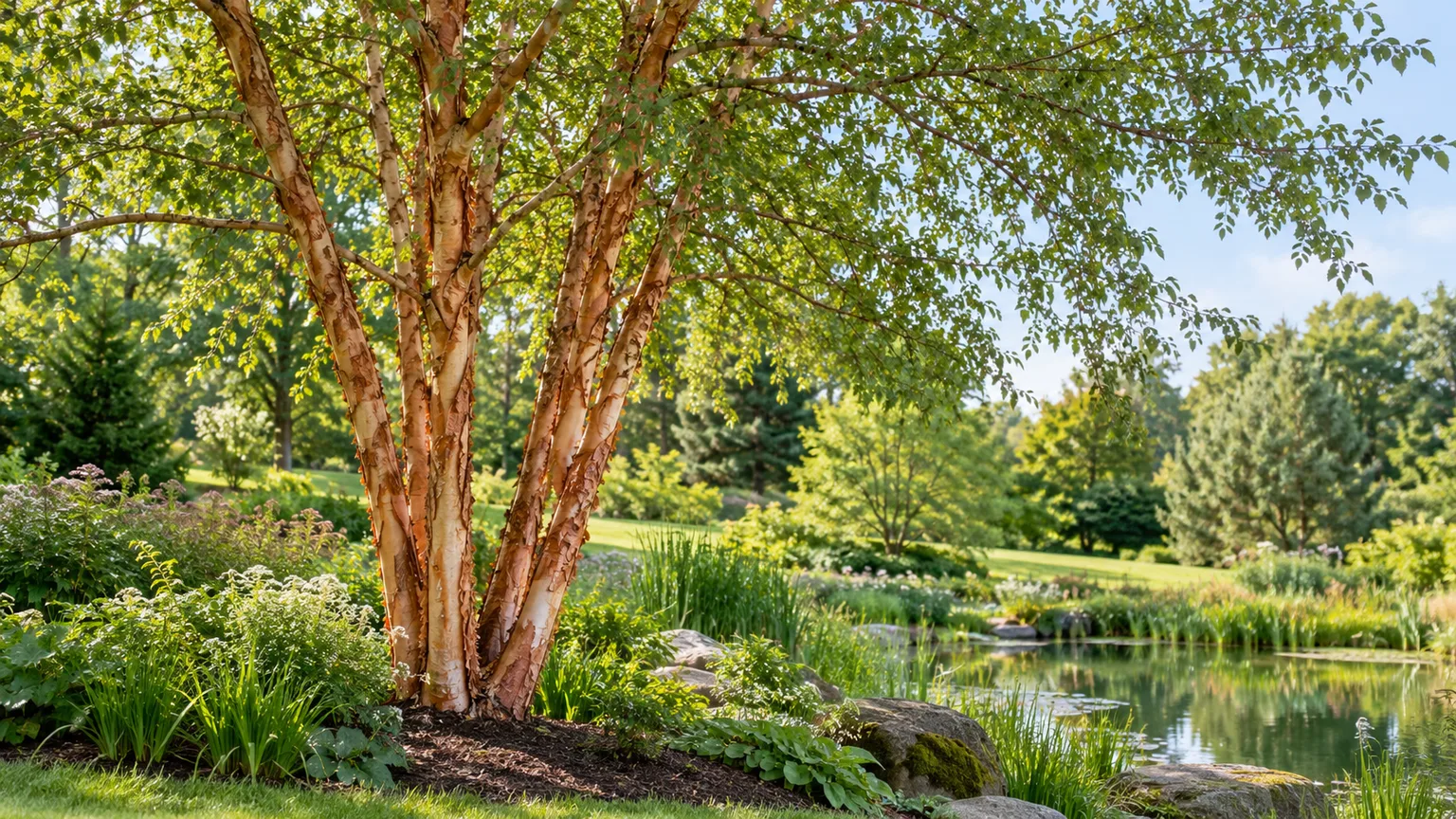
River birch (Betula nigra) is a fast-growing North American shade tree best suited to a yard that has room for a broad crown and soil that stays moist without remaining stagnant. Its cinnamon, salmon, or tan bark peels in papery layers, its foliage moves in the slightest breeze, and its fall color is usually yellow. It also drops small twigs, catkins, and seeds, so it is a better fit for a lawn edge, rain garden, or naturalized space than for a spotless patio or narrow foundation bed.
The care plan is simple once the location is right: plant the root flare at grade, keep the young root zone evenly moist, cover it with mulch, and prune only when there is a sound reason. The hard part is resisting the idea that a river birch belongs anywhere wet. It tolerates periodic flooding, but a new tree can still fail in a planting hole that holds stagnant water, a dry strip of lawn, or a space too small for its mature spread.
River Birch Care at a Glance
River birch grows in USDA hardiness zones roughly 4a through 9b, but that range describes winter survival, not a guarantee of good performance in every climate. NC State Extension’s plant profile lists a height of about 30 to 70 feet and a spread of 40 to 60 feet; University of Wisconsin–Madison Extension describes mature trees around 60 to 80 feet tall and about 40 feet wide. The difference reflects plant form, geography, and growing conditions, so use the mature dimensions for the exact cultivar sold in your region rather than planning around a single generic number.
| Need | Practical target |
|---|---|
| Light | Full sun for strongest growth and best foliage; part shade is tolerated |
| Soil | Moist, preferably acidic to neutral, with enough drainage for roots to breathe |
| Water | Deep, steady moisture during establishment and dry spells; adjust to rainfall and soil texture |
| Space | Large tree footprint; check the cultivar’s full height and spread before planting |
| Pruning | Usually minimal; late summer or fall avoids the strongest spring sap flow |
| Main trade-off | Fast shade and distinctive bark come with debris and a real water demand |
NC State Extension describes river birch as adaptable and heat tolerant among birches, and capable of tolerating extended flooding. That tolerance should not be read as permission to keep the trunk base submerged or roots oxygen-starved for the whole growing season. A site that is moist after rain and then drains is very different from a hole that remains waterlogged for weeks.
Is River Birch Right for Your Yard?
Choose river birch when you have a sunny or lightly shaded area with dependable moisture, a large enough canopy footprint, and a place where falling material will not be a constant nuisance. It works especially well as a specimen tree in a large lawn, near a pond or rain garden, or at the edge of a naturalized planting. The tree’s open crown also creates a changing light pattern: younger trees provide dappled shade, while an older canopy casts denser shade beneath it.
Think about the yard in July and October, not just at planting time. A shallow swale that stays damp during spring but bakes hard in summer may need supplemental irrigation. A low area that ponds after storms may be suitable if water eventually recedes, but chronic stagnant water and compacted soil call for a drainage assessment first. If neither adequate moisture nor a watering line is realistic, pick a tree adapted to your normal summer conditions instead of expecting the species to solve a dry site by itself.
Mature Size, Roots, and Routine Mess
The canopy is the first space constraint. A river birch may be sold as a small nursery tree, but its future crown can spread 40 feet or more. Before buying, measure from the planned trunk to the house, paved areas, overhead lines, septic components, and other mature trees. Leave enough clearance for the crown and for access to maintain gutters; NC State specifically cautions against planting it next to a house because the small branchlets it sheds can clog them.
The ground under a mature river birch is not an effortless flower bed. The tree draws substantial moisture, and its surface-root zone can compete with turf and thirsty perennials. Add the seasonal clean-up to your choice: it sheds twigs, drops catkins after spring pollen release, releases winged seed, and may drop interior leaves during summer drought. That debris is normal and often the price of a quick-growing shade tree, not proof that the tree is diseased.
Wisconsin Extension gives a typical lifespan of roughly 50 to 75 years, though the life of any individual tree varies with cultivar, site, and care. Plan for a medium-to-large landscape tree rather than assuming it will be a permanent, low-maintenance specimen. If your yard is compact, the smaller Fox Valley® (‘Little King’) is worth researching, but confirm its local mature dimensions and growth habit before relying on an online dwarf label.
Choose a Site With Moisture and Room
Look for a place with a naturally moist root zone, such as the edge of a rain garden, a broad lawn depression that drains between storms, or an open area near a stream or pond. A location at the foot of a slope can collect useful runoff, but do not direct roof or driveway runoff at the trunk. Concentrated water can erode soil, carry salts or pollutants, and keep the root collar excessively wet. If a downspout is the only water source, redirect it safely and irrigate the tree independently during dry stretches.
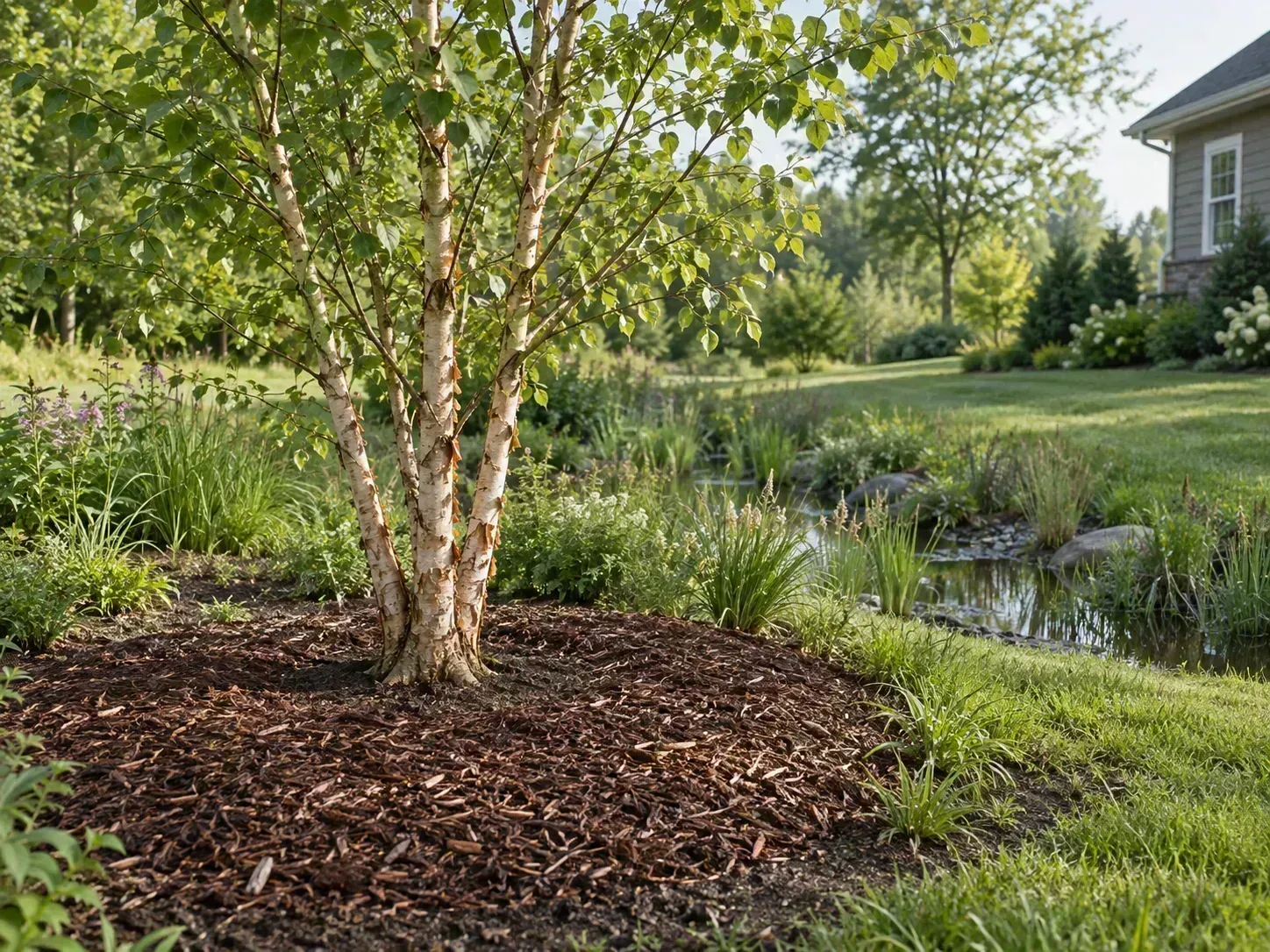
Avoid narrow strips between pavement and a building. Pavement can heat the root zone and limit water infiltration; buildings and gutters increase cleanup. Keep mower and trimmer traffic out of the trunk area, because a mulch ring is easier to maintain than bark wounded year after year. Check local utility and planting-clearance rules before digging, and locate underground services first.
Sun, Soil, pH, and Drainage
River birch performs in full sun to partial shade. Full sun generally produces the strongest growth and best foliage color, while some afternoon shade can be acceptable in hotter areas if the soil stays moist. Dense shade is a poor compromise: the tree may survive, but it will be less vigorous and may not develop the open landscape form you expect.
The useful soil description is moist, acidic to neutral, and not permanently waterlogged. NC State’s profile notes that river birch grows in clay, loam, and sand and can tolerate occasionally wet conditions; Wisconsin Extension warns that iron chlorosis can occur in alkaline soil. Do not assume that all yellow leaves mean the pH is too high. If the tree is declining or shows pale leaves with darker veins, test soil pH and drainage before adding sulfur, iron products, or fertilizer. Correcting pH by guesswork can create a second problem without fixing the first.
Do a simple site check before planting: dig a test hole outside the future root ball, fill it once, and see whether water drains away after the soil has had time to absorb it. This is a screening step, not an engineering drainage test. If water still stands for a long time after rain, or the area smells sour and remains saturated, choose a tree that handles that condition or get local advice. River birch tolerates periodic flooding, but the species also does well in moist, well-drained soil; those facts belong together.
Pick a Cultivar for Size, Shape, and Bark
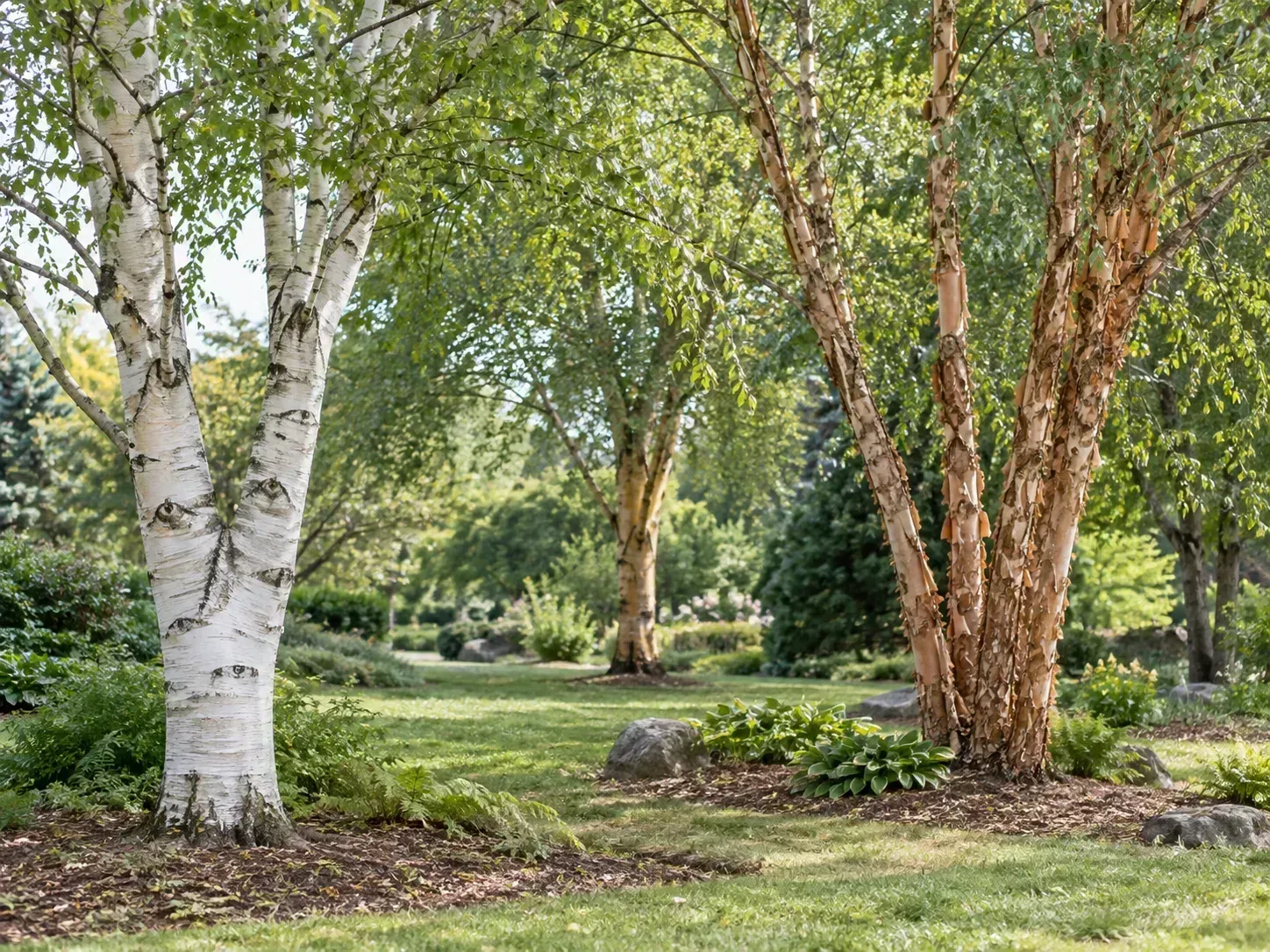
River birch cultivars change the tree’s dimensions, crown shape, bark color, and visual effect, but they do not remove the basic need for moisture and space. Read the botanical name and cultivar on the nursery tag; common names like “dwarf river birch” can hide meaningful differences in final height and spread. Also ask whether the tree is sold as a single trunk or a multi-stem clump. Multi-stem trees emphasize bark and create a broad silhouette, while a single trunk can read more like a conventional shade tree.
How Popular Cultivars Differ
Heritage® (‘Cully’) is popular for its vigorous growth and strongly peeling bark, which can reveal creamy inner layers beneath cinnamon and salmon tones. It may be grown with one trunk or several, and its appearance can be especially striking in a small grouping. Do not confuse lighter bark with a smaller tree; check the full size on the specific nursery label. Wisconsin Extension’s cultivar notes describe its strongly exfoliating, cinnamon-and-salmon bark.
Dura Heat® (‘BNMTF’) is selected for improved tolerance of heat and dry conditions relative to many river birches, with a denser, often pyramidal habit and pinkish-orange bark. “More drought tolerant” is a comparison, not a promise that a new tree can go without water. Its site still needs moisture during establishment and in prolonged drought. NC State Extension lists its heat tolerance and compact habit among the cultivar traits.
Fox Valley® (‘Little King’) is a compact selection that Wisconsin Extension lists at about 15 to 20 feet tall. NC State describes the selection around 10 by 12 feet, which illustrates why estimates can differ by source, region, and site. If you need a genuinely small tree, get the nursery’s regional mature-size estimate and allow room for the crown rather than planting at the closest listed minimum.
Other forms solve narrower design goals. City Slicker® (‘Whit XXV’) is selected for pale exfoliating bark and a smaller stature than the species; NC State includes ‘Shiloh Splash’ for variegated foliage and ‘Summer Cascade’ for a weeping shape. These named forms can be harder to find, and pruning cannot reliably make a vigorous full-size cultivar stay small. Buy the structure you want instead of planning to force a tree into it later.
Planting River Birch Without Burying It
Plant in autumn or early spring when the ground is workable and temperatures are mild. In hot climates, avoid planting during a heat wave or dry spell unless you can give the root ball careful aftercare. RHS tree-planting guidance recommends choosing a suitable site first, digging a broad hole, and setting the root-to-trunk transition level with the soil surface. The practical goal is to help roots move into surrounding soil while keeping the trunk flare visible.
Container, Balled-and-Burlapped, and Root Flare
Before digging, check the tree’s roots. A container-grown tree may have circling or tightly packed roots along the pot wall; loosen the outer roots gently and cut or redirect only roots that are clearly circling. For balled-and-burlapped stock, remove ties and any material that could constrict the trunk. Handle the root ball, not the trunk, and keep exposed roots moist until the tree is in the hole.
Dig the planting hole two to three times wider than the root ball, but no deeper. If the trunk disappears straight into the soil with no visible widening, carefully remove excess soil from the top of the root ball until you find the root flare. Set that flare at or slightly above finished grade so settling does not bury it. Backfill with the native soil, break up large clods, and firm it gently by hand; do not stomp the soil or fill the hole with a rich amendment pocket that differs sharply from the surrounding ground.
Water slowly after backfilling to settle soil around the roots. Check the trunk from two directions to make sure it is upright and the root flare remains uncovered. A short, broad mulch ring is more useful than a tall berm at the trunk. If the tree rocks in wind, stake only enough to stabilize its root ball and remove the ties when it is secure, typically within the first year. Fine Gardening’s planting guide emphasizes correct depth, room for roots to expand, and steady aftercare; those basics matter more than adding fertilizer at planting.
Watering During Establishment and Drought
Newly planted river birches need reliable moisture while the root system expands beyond the nursery ball. Water the entire root ball and nearby soil slowly, then check moisture a few inches below the surface before watering again. If the root zone still feels damp, wait. If it is drying, water deeply enough to wet the root ball, not just the mulch or the soil beside it. Fine Gardening recommends adjusting watering to soil texture: water moves slowly through clay but drains quickly through sandy soil.
There is no useful universal rule such as “run the hose for two hours every week.” Hose flow, root-ball size, slope, mulch, rain, temperature, and soil texture all change how much water reaches roots. Use rainfall as part of the schedule. In the first growing season, check more frequently during hot, windy weather; after establishment, water deeply during extended drought rather than giving the tree a shallow daily sprinkle. Gardening Know How also stresses that a transplanted tree can suffer from both too little water and from roots left sitting in excess water, so respond to the actual soil rather than following an unchanging calendar.
Apply water over the root ball and the area just beyond it as the tree grows. A soaker hose or drip line laid in a broad circle can help deliver water gradually; periodically check beneath mulch to confirm the soil is actually wet. If leaves droop at midday but recover overnight, observe the tree and the soil before flooding the root zone. If the canopy stays wilted, soil is dry below the surface, and there has been little rain, give it a deep soak. If soil is already saturated, stop watering and investigate drainage or runoff instead.
River birch may shed some interior leaves in hot, dry weather. NC State and Wisconsin Extension both describe water stress and summer leaf drop as possible responses. That does not mean every dropped leaf is harmless: look for whether the loss is concentrated inside the crown or accompanied by tip dieback, sparse upper branches, or continued decline after soil moisture improves. A tree repeatedly stressed by summer drought is in the wrong spot or needs a dependable irrigation plan.
Mulch and Plants Under the Canopy
Spread a 2- to 4-inch layer of bark or leaf mulch across the root zone, extending outward as far as practical. Keep mulch several inches away from the trunk so the root flare stays visible and bark is not held continuously wet. Fine Gardening notes that mulch slows moisture loss, moderates soil temperature, limits weeds, and keeps lawn equipment away from bark. Those are especially useful benefits for a shallow-rooted tree that needs a cool, moist surface layer.
Do not create a “mulch volcano” around the trunk or cover the visible flare. Deep mulch against bark can conceal wounds, hold excess moisture, and make routine inspection harder. Replenish only what has decomposed; do not stack a new thick layer every season. If the mulch stays soggy for long periods, reduce it and address the site’s drainage rather than assuming more mulch is always better.
Underplanting should stay sparse and modest. River birch uses substantial water and eventually casts shade, so thirsty perennials and turf may struggle beneath the mature crown. A wide mulch ring is often the best answer for young trees because it protects the trunk and makes watering visible. Once the canopy develops, choose drought-tolerant shade plants that can coexist with tree roots, and set them in pockets without cutting large roots. Avoid digging a dense bed directly around the trunk.
Pruning Without Sap or Weak Regrowth
River birch generally needs little pruning. Remove dead, damaged, crossing, or poorly attached branches, and preserve the tree’s natural shape. For larger limbs, cuts near the branch collar and the three-cut method reduce the risk of stripping bark; if a branch is heavy, high, or near a structure, hire an ISA-certified arborist rather than using a ladder and chainsaw.
Time necessary pruning for late summer or fall. River birch moves abundant sap in early spring, and Wisconsin Extension notes that cuts made around late winter or spring may bleed heavily. Sap bleeding is usually a timing issue rather than an emergency, but it is easy to avoid by postponing routine work. Do not top the crown to limit height: topping creates large wounds and weak regrowth without fixing a poor site choice. Avoid stripping lower branches simply to expose bark until you understand the final form and how the tree will shade nearby space.
Pests, Yellow Leaves, and Dieback
River birch is among the more resistant birches to bronze birch borer, but resistance is not immunity. Drought, heat, compaction, trunk damage, and other stress can reduce a tree’s ability to cope with insects and disease. NC State lists aphids, leaf miners, birch skeletonizer, and leaf spot among possible problems. Many minor leaf blemishes do not warrant treatment, especially if the tree is otherwise growing and the canopy remains full.
What to Check Before Treating
Start with the pattern and timing. Yellow leaves across the whole crown in autumn may be normal seasonal color. Interior leaves dropping in a hot, dry summer can be a water-stress response. Pale or yellow leaves with greener veins, particularly on younger foliage, can point to iron chlorosis in alkaline soil; confirm with a soil test rather than adding fertilizer blindly. If the soil is dry, correct watering first. If the root zone is wet for long periods, address drainage and runoff.
Puckered or curled new leaves can occur with aphids; inspect the undersides and growing tips before reaching for a pesticide. Leaf miners cause blotchy areas within leaves, while fungal leaf spots appear as discrete lesions and may increase after wet weather. For a small amount of leaf damage, monitor and clear fallen foliage where appropriate. Escalating to chemical treatment without an identified pest can harm beneficial insects and still miss the cause.
Upper-crown thinning, branch dieback that keeps spreading, or sudden decline deserves closer inspection. Bronze birch borer symptoms can overlap with drought stress, so a photo alone is not a dependable diagnosis. Note whether dieback begins at the top, when it started, recent rainfall and irrigation, any construction or root disturbance, and whether there are holes or bark changes. Share those observations with a local extension office or qualified arborist. If the tree threatens a target or a major limb is failing, contact an arborist promptly.
Catkins, Seeds, and Seasonal Behavior
River birch is monoecious: the same tree bears male and female flowers in separate catkins. Male catkins form in fall and hang through winter, then release pollen in spring; the smaller female catkins develop seeds. Wisconsin Extension notes that the seeds mature in late spring and spread by wind and water. Catkins and seed are part of the normal seasonal cycle, not evidence that the tree is dying.
Expect spring pollen and cleanup. Because river birch is wind-pollinated, its pollen can contribute to seasonal allergies. If pollen sensitivity is a concern, choose the planting site away from windows or outdoor seating and check with a clinician about personal allergy management. A tree cannot be made pollen-free by pruning. After spring, the bark continues peeling and the foliage provides summer shade; fall color may be yellow but can vary from bright to dull depending on weather and site.
River birch also contributes to local food webs. NC State lists the species as a host for several butterfly caterpillars, while its seeds and buds are used by birds and other wildlife. Leave a little natural litter in a back-corner habitat zone if your landscape allows it, but keep gutters, paths, and drainage grates clear. This balances wildlife value with the practical cleanup the tree requires.
Growing River Birch From Seed or Cuttings
Growing a tree from seed is possible, but it is a slower and less predictable way to get a particular landscape tree. Collect ripe seed when it is naturally released in late spring, sow it promptly in a moist, free-draining medium, and keep it evenly damp while it germinates. Seedlings can vary from the parent tree, so do not expect a seed-grown tree to reproduce a named cultivar such as Heritage or Fox Valley. For a specific form, buy a properly labeled nursery plant.
Stem cuttings are used in commercial propagation, but success depends on timing, cultivar, and rooting conditions. A home grower should treat cuttings as an experiment rather than the dependable route to a landscape tree. If you want several matching trees for a group, ask a nursery about availability of the same cultivar and size. That provides a more predictable shape and bark appearance than trying to clone the tree without controlled equipment.
Conclusion
River birch is a strong choice for a large, moist yard where a fast-growing shade tree, peeling bark, and a little seasonal litter are welcome. Give it full sun or light shade, room for its mature crown, soil that remains moist but drains, and a broad mulch ring. Plant the root flare at grade and keep watering responsive to rainfall and soil texture rather than using a fixed hose timer.
The right cultivar can improve the fit, but it cannot turn a full-size tree into a small one or make drought disappear. Check local mature dimensions before buying, protect the trunk from equipment and wildlife, and prune only when needed during late summer or fall. When a river birch yellows or thins, investigate water, pH, and the pattern of damage before treating. Those choices prevent many of the problems that look mysterious after a tree is already stressed.



