How to Grow and Care for Goldflame Honeysuckle
Goldflame honeysuckle brings fragrant pink-and-yellow flowers to a trellis. Get practical advice on light, soil, watering, pruning, containers, and winter care.
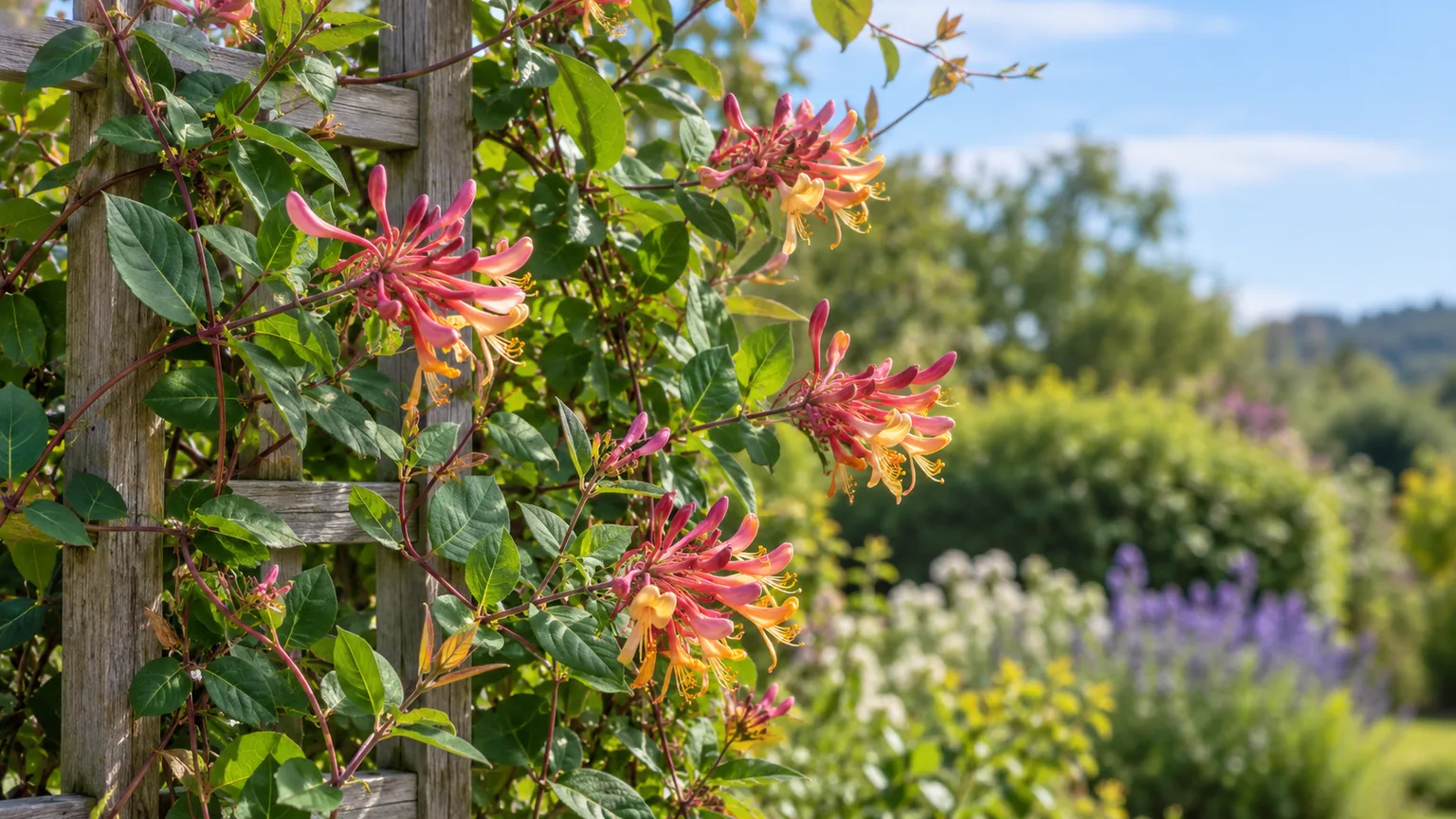
Goldflame honeysuckle is a vigorous, fragrant vine grown for summer clusters of rose-pink flowers with yellow-orange throats. It can climb a trellis or fence, spread over a wall, or be pruned into a broad shrub, so the first decisions are about its identity, space, and support—not fertilizer. A well-sited plant needs regular attention while it establishes, then mostly seasonal watering and selective pruning.
The name deserves a quick check before you buy. The cultivar is listed botanically as Lonicera × heckrottii ‘Gold Flame’, but “goldflame honeysuckle” is also used loosely for related plants. Match the nursery tag to the botanical name and bicolor flowers, then check the invasive-plant guidance for your region rather than treating every honeysuckle as the same species.
Is Goldflame honeysuckle the plant on your tag?
Gold Flame is a named selection of the hybrid Lonicera × heckrottii. The Royal Horticultural Society’s plant profile describes it as a deciduous or semi-evergreen climber with fragrant flowers that are deep pink outside and orange-yellow inside; the Missouri Botanical Garden profile gives a similar description and notes a twining vine or small shrub habit. Those traits are more useful for confirming the plant than the common name alone.
The exact parentage is sometimes given as a cross involving L. americana and L. sempervirens, but the Missouri Botanical Garden profile qualifies that identification as possible rather than certain. You do not need to resolve the plant’s history to care for it. For garden planning, verify the label says L. × heckrottii ‘Gold Flame’ (or the accepted spelling used by the seller) and expect an ornamental hybrid rather than a native species selected for local restoration.
Identify the hybrid by its flowers and growth
Look for opposite, oval leaves on reddish or green twining stems and tubular flowers gathered in terminal whorls. The outer petals are rose to deep pink; the throat is yellow or orange-yellow. Flowers are strongly fragrant, and a mature vine may carry several bloom clusters along sunlit shoots. Flowers in a nursery photograph can vary with light and age, so check the plant name as well as color.
A label that says only “honeysuckle” is not enough to make a sound ecological decision. The genus includes shrubs and climbers with very different origins and behavior. The RHS profile lists Gold Flame separately as a named cultivar; the Missouri Botanical Garden also notes that the common name “goldflame” has caused confusion between the hybrid species and the cultivar.
Related honeysuckles do not share one invasive status
Do not transfer the invasive reputation of Japanese honeysuckle (Lonicera japonica) or Amur/bush honeysuckle (L. maackii) to Gold Flame, and do not assume a cultivated name automatically means a plant is safe everywhere. NC State Extension’s genus overview identifies Japanese and Amur honeysuckles as serious weeds in North America while noting that other Lonicera species are garden-worthy. The Missouri Botanical Garden describes Gold Flame as a hybrid, distinct from those species.
That is enough to distinguish the plants, but it is not a universal legal or ecological clearance. Invasive-plant lists are regional, and climate, seed production, and local regulation vary. Before planting near natural areas, check the state or provincial invasive-species list and ask your local extension service if the entry is unclear. After planting, remove any seedlings that appear outside the intended planting area and collect or clip ornamental berries if you want to reduce the chance of volunteer plants. Treat red berries as decorative, not edible; the RHS plant profile warns that the fruit should not be eaten and may be harmful.
Plan for mature size, light, and support
Give this honeysuckle the room and structure of a woody climber, not a compact perennial. The Missouri Botanical Garden profile lists a typical vine at 10 to 15 feet tall and 3 to 6 feet wide, with the option to prune it into a rounded shrub roughly 4 to 6 feet high. The RHS profile gives a broader eventual range of about 4 to 8 meters, reflecting differences among conditions and how the plant is trained. Use the smaller figure as a practical minimum, not a guarantee that a vigorous vine will stop there.
Choose its support before you dig. Gold Flame climbs by twining its stems around narrow elements; it does not cling to flat masonry by suckers or adhesive pads. A sturdy trellis, arbor, fence wires, or espalier wires give it something to wrap around. The Royal Horticultural Society’s climber guide advises putting supports in place before planting and tying in climbers that need help finding the framework. For this woody vine, avoid a lightweight fan trellis that will flex once stems mature.
Give it sun and soil that drains
For the fullest flowering, choose a site with several hours of direct sun. Gold Flame tolerates partial shade, but fewer direct-light hours usually mean fewer flowers and more leaf growth. Afternoon shade may help in very hot climates, provided the plant still receives strong morning or midday light. If the site is shaded most of the day, choose a shade-adapted climber instead of expecting fertilizer to compensate.
The plant prefers soil that holds some moisture but does not stay waterlogged. The RHS plant profile lists clay and loam among suitable soils and specifies moist but well-drained conditions; the Missouri Botanical Garden likewise recommends average-moisture, well-drained soil enriched with organic matter. Heavy soil is not automatically a problem if water moves through it. If a test hole stays full of water long after rain, plant on a raised bed or select another location rather than trying to fix a drainage problem with a pocket of compost.
Plant it with the trellis already in place
Spring or early autumn planting gives roots time to settle in mild weather; in colder climates, spring avoids sending a new plant into its first winter before it has rooted. Install the support first so you are not driving posts or digging around the root ball afterward. If you are using a fence or wall, leave enough air space to reach the back for pruning and to prevent the foliage from being pressed flat against a hot surface.
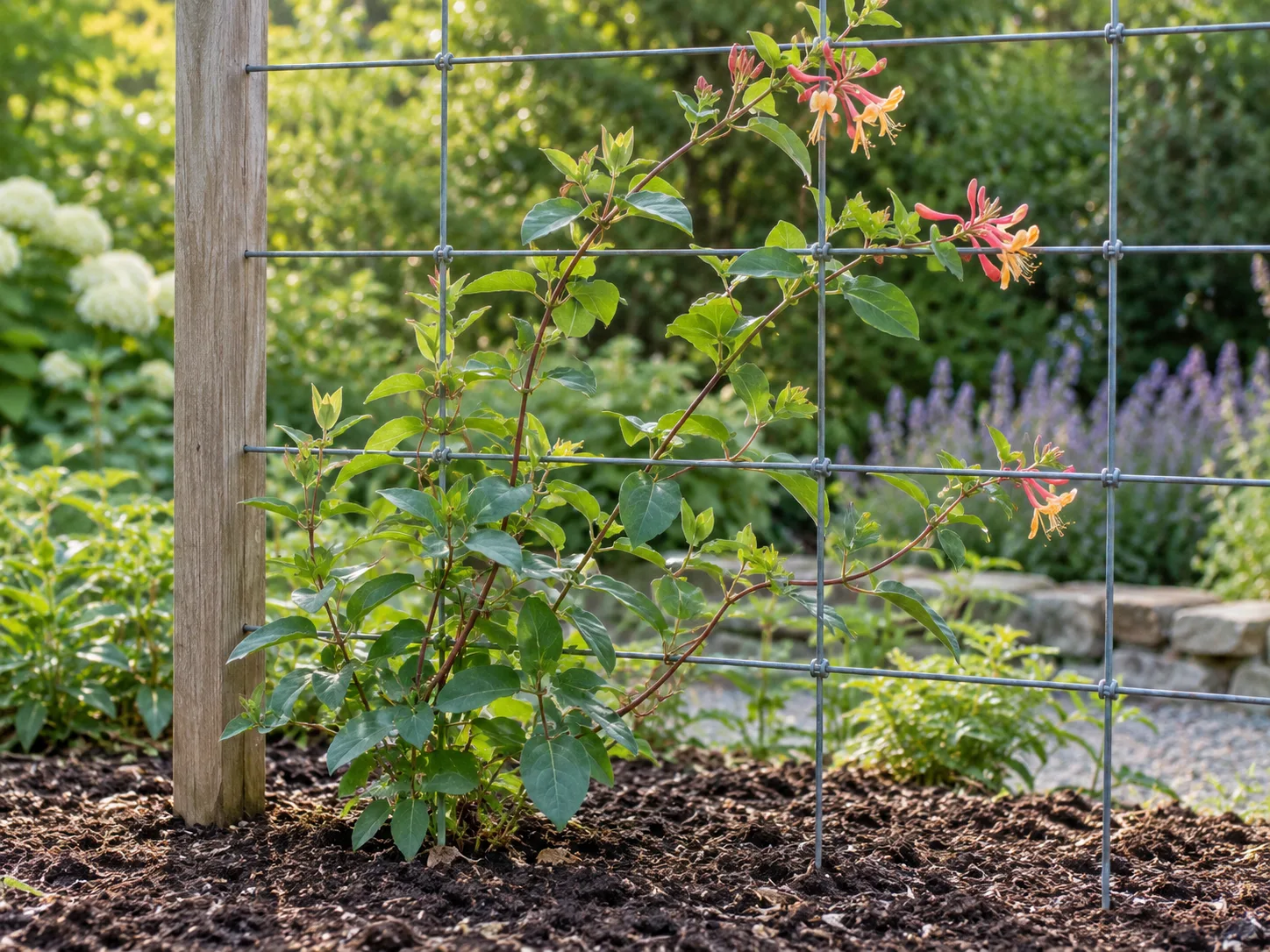
A planting sequence that protects the root ball
Water the nursery pot before planting and dig a hole about twice the width of the root ball, but no deeper than its current growing level. Loosen circling roots gently at the outside of the root ball; if they form a dense mat, tease them outward without stripping away all the potting medium. Set the plant so the top of the root ball sits level with the surrounding ground, backfill with the original soil, and water slowly to settle it.
Do not bury the crown or place a layer of gravel in the hole. A deep hole amended with a different soil can hold water like a basin, especially in clay. Keep the main stem several inches away from the trellis post, then loosely tie young shoots to the support with soft garden ties. Honeysuckle twines, but young stems may need direction until they reach the framework. Aim several shoots in different directions rather than winding every stem into one tight bundle.
Water, mulch, and feed only as needed
During the first growing season, check the soil at the root zone a few times a week during dry weather. Water when the upper inch or two begins to dry, applying enough to moisten the root ball and surrounding soil rather than sprinkling only the surface. A pot-grown plant can dry faster than the ground around it, and new roots cannot yet draw on a broad area. Reduce watering after rain and do not keep the planting hole saturated.
Once established, Gold Flame generally needs supplemental water only during prolonged hot, dry periods. Check below the mulch before watering; a dry surface can hide moist soil beneath it, while a very wet surface suggests a drainage issue. A wall or fence can create a rain shadow that keeps the root zone drier than the open garden nearby, a practical point highlighted in BBC Gardeners’ World’s general honeysuckle guide. A 2-inch layer of shredded bark or compost helps even out moisture and suppress weeds. Keep the mulch a few inches away from the stem so the base stays airy.
Skip routine high-nitrogen feeding. A plant producing long leafy shoots but few flowers may already be getting more nitrogen than it needs. If the soil is poor or growth stays weak after you have corrected light and drainage, use a soil test before adding fertilizer. A light application of balanced slow-release fertilizer in spring can be reasonable when a test or local guidance supports it, but an automatic annual dose is not necessary. Healthy roots, sun, and sensible pruning have more influence on flowering than a fixed NPK formula.
Prune to control size without losing the show
Gold Flame can be maintained as a loose climbing framework or cut back to form a broad shrub, but pruning timing affects flowers. Its heaviest display is commonly reported from June through August, with lighter flowers continuing into fall on new growth in warm conditions. The RHS climber pruning guide lists it in group 11, which calls for little routine pruning in established climbers. The Missouri Botanical Garden profile notes that Gold Flame can continue flowering on new growth into fall. That supports a light post-bloom tidy for routine control and more substantial shaping before spring growth begins. General advice agrees that flowering season changes the safest timing: BBC Gardeners’ World separates pruning by when climbing honeysuckles flower, and Gardening Know How recommends sparing spring cuts for summer-flowering vines and reserving late-winter renovation for severely overgrown plants. Use these as general timing principles, then let the Gold Flame plant’s bloom and local climate guide the exact date.
Shape lightly around the flowering season
For routine tidying, remove dead, broken, or crossing stems whenever you notice them, and tie in new shoots through the growing season. After the main flowering flush, shorten only the shoots that have escaped their space or block access. This retains much of the vine’s framework while preventing it from becoming a tangled curtain.
If you need more substantial size control, late winter or early spring before active growth is a practical window for a plant that continues some flowering on new growth. Avoid shearing the whole plant into a tight ball: it creates dense outer growth and can leave a bare, shaded interior. Instead, trace an overlong stem back to a side shoot or healthy bud, and remove a few of the oldest or weakest stems at their base to open the plant.
Renovate an overgrown vine in stages
A neglected vine may be leggy, congested, or bare at the bottom. Thin it gradually over two or three seasons, removing roughly a third of the oldest stems near the ground each year and keeping young, well-placed shoots to rebuild the framework. This staged reset lets you preserve flowers and green cover while improving light and air through the plant.
Hard pruning all the way to the ground is an option only when the plant is well established and you are willing to accept a smaller display while it resprouts. Do not use a severe cut as the first response to poor flowering if the actual cause is shade, saturated soil, or excessive nitrogen. Before pruning, look through dense stems for active bird nests and check local rules; timing and protections differ by place.
Read the flowers and make room for wildlife
The flower clusters explain why this vine is planted near patios and paths. Each bloom is a narrow tube with a pink exterior and a yellow-orange throat; groups form at the ends of shoots, and the fragrance is easiest to notice when the flowers are open on a warm day. Missouri Botanical Garden lists showy, fragrant flowers and attraction to hummingbirds and butterflies. The RHS plant profile also recommends the plant for wildlife gardens.
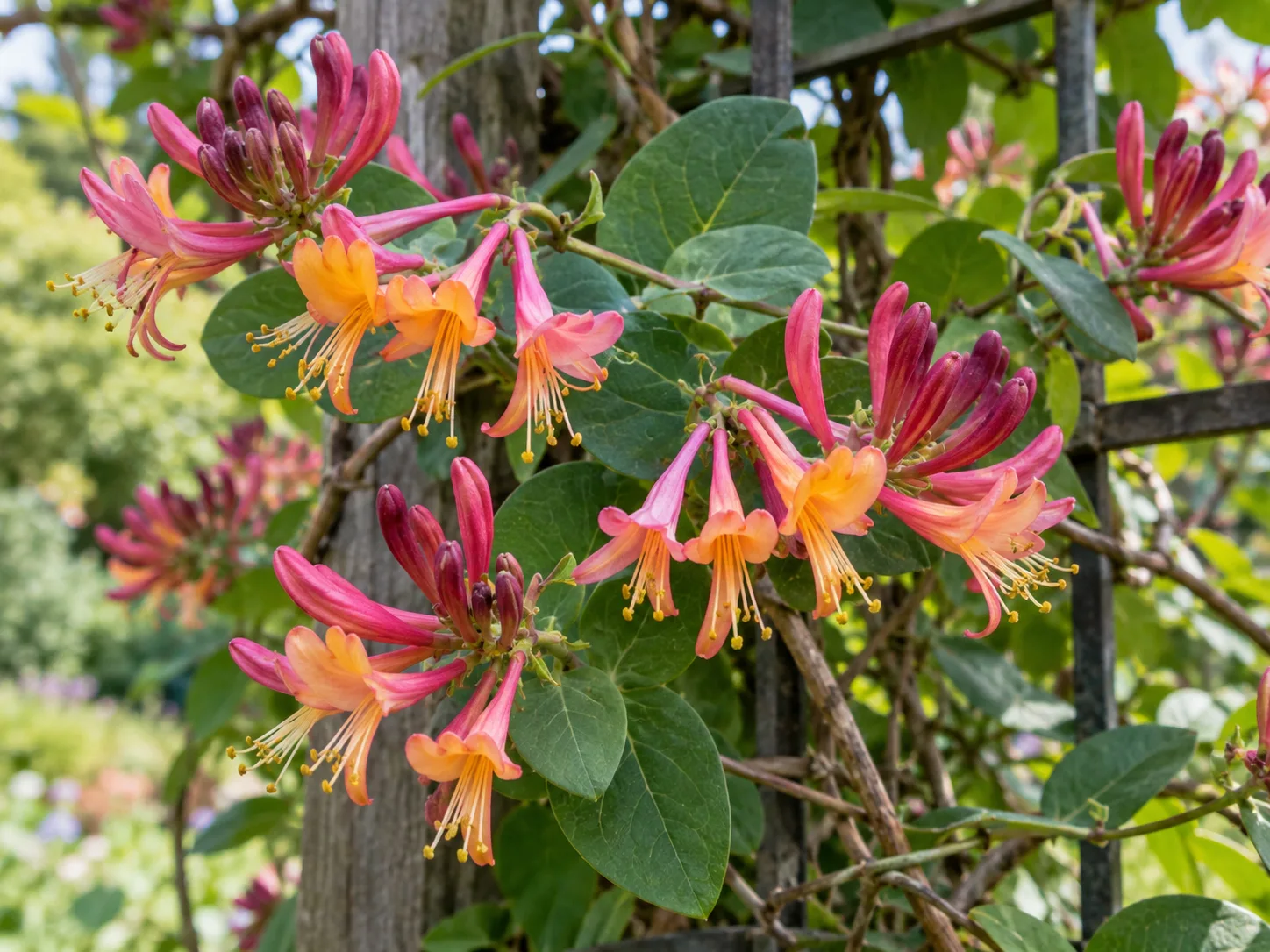
Peak bloom depends on climate, plant age, and sun. Missouri Botanical Garden lists June through August as the main period and notes lighter flowering into fall; the RHS describes its flowering as late summer. That difference is a reminder to treat a calendar as a regional guide, not a promise. A young plant may spend its first seasons building shoots and roots, while a warm, sunny site can extend the display later than a cooler garden.
Berries may follow the flowers, but they are ornamental and should not be eaten. The RHS plant profile flags the fruit as potentially harmful and advises keeping people and pets from consuming it. Flowers and berries can be part of a garden’s wildlife value, but avoid promising a particular species will visit: animal activity depends on what lives nearby, the season, and the rest of the habitat. If you want to encourage wildlife, let some flowers mature while keeping berries away from small children and pets.
Grow Goldflame honeysuckle in a container
A large container can work on a sunny patio, but the vine still needs a substantial root zone and a support fixed independently of the pot. Choose the largest practical frost-resistant pot with several drainage holes; a container that tips when the vine catches wind is too small or too light. Use a well-draining outdoor potting mix and secure the trellis to a wall or other stable structure rather than relying on a stake inserted into loose mix.
Expect to water more often than a ground-planted vine, especially in summer, because the pot’s limited soil volume warms and dries quickly. Check moisture with a finger rather than following a daily schedule, and flush the mix thoroughly when you water so salts do not build up. Repot when roots crowd the container, growth declines despite suitable care, or water runs straight through without wetting the root ball. Move the plant into a slightly larger pot or refresh some of the mix while preserving the root crown.
Roots in a container experience colder temperatures than roots in the ground. In a cold-winter region, place the pot in a sheltered location, insulate the sides, or move it into an unheated protected area if severe freezes are forecast. Do not bring a dormant hardy climber into a warm living room; warmth can disrupt its seasonal rest and encourage weak growth.
Propagate by layering or cuttings
Layering is usually the simplest way to make a genetically matching plant. In spring or early summer, choose a flexible, healthy shoot that can reach the soil without snapping. Loosen a small patch of soil beside the parent, bend a section of the stem down, and bury one or two leaf nodes about an inch or two deep while leaving the growing tip above ground. Pin the stem with a wire peg or stone and keep the patch evenly moist.
Check for resistance only after several weeks of active growth; tugging too early can break new roots. Once the buried section has rooted well, sever it from the parent with clean pruners and move it during mild weather, keeping as much of its new root system intact as possible. You can also leave it attached until the plant is dormant if roots are slow to form. The RHS plant profile includes layering and hardwood cuttings among propagation options for this cultivar.
Hardwood cuttings are another route in autumn: take healthy, pencil-thick sections from mature stems after growth has hardened, mark which end was the base, and place them in a free-draining propagation medium. Not every cutting will root, so take more than one and keep them cool, protected from drying winds, and not waterlogged. Do not expect seedlings from berries to reproduce Gold Flame exactly. As a hybrid selection, seed-grown offspring may vary in flower color, vigor, or habit; use layering or cuttings when you want to preserve the named cultivar.
Prepare it for winter in your climate
Gold Flame is listed for USDA zones 5 through 9 by the Missouri Botanical Garden, while the RHS rates it H5. These ratings describe typical winter tolerance under different systems; they cannot account for every exposed site, freeze-thaw cycle, or container. The Missouri Botanical Garden specifically advises planting it in a sheltered location in zone 5, where it may not be reliably hardy. If your winters are colder than that guidance, choose a more reliably hardy climber or grow Gold Flame in a protected microclimate.
In cold climates the plant may drop its leaves and go dormant; in mild winters it can remain partly evergreen. Do not mistake normal seasonal leaf loss for a dead vine. Water container plants before the soil freezes if they are dry, but do not leave the pot sitting in a saucer of winter rain. After heavy snow or ice, wait for stems to thaw before gently removing only what is safe to reach; frozen branches snap easily. A light mulch over the root zone can moderate soil swings, but keep it off the stems.
Troubleshoot leaves, pests, and missed blooms
Start with the pattern of symptoms before treating. A few curled tips in spring may reflect aphids; widespread powdery growth, spotted leaves, or sudden wilt point to different conditions. Check the underside of leaves, the moisture around the roots, and whether nearby plants show the same issue. Correcting a site problem is more effective than applying a spray to a plant that is simply stressed.
Respond to aphids and mildew without overreacting
The RHS plant profile lists honeysuckle aphids, thrips, and glasshouse whitefly as possible pests; the Missouri Botanical Garden reports no serious insect problems but notes that powdery mildew and leaf spots may appear, especially in hot, humid summers. A small aphid colony can often be dislodged with a firm stream of water, then rechecked in a few days. Avoid broad insecticide sprays while flowers are open, when pollinators are visiting, and use any product only if its label permits the intended plant and target pest.
For powdery mildew, first improve airflow by thinning congested stems, keep the plant out of deep shade, and water soil rather than wetting foliage late in the day. Mildew on a few leaves rarely justifies a home-mixed detergent remedy; dish soap can injure leaves, and baking soda is not a reliable substitute for correcting the conditions that favor disease. Remove badly affected fallen leaves and dispose of them rather than leaving infected debris in a dense planting.
Find the cause of a weak flowering display
If the vine is healthy but flowering is sparse, check conditions in this order: available sunlight, plant maturity, last year’s pruning, and fertilizer history. Partial shade may be enough for survival but not for a showy bloom. A recently planted vine can direct energy into roots and framework first; give it time to fill its support instead of cutting it back for shape every few weeks.
A late or severe prune can remove the shoots carrying flower buds, while a hard late-winter trim may delay the display even if the plant later flowers on new growth. Excess nitrogen can also favor leaves over blooms. If leaves are pale or shoots are weak, confirm drainage and check for pests before feeding; yellowing in waterlogged soil is not fixed by fertilizer. When all these factors are suitable, allow a full growing season before deciding a mature plant has permanently stopped flowering.
Conclusion
Goldflame honeysuckle is a rewarding choice when you can give a fragrant, vigorous vine a sunny position, well-drained soil, and a sturdy structure. Confirm the botanical name, water consistently while it establishes, and prune selectively around its bloom cycle. Treat common names and invasive status as regional questions, and keep its ornamental berries away from people and pets who might try to eat them.



