Rose of Sharon Seedlings: How to Remove and Prevent
Stop Rose of Sharon seedlings before they spread. Learn when to remove seed pods, how to pull young volunteers by the roots, and what to monitor next spring.

If Rose of Sharon seedlings are appearing under a shrub, across a bed, or in the lawn, the fastest dependable fix is to remove each volunteer while it is small and prevent new seeds from reaching open soil. The job is easier after rain, when a hand pull or narrow trowel can lift the young root rather than snap the stem above it. Then check the parent shrub for developing seed capsules and remove them before they dry and split.
Rose of Sharon (Hibiscus syriacus) is a deciduous woody shrub, also called shrub althea. Its brown, five-valved seed capsules can remain on the plant into winter, and it is reported to naturalize or behave invasively in some regions—not everywhere. North Carolina State Extension records that regional concern in states including Virginia and Kentucky, while the University of Connecticut Plant Database flags an invasive tendency in Connecticut (NC State Extension; University of Connecticut Plant Database). If your area treats it as a concern, prevention is not only a neatness issue; it can reduce volunteers moving beyond the garden.
Quick answer: remove small seedlings and stop the next crop
For seedlings already growing, pull them when the soil is moist, gripping close to the soil line and easing the root out slowly. Use a hand fork or narrow trowel for a larger volunteer, then check that the crown and main root came out instead of breaking off. For future seedlings, remove the swollen capsules after the flowers fade but before they turn brown and open; the exact date varies with climate and cultivar.
A simple priority order keeps the job manageable: remove volunteers outside the intended bed first, pull the smallest ones before they become woody, then inspect the parent shrub for capsules. If only a few seedlings appear in a lawn, mowing may keep them short, but it is not a reliable substitute for removing a stem that is becoming woody. A dense bed with a mulch layer can make seedlings easier to spot and can reduce bare soil, though mulch does not guarantee that every seed will be blocked.
Why Rose of Sharon keeps producing volunteers
Each flower that is pollinated can develop into a capsule containing seeds. When a mature capsule dries and splits, seeds fall near the parent or can be moved farther by routine garden activity, such as raking, sweeping, or carrying cut branches. Savvy Gardening describes finding dozens of young plants in a lawn after seed pods were left to dry; its practical cutoff is before capsules turn brown and open (Savvy Gardening).
The shrub’s late-season flowers mean capsule formation can overlap with other fall garden work. A missed cluster can remain attached through winter, so an apparently tidy dormant shrub may still carry seed-bearing structures. NC State Extension describes the fruit as a brown capsule about three-quarters of an inch wide that persists through winter; its five valves help explain how a pod opens and releases seed (NC State Extension).
Seedlings can also appear away from the parent where seeds settled in lawn gaps, gravel, fence lines, or freshly disturbed soil. That pattern does not prove every distant volunteer came from this shrub, so identify the plant before treating it. The useful management idea is to interrupt both ends of the cycle: catch capsules before they release seed, and remove any volunteers that get through.
Identify a seedling before you pull it
Young Rose of Sharon plants may first look like a generic broadleaf weed. As true leaves develop, look for simple leaves arranged alternately along the stem, with coarse teeth and usually three shallow lobes; NC State’s plant profile lists those traits as quick identification clues. Seedlings near the parent are likely candidates, but leaf shape alone may not be enough when they are very small or growing among similar plants.
A seedling begins as a separate plant from a seed and has its own stem base and root system. A sucker is a shoot connected to the parent shrub’s roots or base, so digging at the visible shoot may reveal a connecting root rather than a separate seed-grown plant. The distinction matters if you want to keep the mature shrub: pulling every shoot around its base can injure roots or remove a stem that belongs to the framework.
If you are unsure, wait until the plant has several true leaves and inspect where the shoot enters the soil. Trace the stem gently with a finger or hand fork rather than yanking it. For a volunteer several feet from the shrub, especially in lawn or gravel, a separate seedling is more likely; for a shoot emerging directly beside a trunk or from a surface root, check for a connection before cutting.
Choose a removal method by size and site
Use the plant’s stem and location to choose a method instead of reaching first for a spray. A small seedling in loose garden soil is a hand-pulling job; one in a tight perennial crown calls for a narrow tool and slower work; an older, woody sapling may need careful digging. Trees Atlanta’s Rose of Sharon removal guidance likewise treats uprooting as workable for small stems and recommends a different approach as woody stems become larger (Trees Atlanta).
| Situation | First choice | Main caution |
|---|---|---|
| Tiny seedling in damp, open soil | Hand-pull low and lift the root | Stop if the stem snaps; loosen soil first |
| Several seedlings among perennials | Hand fork or narrow trowel | Work slowly to avoid neighboring roots |
| Volunteer with a firm, woody stem | Dig around the root crown | Do not lever against a tree trunk or shrub |
| Seedling in regularly mowed lawn | Remove by hand where practical; mow between checks | Mowing can hide or weaken growth without removing the crown |
| Seed pods still on the parent shrub | Snip and bag capsules before they open | Do not shake or scatter dry pods |
| Large unwanted parent shrub | Plan root removal or consult local guidance | This is a different job from clearing seedlings |
The table is a starting point, not a diameter rule. Soil texture, nearby roots, slope, and whether the plant is growing in paving or a cultivated bed change how safely you can work. If a volunteer is near a valued plant, protecting that plant is more important than extracting every fragment in one pull.
Stop future seedlings by removing seed capsules
Deadheading is optional for keeping Rose of Sharon flowers coming, but it becomes useful when you want fewer volunteers. Focus on the developing capsule just behind a spent flower, not only the soft petals; once the flower drops, that rounded green structure may continue to mature. Remove the capsule with clean hand pruners or snips, taking care not to cut the leafy shoot or a nearby unopened bud.
Walk around the whole shrub rather than trimming only the visible front. Rose of Sharon can be tall and wide, and pods can hide in the interior or on branches that overhang a fence. Savvy Gardening recommends trimming capsules before they turn brown and open, and Planet Natural also advises removing spent flower heads when seedling spread is unwanted (Savvy Gardening; Planet Natural).
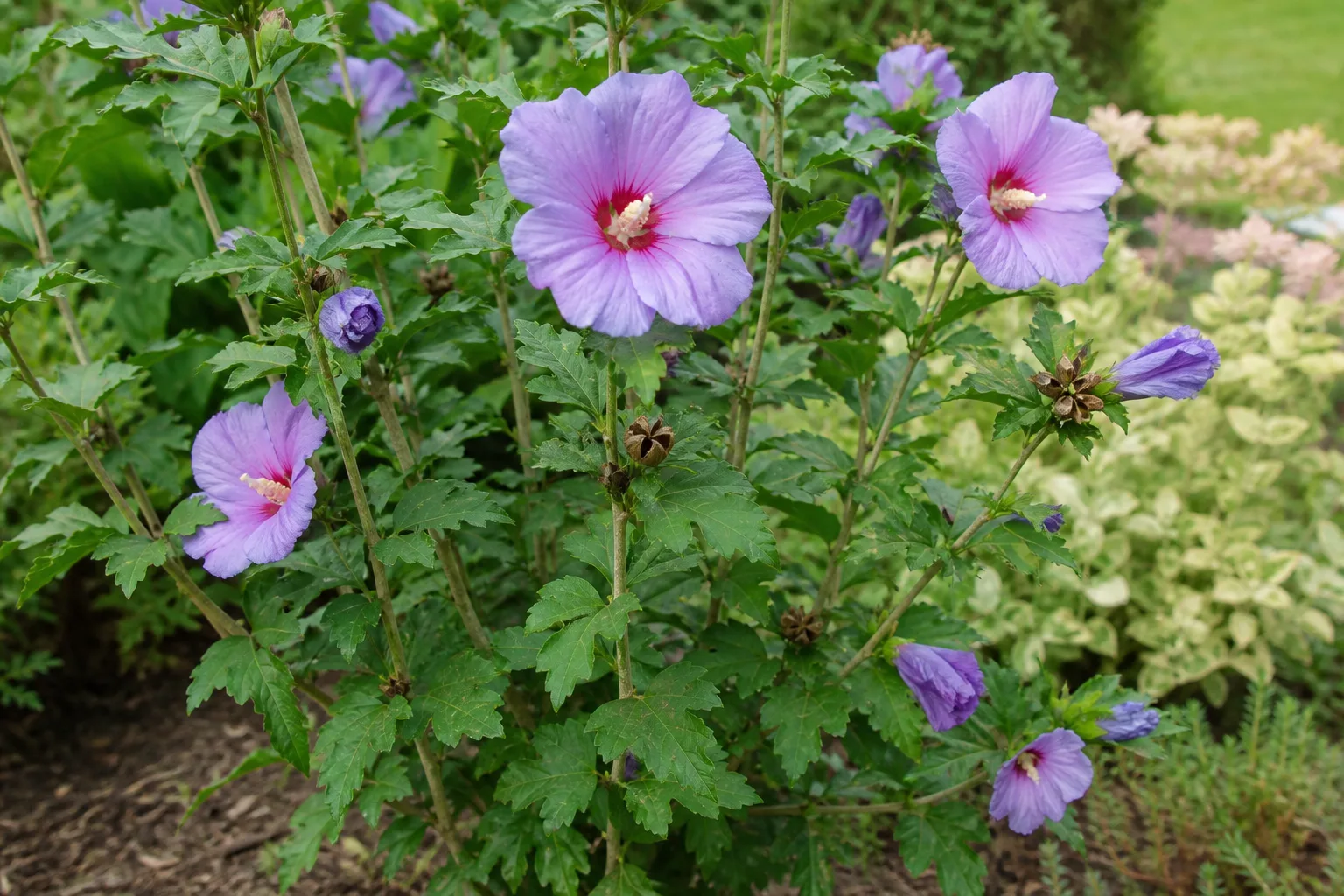
If the shrub is large, split the work into reachable sections and use a stable step ladder only on level ground, with a helper if needed. Do not climb into the shrub or cut overhead while looking up; hire a qualified pruning service if you cannot reach pods safely. Selective capsule removal is a light cleanup task, not a reason to shear the entire shrub or remove healthy branches.
Find the right window for seed-pod cleanup
Start checking as the flowering season winds down. Rose of Sharon blooms over an extended period, so flowers and developing capsules may be present together; inspect weekly while new flowers continue, then make a final pass when flowering slows. In many climates, the capsules begin green and plump before becoming tan or brown, but weather and cultivar can shift the timing.
The practical deadline is before a dry capsule opens. Do not wait for a single calendar date such as “October,” because warm regions, cool regions, and plants with different bloom periods will not mature at the same pace. If capsules are already brown and starting to split, place a bag or tarp beneath the branch before cutting and avoid shaking the stem.
You can remove seed pods without carrying out major structural pruning. The main shaping window is usually late winter or early spring, while pod cleanup can happen after flowering; this keeps a seed-control task separate from a bigger cut that changes the shrub’s form. The RHS describes Rose of Sharon as a deciduous shrub flowering in succession from midsummer into autumn, which is another reason to follow the plant’s stage rather than a fixed date (Royal Horticultural Society).
Bag pods and prunings without spreading seeds
Bring a paper yard-waste bag or a small bucket to the shrub before you start. Place cut capsules directly into it, especially if they are already dry; piling seed heads on a path or tarp and moving them later can shake loose seeds. Keep seed-bearing branches out of a casual home compost pile unless you know the composting process will reliably destroy viable seed.
Follow local collection rules for woody yard waste. Some municipal programs accept bagged seed heads, while others specify trash or yard-waste bins; use the local option that contains the material instead of dumping it at a woodland edge, creek, vacant lot, or roadside. Do not transport live seedlings to a natural area or give them away if local invasive-plant advice says to prevent spread.
For a shrub whose pods have already split, rake or hand-collect visible capsules beneath it, but avoid deep tilling that buries or redistributes seeds and damages roots. You may not find every seed, and the goal is not to sterilize the soil. Removing the current seedlings and watching for the next flush is more realistic than disturbing the entire bed.
Pull young seedlings while roots are shallow
The easiest time to pull a volunteer is when it is small and the soil is damp but not waterlogged. After rain or a slow watering, grip the seedling as low as you can, close to the soil surface, and pull with steady upward pressure. A quick jerk often snaps the stem and leaves the root crown behind, which makes the job look finished even though the plant may regrow.
If the plant resists, stop and loosen the soil with a hand fork or narrow trowel a few inches from the stem. Angle the tool under the root, gently lift the soil, and then ease the plant out while supporting the stem near its base. Trees Atlanta’s field guidance says to shake soil from uprooted Rose of Sharon so the roots can be checked; doing that over the bed keeps useful soil in place and makes a missed root easier to see (Trees Atlanta).
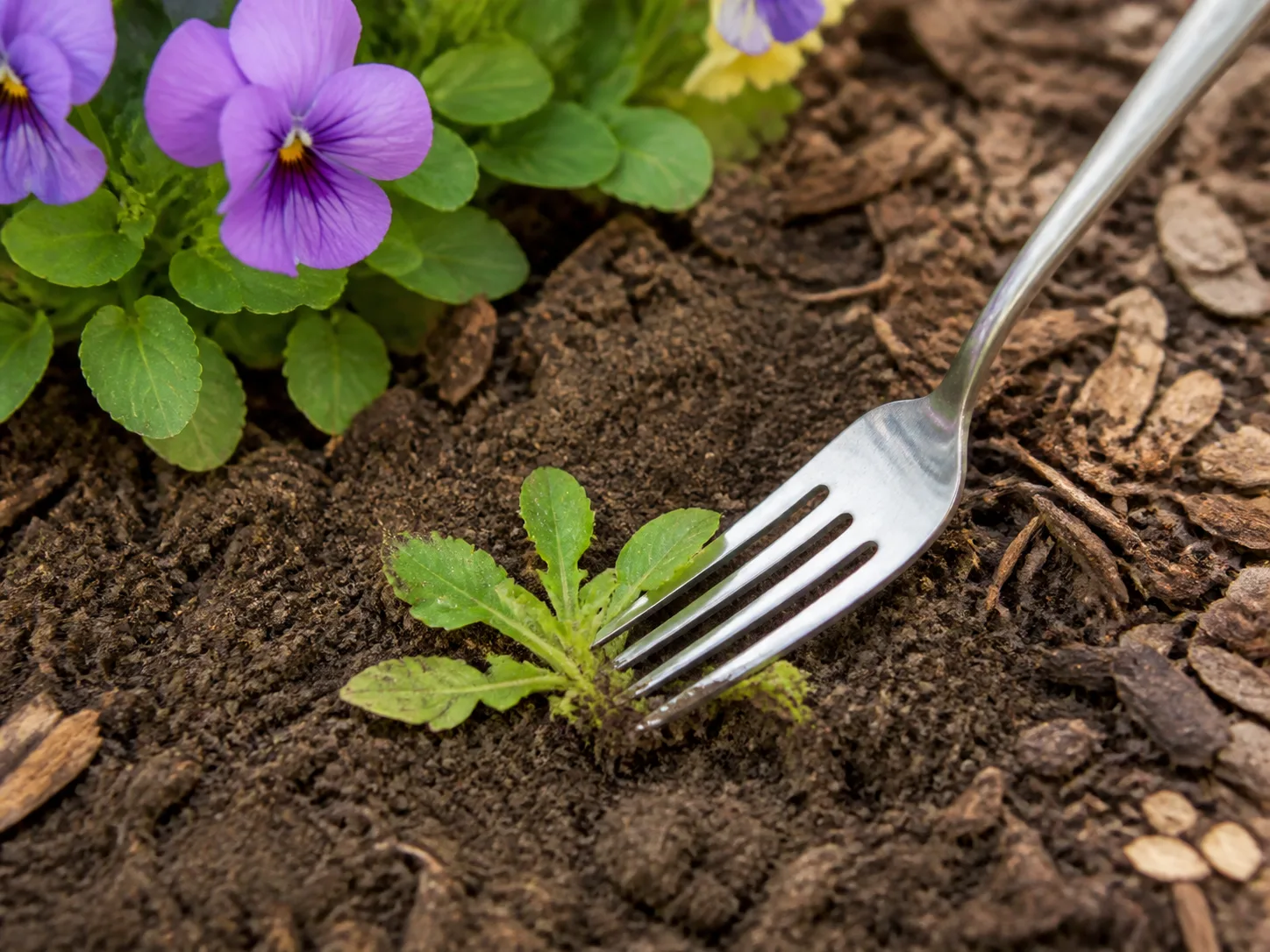
After removal, inspect the plant for a small taproot or branching root crown, then firm the disturbed soil back into the hole. If the stem breaks, use the tool to expose the remaining crown rather than digging a large trench. A tiny, pale root fragment is not the same as a mature root system; the practical check is whether a rooted stem remains in the soil and whether new growth appears at that point.
Dig out a woody volunteer without harming neighbors
Once a seedling has a firm stem, hand-pulling alone may tear the top away. Water the area the day before if the soil is dry, then clear mulch or debris so you can see where the stem meets the soil. Use a narrow spade or trowel to loosen a circle around the root crown, staying far enough away to avoid slicing into the seedling before you have exposed the roots.
Work the soil loose on several sides, then lift the root system while keeping the stem upright. Do not use a nearby tree or established shrub as a fulcrum; prying hard against its roots can cause more damage than leaving a small volunteer for another pass. If the volunteer is large enough to require a lever, a root saw, or repeated heavy force, it may be wiser to call a qualified garden professional, especially in a crowded bed.
Refill the hole with the original soil and water the area if you disturbed roots of neighboring plants. Monitor the exact spot through the next growing period; if a new shoot appears, trace whether it comes from a missed crown or a connected root. That check is more useful than repeatedly cutting the top off without learning why it returned.
Handle seedlings in lawns and narrow gaps
A Rose of Sharon seedling in a lawn can be cut by routine mowing, but mowing is best treated as suppression and detection—not guaranteed removal. A young seedling may weaken if it is repeatedly cut before it establishes, yet a woody crown can persist below mower height, and infrequent mowing gives it time to grow between passes. Pull or dig it while it is still small if you want to remove that individual plant.
Keep the lawn dense and avoid leaving bare soil beside the parent shrub where seed can settle and germinate. At a fence line, gravel edge, or pavement joint, loosen only the seedling’s immediate root zone; broad herbicide or hot-water treatments can injure desirable plants and soil organisms around the gap. If you cannot remove it immediately, mark the location and return before the stem becomes woody.
In a bed, do not mow or string-trim close to valued perennials just to reach volunteers. Snip a seedling at the base only as a temporary stopgap when you cannot dig safely, then return to remove the crown when access improves. Keeping a short list of problem spots—under the shrub, along the hedge, near the lawn edge—turns an overwhelming flush into a quick inspection route.
Use mulch or smothering where it makes sense
Mulch is a supporting tool, not a cure for a seed-producing shrub. After pulling visible seedlings, apply a moderate, even layer of organic mulch over open soil and keep it away from the shrub’s stems. The cover reduces exposed germination space and makes new green shoots easier to spot, but seeds may still germinate in the mulch or in gaps at its edges.
For a small patch where no desirable plants need light, cardboard under mulch can temporarily block light while seedlings weaken. It is a poor fit around shallow-rooted perennials, groundcovers you want to retain, or the crown of the Rose of Sharon itself. Check under the barrier after several weeks and remove surviving plants; a tarp hidden under mulch is not a long-term substitute for pulling woody volunteers.
If you are cultivating a vegetable or flower bed, avoid turning the whole bed to bury seedlings. Deep disturbance can uncover or move seeds and damage established roots. Remove individual volunteers, restore the mulch layer, and keep intentional seed-sowing areas clear of barriers until the seeds you want have emerged.
Understand what preemergent products can affect
A preemergent herbicide is meant to interfere with germination, so it may also affect seeds you intend to sow in the treated area. It will not remove seedlings that have already emerged, and the product’s permitted uses, timing, and limits depend on its label. For a mixed garden border, that tradeoff can make hand removal and capsule prevention more practical than treating the ground broadly.
Do not apply a lawn or garden product just because it is sold as a weed preventer. Confirm that the exact product is labeled for the site and target use, follow every label direction, and keep it away from areas where you are starting flowers, vegetables, or cover crops. If you are unsure whether the product is appropriate, ask a local Extension office or licensed landscape professional rather than improvising a rate or mixing products.
For a few scattered volunteers, a preemergent often solves the wrong part of the problem: it leaves visible seedlings in place while reducing germination of other seeds. Choose it only when the full bed or lawn plan makes sense, not as a shortcut for one shrub’s capsules or one established sapling.
Know when a mature parent shrub needs a different plan
Removing one seedling is not the same as removing an established shrub. A mature Rose of Sharon has a larger woody framework and root system; digging it out can disturb nearby plantings, utilities, hardscape, and soil. If the shrub is healthy and the only issue is volunteers, begin with capsule removal and seedling patrol before deciding that the parent must go.
If you do want the parent removed, cut branches in manageable sections and plan how to lift or grind the root system without damaging adjacent plants. Trees Atlanta recommends uprooting small stems and describes cut-and-treat as an option for larger woody plants, but its herbicide guidance is specific to its setting; a home gardener should not copy a concentration or technique without a locally appropriate label and professional advice (Trees Atlanta). If chemical treatment is being considered, use only a product labeled for the exact site and purpose, and follow the label.
Where physical removal is practical, remove the stump and major roots that can be lifted without excessive excavation, then watch for any remaining shoots. Where roots run under a wall or neighboring shrub, a professional can assess whether staged cutting, stump grinding, or another local method is safer. Do not assume that cutting the canopy once will kill the shrub; woody plants can resprout, and follow-up is part of removal.
Follow a season-by-season control routine
A repeatable routine is easier than waiting until hundreds of seedlings are visible. During bloom, note when flowers are fading and capsules begin to develop; after flowering slows, inspect the whole canopy and clip pods before they turn brown and split. In late winter, look for persistent capsules that were missed, but bag them carefully because they may already be dry.
In spring, make a short circuit under the shrub and around nearby beds, fence lines, and lawn edges. Pull seedlings while they are small, especially after rain, and record any spot where a stem broke or returned. During summer, mow lawn volunteers on schedule while removing any individuals that are turning woody; in fall, repeat the capsule sweep and check local guidance if you are near natural areas.
You may need more than one season of monitoring because some capsules are easy to miss and seedlings do not appear all at once. That does not mean the removal method failed. It means the source produced another opportunity for germination, so keep the parent under observation and remove each new volunteer before it becomes a larger woody plant.
Decide whether to keep, replace, or propagate seedlings
If Rose of Sharon is welcome in your yard but the volunteer count is not, keep the parent and manage seed production before considering removal. A named cultivar described as producing little or no viable seed can reduce the workload, but verify the exact cultivar and current claim with the nursery or local Extension service. Regional status and cultivar behavior are not interchangeable, and a low-seed label is not a reason to ignore local invasive-plant guidance.
Seed-grown plants may not match the parent’s flower color or growth habit. Planet Natural notes that seedlings can show variation, so a volunteer is not a reliable way to reproduce a selected cultivar; use a named nursery plant or vegetative propagation when keeping specific traits matters (Planet Natural). If you want to save one seedling, choose a healthy one in a suitable location, transplant it while young and dormant or in mild weather, and be prepared to remove it if its eventual traits or local status make it a poor fit.
When seedlings repeatedly spread into places where the species is discouraged, removing the parent and choosing a locally appropriate alternative may be the more responsible long-term option. Check local invasive-plant guidance before planting a replacement, particularly near a woodland edge, stream corridor, or unmanaged lot. The right decision depends on local ecology as much as on how tidy the bed looks.
Avoid the mistakes that make the work return
The most common failure is cutting only the visible top. That may hide a stem for a while without removing its root crown, so look for the point where the plant enters the soil and loosen it before pulling. A second mistake is waiting until the seedling is woody; the same small trowel that works easily on a first-year volunteer may struggle once the roots and stem have thickened.
Do not prune seed-bearing branches over bare soil and then rake them later. Capture the capsules before they fall, and dispose of them according to municipal rules. Likewise, do not compost or dump seed pods where garden waste can be spread into a natural area; if you intentionally keep seed, store it separately and label it so it cannot be confused with waste.
Finally, do not treat every Rose of Sharon as invasive everywhere or assume it is harmless everywhere. NC State and UConn document concerns in particular regions, while a garden’s seed behavior also varies by cultivar and conditions. Check the current local plant list, then match your response to the site: remove volunteers near natural areas, monitor a managed ornamental bed, or replace the parent where the plant is a poor regional fit.
Conclusion
Get rid of Rose of Sharon seedlings while their roots are small: soften the soil, pull low and steadily, and use a hand fork or trowel if a volunteer resists. Then remove developing seed capsules before they dry and split, bag seed-bearing material, and revisit the lawn edge and beds next spring. That pairing—removing what has emerged and reducing what the parent can release—takes less effort than chasing woody volunteers year after year.
A few seedlings do not automatically mean the parent shrub must go. Check the local status of Hibiscus syriacus, consider how close the plant is to unmanaged ground, and decide whether ongoing capsule cleanup is realistic for your garden. If you keep it, make seed-pod checks part of fall care; if you remove it, plan for follow-up and choose a replacement suited to your region.



