Fiddle Leaf Fig Leaves Turning Brown: 6 Causes and Fixes
Diagnose brown fiddle leaf fig leaves by checking texture, position, soil moisture, and recent changes. Learn when to water, prune, or inspect the roots.
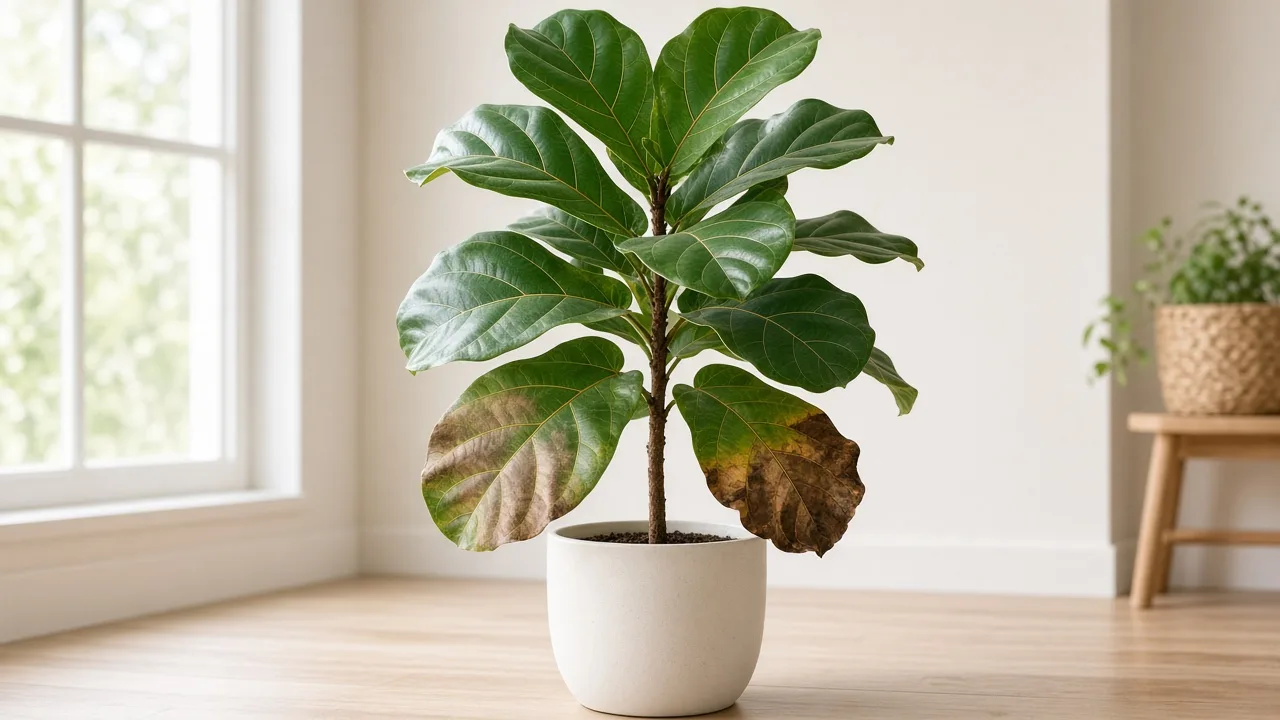
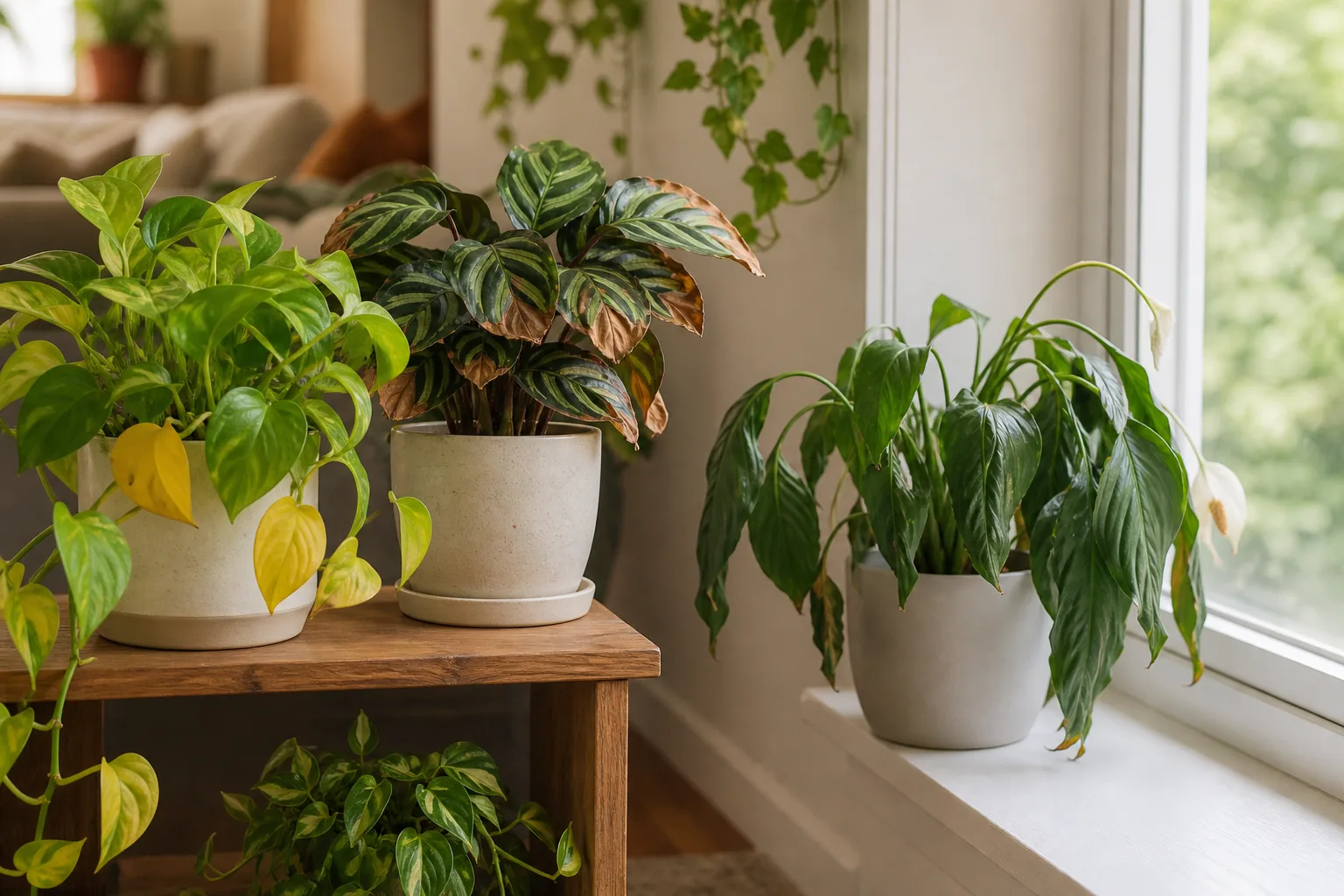
A brown patch is a clue, not a diagnosis. On a fiddle leaf fig, the same color can follow dry soil, roots kept wet too long, harsh sun, a cold draft, pests, or a leaf-spot disease, so start by checking the pattern and the pot before changing the routine.
North Carolina State Extension describes Ficus lyrata as a plant that prefers bright indirect light or partial shade and moist, well-drained soil; it also notes sensitivity to overwatering, afternoon sun, and temperature fluctuations near heating or cooling vents. Those details matter because brown leaves often reflect a mismatch between the plant’s environment and how quickly its roots can take up and use water. North Carolina State Extension’s plant profile is a useful baseline, but no single symptom reliably identifies the cause by itself.
Read the Leaf Pattern Before You Change Care
Look at several leaves, not just the most damaged one. Note whether browning begins at a tip, edge, center, or sun-facing side; whether the tissue feels dry or soft; whether new leaves are affected; and whether the soil is dry, lightly moist, or still wet well below the surface.
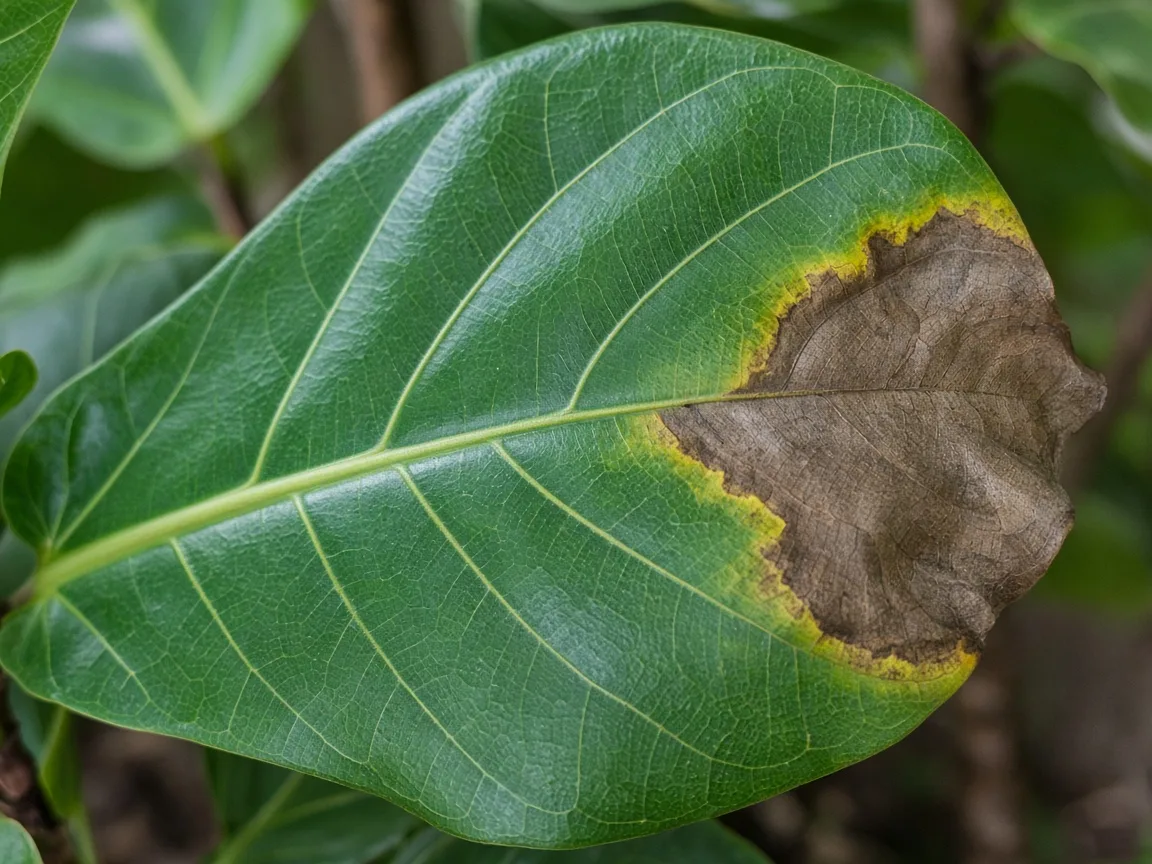
Brown tissue can show where damage is visible, but its position must be read alongside soil moisture and recent changes.
| What you see | What to check first | A useful next step |
|---|---|---|
| Dry, crisp edges on multiple leaves; soil is very dry | Moisture a few inches into the root ball and whether water runs around the sides | Rehydrate the whole root ball slowly, then water thoroughly |
| Dark or water-soaked spots; lower leaves yellow; soil stays wet | Drainage hole, standing water, and how long the mix remains damp | Stop scheduled watering; investigate drainage before adding more |
| Pale tan, dry patches on the window-facing side | Recent move, seasonal sun angle, and direct afternoon beams | Filter or soften the exposure without putting the plant in a dark corner |
| Fine stippling, webbing, sticky residue, or attached bumps | Leaf undersides, stems, and the newest growth | Isolate and identify the pest before choosing a treatment |
| New spots appear quickly across several leaves | Wet foliage, poor airflow, and whether marks are spreading | Separate from other plants and seek a closer disease diagnosis |
Treat the table as a triage tool, not a photographic test. For example, a dry-looking leaf can still come from a plant with damaged roots if its pot has stayed saturated; checking the soil resolves that contradiction better than guessing from color.
Timing adds another clue: damage that starts after a sunny relocation or a cold night points toward a recent exposure, while new marks continuing on untouched leaves suggest an ongoing problem. Gardening Know How’s brown-spot diagnosis guide likewise recommends comparing lesion position, texture, and spread rather than reading color alone.
1. Underwatering Dries Leaves from the Edges In
A fiddle leaf fig that goes too long without water may develop brittle, papery edges, curling, drooping, or leaf drop. The most useful confirmation is dry soil through more than the surface layer; if a wooden skewer or finger comes out dry several inches down and the pot feels unusually light, drought stress becomes more plausible than root rot.
Do not water by weekday alone. A fig in a bright, warm room can use water faster than one several feet from a window, while a large pot in cool, dim conditions may stay wet much longer; the plant’s use changes with light, season, temperature, pot size, and mix.
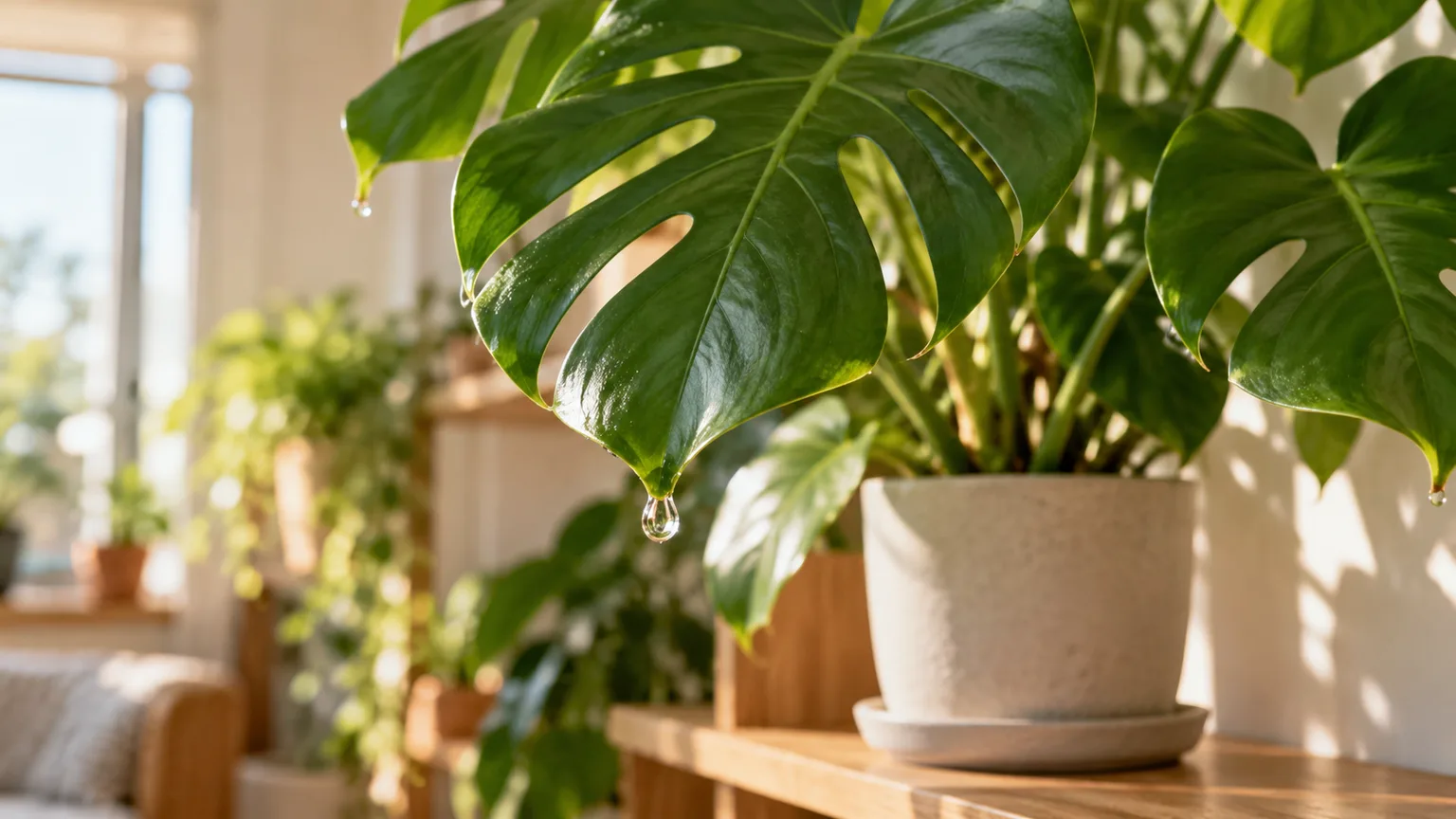
Water slowly over the soil surface until water drains from the pot’s holes. If very dry mix has pulled away from the pot and water immediately races down the gap, apply a small first pass, pause for several minutes, then water again so the root ball can absorb moisture rather than letting it bypass the soil.
Afterward, empty the saucer or outer cachepot. A Penn State Extension Master Gardener’s account describes checking about two inches into the mix, watering thoroughly, and letting the nursery pot drain before returning it to a decorative container; the practical point is to wet the root zone without leaving the bottom sitting in runoff. Penn State Extension also notes that extremely dry, shrunken soil can channel water down the pot wall instead of rehydrating evenly.
If you use a moisture meter, take more than one reading around a large pot because the surface and root ball can dry unevenly. Treat the meter as one clue alongside pot weight and touch; a single number does not replace checking whether water can drain freely.
2. Overwatering and Root Trouble Can Look Like Thirst
Overwatering does not mean one generous watering. It means the root zone remains oxygen-poor because watering is too frequent, drainage is blocked, or a dense mix and oversized pot stay wet too long; stressed roots then struggle to supply the leaves even though water is present.
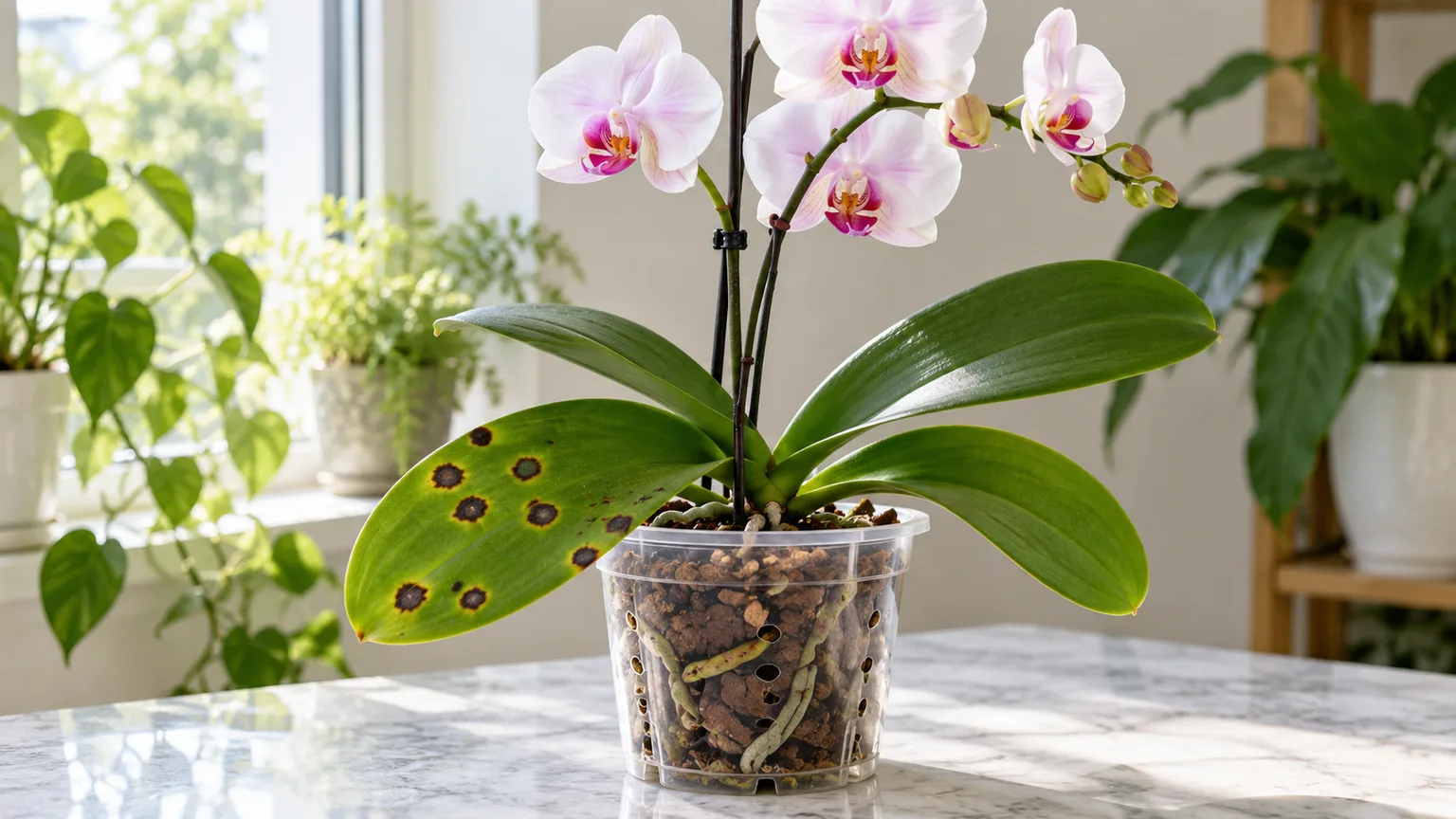
Look for a cluster of clues: the pot remains heavy or damp for days, several lower leaves yellow or drop, dark spots appear while the mix is wet, or the soil smells sour. North Carolina State Extension flags fiddle leaf figs as sensitive to overwatering and recommends well-drained soil; these signs should prompt a moisture and drainage check before you add more water. The image below shows a wet-root stress pattern, but even a visual match cannot establish root rot without checking the plant’s condition.
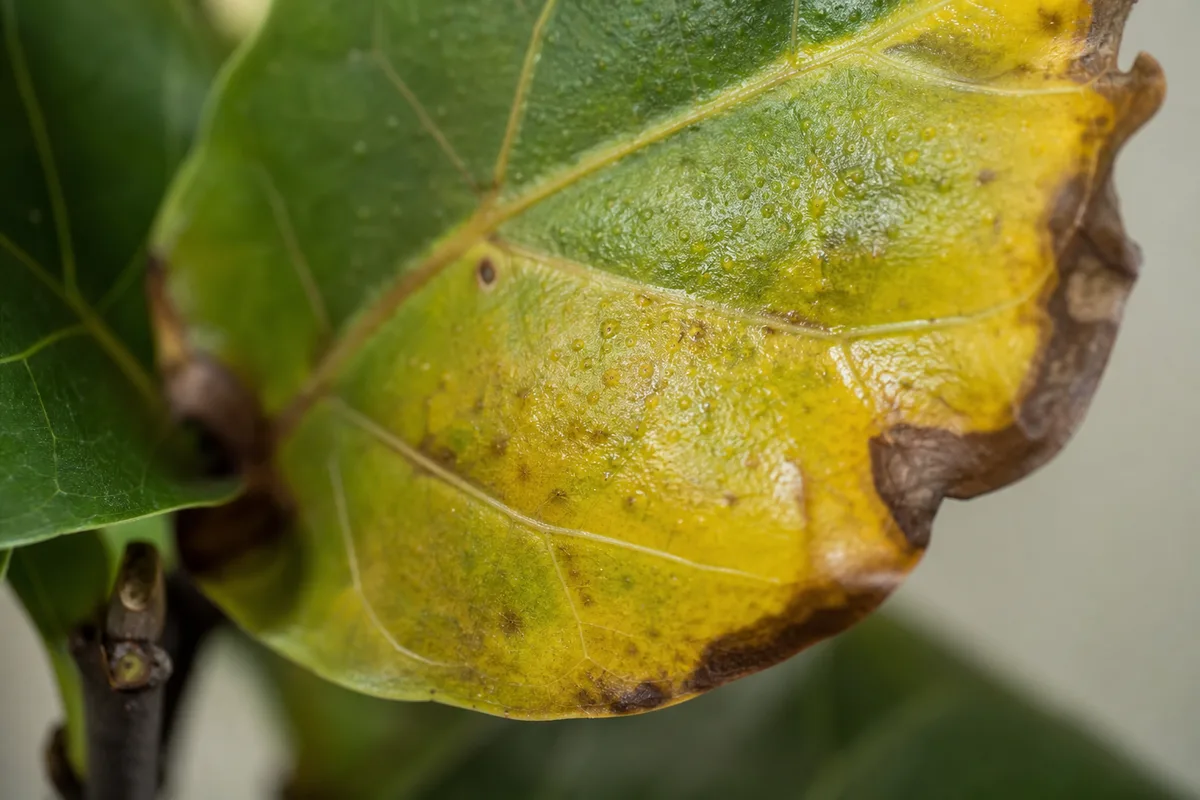
Wet soil plus spreading discoloration is a reason to check drainage and roots—not to pour in more water.
First check that the inner pot has an open drainage hole and that water can leave the outer container. If the pot has no hole, use it as a cachepot around a nursery pot with drainage, and pour away any runoff rather than leaving the plant to stand in it.
Do not immediately unpot a stable plant because one leaf has a spot. Root inspection is disruptive, and a repot can add stress if the soil is draining normally and the new growth is healthy; make that step only when persistent wetness, odor, limp growth, or several worsening leaves make a root problem credible.
When a root inspection is warranted
Slide the root ball out gently only when the potting mix remains soggy despite withholding water, the plant is declining across multiple leaves, or roots are visible at drainage holes and the container will not drain. Healthy roots are generally firm, while decayed roots may be dark, soft, and easy to pull apart; color alone is not enough because some healthy roots are tan from the mix.
If you find extensive soft roots, remove only clearly dead tissue with clean, sharp shears and repot into fresh, airy potting mix in a container with drainage. Choose a pot that fits the remaining root ball rather than a much larger one, and do not keep unpotting to check progress; let the plant settle and use soil moisture and new growth as your next evidence.
A decorative outer pot can still be used, but the plant should remain in a draining inner pot and runoff should be discarded. A gravel layer at the bottom of a pot does not make a container without drainage equivalent to one with an open hole; it can hide standing water from view while the root zone remains too wet.
3. Harsh Sunlight Scorches Exposed Leaves
Sun scorch is more likely when pale tan or bleached patches appear on the side of the plant that faces direct sun, especially after a move, a change in season, or a sudden increase in exposure. The damaged area usually dries and stays brown; it does not spread from leaf to leaf like an infection.
Fiddle leaf figs need strong light, but “indirect” is not a precise measurement. North Carolina State Extension advises bright indirect light or partial shade and protection from afternoon sun, while a House Plant Journal case study shows how a plant described as receiving indirect light can still sit too far from a window to receive useful brightness. Together, those points call for a balance: assess both the amount of daylight and the duration and intensity of sun on the actual leaves. House Plant Journal’s brown-spot case is one real example, not a universal rule that every fig should receive direct sun.
If bright beams strike the plant for hours, move it a short distance back or soften the light with a sheer curtain, then observe the next leaves. A few hours of gentle morning sun may be tolerated by an acclimated plant, but hot afternoon sun through glass can be much harsher; do not move a fig from a dim corner into full sun all at once.
4. Too Little Light Slows Water Use
Low light is easy to miss because it rarely creates one crisp, dramatic burn mark. Growth may stall, lower leaves may fade or fall, and the pot can remain wet longer than it did in a brighter spot; that slow water use can turn an unchanged weekly watering habit into overwatering.
Check the plant’s position at different times of day. A room that feels bright to a person may provide much less light at the plant’s leaves, especially when the fig is far from the window, behind a deep porch overhang, or shaded by curtains or nearby buildings.
Move it closer to the brightest suitable window in small steps, keeping an eye on hot afternoon rays. If you use a phone light meter or dedicated meter, treat the reading as a comparison between spots rather than a universal pass/fail number; House Plant Journal’s light discussion is useful for its reminder that window distance and measured brightness matter, but plant response also depends on exposure duration and acclimation.
Recheck the soil before each watering during the transition. Better light can increase water use, but the change is gradual; watering the same amount on the same day before the plant’s use has increased can keep roots too wet.
5. Dry Air, Drafts, and Temperature Swings Stress Leaves
Brown tips and margins can develop when the air is very dry or a leaf sits in a steady stream from a heater, air conditioner, or frequently opened exterior door. A sudden chill against window glass can also leave dark, bruise-like patches; North Carolina State Extension specifically lists brown spots from room-temperature fluctuations near heating or cooling vents.
Use the room, not a calendar, to decide whether dry air is likely. A small hygrometer can tell you whether the plant is in a persistently dry area, and a humidifier that raises room humidity is more predictable than misting, which briefly wets the leaf but does little to change the room’s overall moisture.
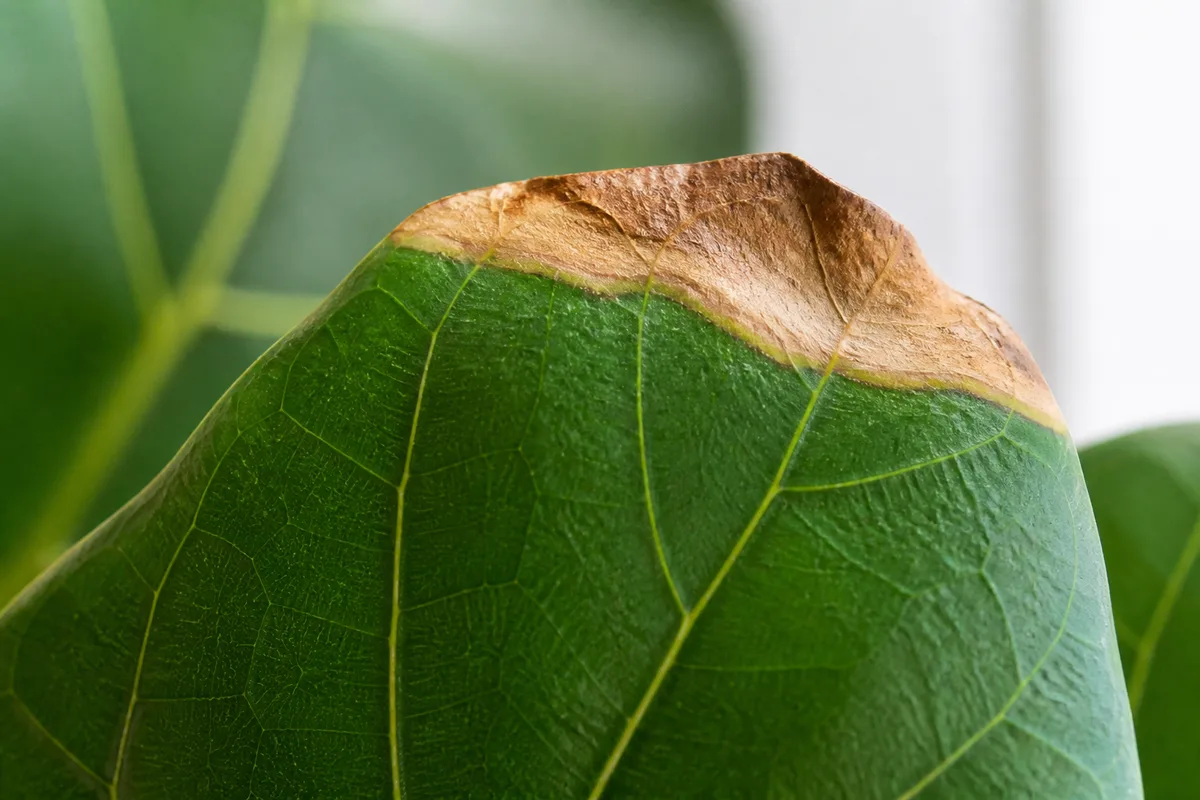
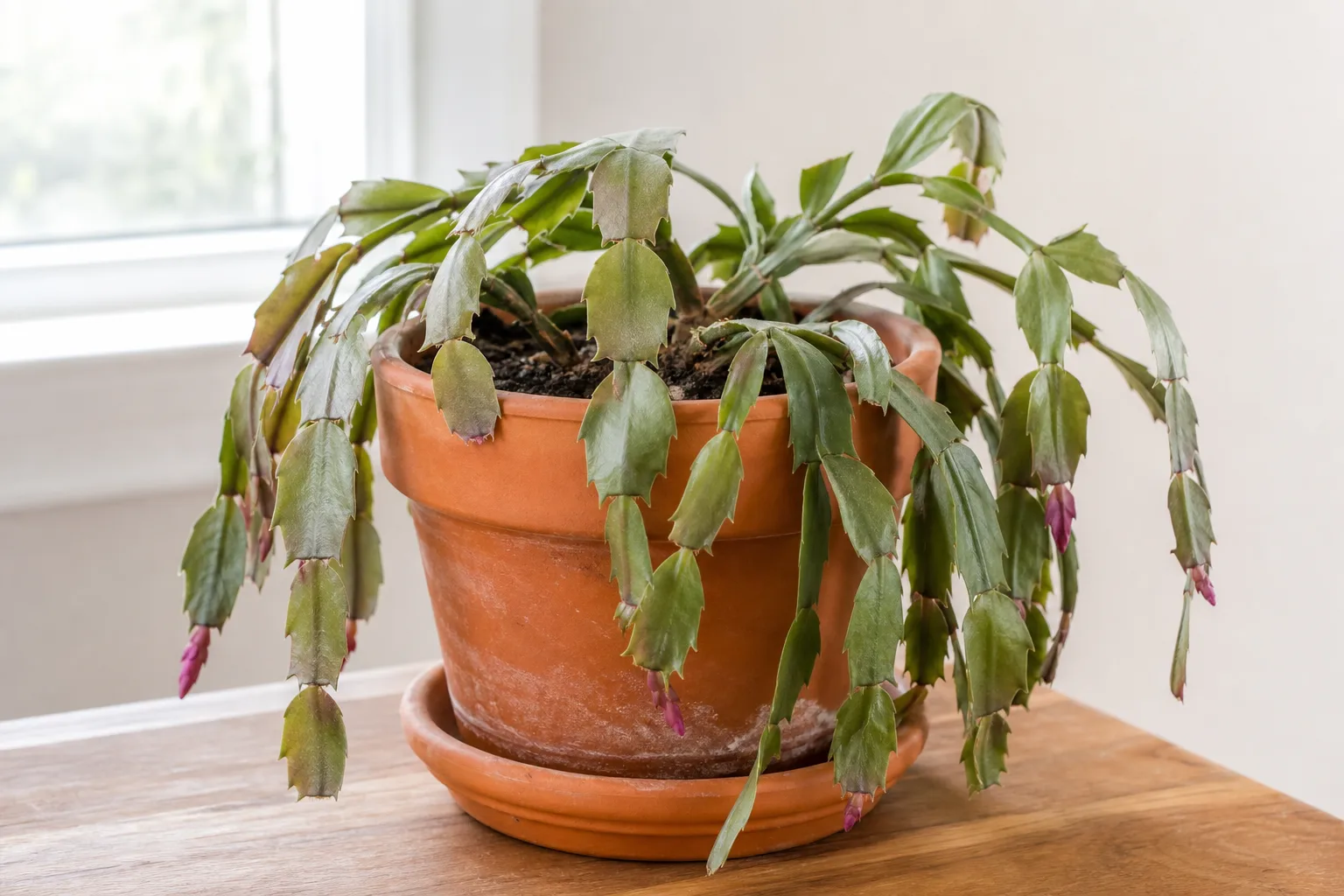
Dry, crisp margins can follow dry air or a draft, but confirm that the root ball is not also parched or waterlogged.
Move the plant out of direct vent flow and away from cold glass without sacrificing all its light. If the plant is near a window, consider whether the mark appeared after a cold night or after the sun shifted onto the leaf; those timelines help distinguish a temperature event from chronic dry air.
Do not chase an exact humidity percentage based on a single internet rule. A stable, moderate indoor environment is usually more useful than repeated swings, and adding moisture will not fix brown tissue caused by saturated roots, scorching, or a pest.
6. Pests or Leaf-Spot Disease Damage Foliage
Inspect the underside of leaves, petioles, and stem joints before assuming a brown patch is a watering issue. North Carolina State Extension lists scale, aphids, mealybugs, thrips, and spider mites among the pests to monitor on fiddle leaf figs, and it notes that bacterial and fungal diseases can occur as well.
Check for pests before treating
Spider mites may leave fine webbing and pale stippling; scale can look like small attached bumps, while mealybugs may appear cottony and aphids or thrips can cluster around tender growth. A flashlight and a damp white tissue help you look closely without starting with a spray; check more than one leaf because a single speck may be dust or a harmless bit of debris.
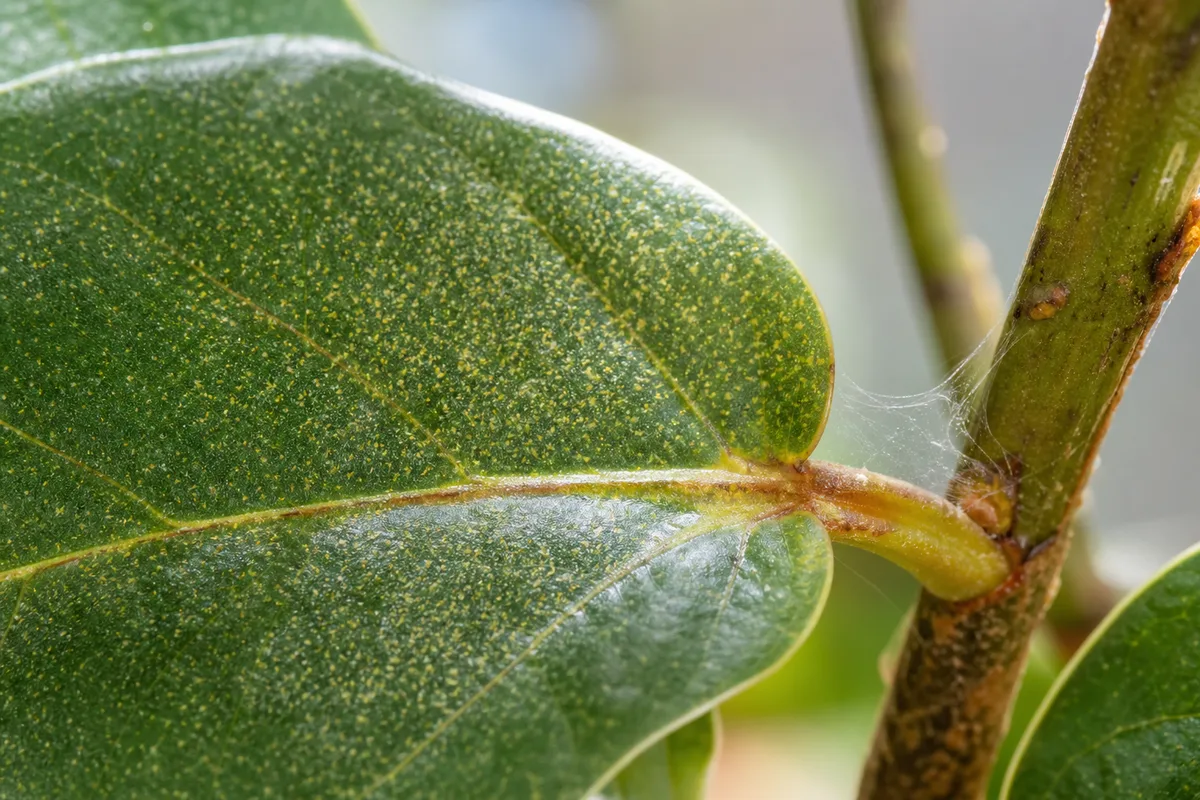
Look under leaves and along stems for webbing or visible insects; brown marks alone do not prove a pest infestation.
If you find insects, separate the fig from nearby plants and rinse or wipe leaves where practical, including the undersides. For a persistent infestation, identify the pest and use only a product labeled for indoor ornamental plants, following its label; a broad treatment applied without confirming pests can injure foliage and will not correct a watering problem.
Treat possible disease as a pattern, not a guess
Disease becomes more plausible when fresh lesions appear on multiple leaves and continue enlarging, especially if the marks look water-soaked or have an expanding halo. Yet spots can overlap with root stress, physical injury, or edema, and a photo cannot reliably name a bacterium or fungus; North Carolina State Extension confirms that bacterial and fungal diseases are possible but does not claim every brown spot has a single visual signature.
If lesions are spreading, keep the plant separate, avoid splashing water from leaf to leaf, and improve gentle air movement. Remove a leaf only when it is extensively affected or a disease is reasonably suspected, clean the cutting tool between cuts, and ask a local extension office or diagnostic clinic when the decline continues; do not apply a fungicide or bactericide based only on a brown spot.
Other Look-Alikes: Edema, Salt Buildup, and Old Leaves
Edema is a water-balance disorder, not a contagious leaf disease. The RHS explains that it can happen when roots take up more water than the leaves can release; water-soaked patches may become raised, warty, or corky, often on the underside. The RHS edema guide advises improving air and soil conditions rather than removing every affected leaf, so do not confuse raised corky spots with an automatic reason to prune or spray.
A crust on the soil surface or pot rim can suggest accumulated fertilizer salts, especially after repeated heavy feeding, but it is not proof that salts caused the leaf damage. Pause fertilizer while the plant is stressed, check whether feeding has been excessive, and avoid flushing a pot that already stays wet; extra water is not a safe fix when drainage is poor.
One older lower leaf may yellow and brown as a plant grows, particularly if the rest of the fig is stable and new leaves look healthy. That isolated change is different from a wave of new spots, multiple leaves declining at once, or damage that spreads from one day to the next.
What to Do in the First 48 Hours
Start with observations you can make without disturbing roots: photograph the plant, check both sides of affected leaves, feel the mix below the surface, lift the pot to judge its weight, and confirm that drainage holes are clear. Write down any recent move, repot, fertilizer application, outdoor trip, cold night, or change in sunlight; the timing can narrow the likely cause.
Then take one matching action: rehydrate a genuinely dry root ball, stop watering a persistently wet pot, soften intense direct sun, relocate away from a draft, or isolate and inspect a plant with visible pests. If two clues conflict—such as wilt with wet soil—treat the root zone as the priority rather than assuming the plant needs more water.
Change one factor at a time
Changing watering, light, soil, fertilizer, and location on the same day makes it impossible to tell what helped and may stack stress on top of stress. Fix an urgent problem such as standing water or a visible pest infestation first, then hold the rest of the routine steady long enough to see whether new damage stops.
A brown patch will not disappear during that observation period. Look for whether the edge of an existing mark is still expanding, whether more leaves develop spots, and whether the next leaf opens without damage; new growth is a better recovery signal than expecting old tissue to turn green.
Some delayed browning can show up after the original stress because tissue that was already injured may continue to dry as the plant adjusts. That does not always mean the fix failed, but repeated new spots on previously clean leaves are a reason to revisit the diagnosis.
Should You Remove Brown Leaves?
A fully brown, brittle leaf is dead tissue and will not regain its green color. A leaf with a small brown margin still contributes healthy green area, so pruning it is mostly an appearance choice unless disease is suspected or the leaf is mostly dead.
Use clean, sharp scissors and cut the petiole close to the stem without nicking the trunk. Fiddle leaf figs have milky sap, which North Carolina State Extension notes can irritate skin, so wear gloves if you are sensitive and wash sap from skin promptly; the plant is also toxic if eaten, so keep trimmings away from children and pets.
Avoid removing many leaves at once just to make the plant look tidy. The plant needs its remaining healthy foliage to support new growth, and pruning cannot solve the cause of the browning.
Prevent Another Round of Browning
Build the routine around conditions rather than a fixed watering day. Give the plant bright light it can tolerate, use a pot with drainage, water the root ball thoroughly when the upper layer has dried appropriately for the pot, and let the runoff leave instead of collecting beneath it.
Keep the fig away from hot and cold air blasts and avoid repeated room-to-room moves. If it spends summer outdoors, acclimate it gradually to brighter conditions and inspect for pests before bringing it back inside; Penn State Extension’s Master Gardener guidance describes both this gradual light adjustment and checking the plant for insects during seasonal moves.
Clean dust from leaves with a damp cloth when needed, but do not treat routine wiping as a cure for brown spots. Regular inspection makes it easier to notice the first new speck, a change in leaf texture, or a pot that suddenly stays wet much longer than before.
Keep a short observation log
For two or three weeks, record the date you water, whether the mix felt dry or damp, whether the pot drained, and whether any new mark appeared. Add a note when sunlight or indoor heating changes; a short log often reveals that the problem began after a move or a seasonal shift, not because the plant needs a complicated product.
If the same cause is corrected and damage still spreads, reconsider the diagnosis instead of repeating the intervention more aggressively. A persistent decline with wet soil warrants a root check, visible pests warrant pest-specific identification, and rapidly multiplying lesions warrant expert review.
Seasonal changes deserve their own check-in. Shorter days, cooler rooms, and closed windows can reduce water use and airflow, while a summer move closer to bright glass may increase both warmth and drying; reassess conditions when the room changes instead of carrying the same watering interval forward automatically.
Conclusion
Brown fiddle leaf fig leaves are best diagnosed by combining where the damage starts, how it feels, what the soil is doing, and what changed recently. Check the root zone and the light before you water, then match the response to the strongest clues: correct dry soil, address persistent saturation, soften harsh sun, improve a dim placement, remove drafts, or investigate pests and spreading lesions.
Do not expect brown tissue to turn green again, and do not repot or strip leaves just because one mark appeared. Keep healthy foliage, make one targeted change, and judge recovery by whether new damage stops and the next leaves emerge clean.