Does Baking Soda Kill Mold? Limits, Steps, and Safer Fixes
Wondering if baking soda kills mold? Get the short answer, step-by-step cleaning methods, vinegar timing, and EPA-based rules for DIY vs pro cleanup.
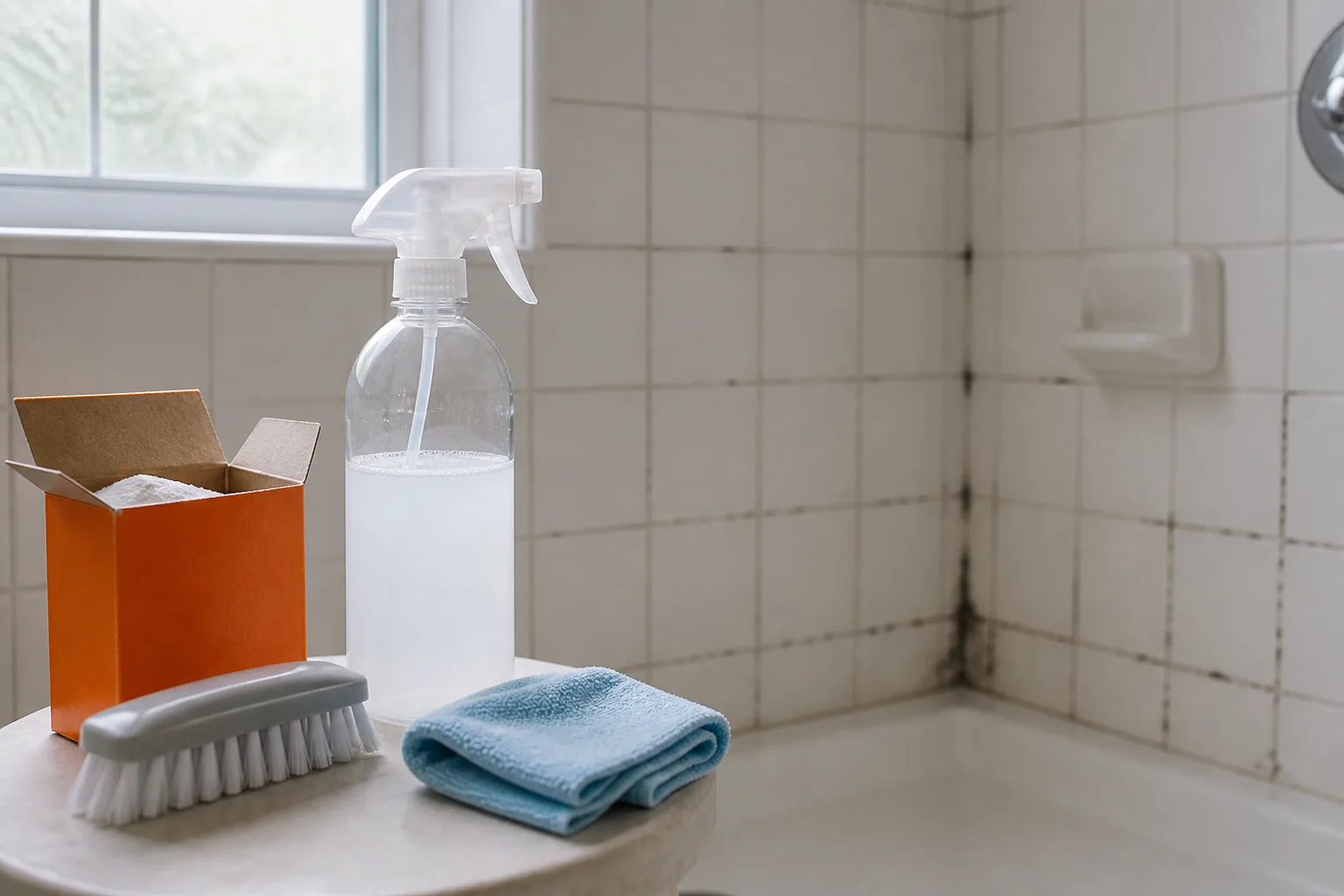
You open the pantry, grab the orange box, and wonder whether baking soda can handle the dark specks along the shower grout or the musty patch under the sink. The honest answer is nuanced: baking soda can remove light mold and make the environment less hospitable to new growth, but it is not a registered disinfectant and will not reliably kill every spore on a serious infestation. For a fingernail-sized spot on glazed tile after you have fixed ventilation, it is a sensible first move. For fuzzy growth on drywall after a leak, it is a scrub brush — not a remediation plan.
The Short Answer: Baking Soda Cleans and Slows Mold — It Does Not Fully Disinfect
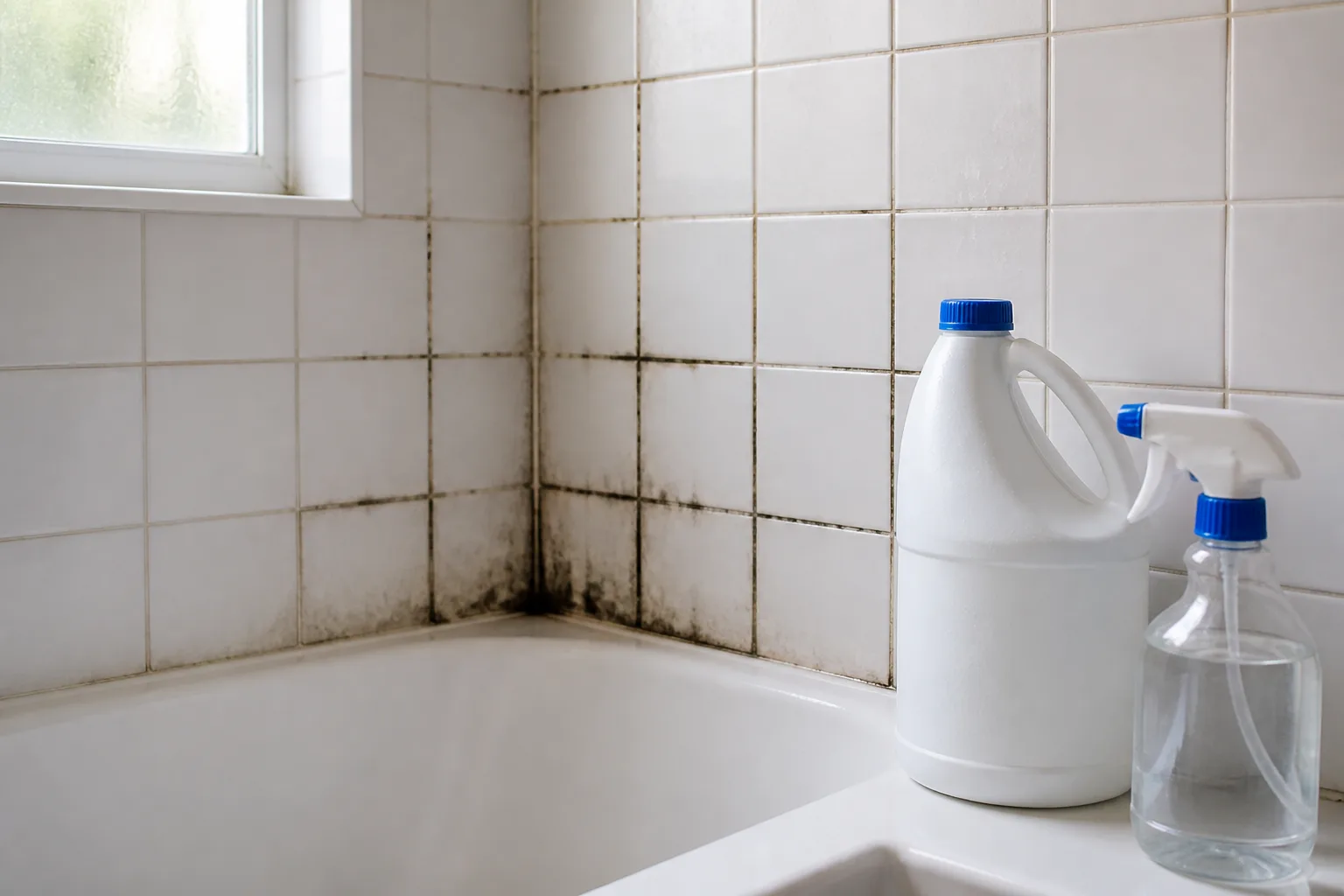
Baking soda (sodium bicarbonate) helps with mold mainly in three ways: it is a mild alkaline abrasive that loosens visible growth, it absorbs residual moisture mold needs to thrive, and its high pH can inhibit some fungal activity on the surface you treat. That combination is useful for small, surface-level patches on hard, non-porous materials — shower corners, tub rims, glazed tile, glass, and sealed countertops.
On a hard surface you can fully dry, baking soda can lift staining, reduce musty odor tied to surface film, and leave a drier microclimate when you let a thin residue air-dry after rinsing. That is often enough for surface mildew — flat, powdery growth on grout or caulk — especially once you have improved airflow in the bathroom. For a deeper look at telling surface film from penetrating growth, see our guide on how to identify mold vs. mildew.
What baking soda does not do is replace a product tested and labeled to disinfect against mold on the surface in question, and it cannot reach colonies growing inside porous materials like drywall, ceiling tiles, carpet pad, or unfinished wood. The EPA is clear that the key to mold control is moisture control: clean up growth promptly and fix the water problem. Baking soda cannot substitute for removing and replacing moldy porous materials, professional remediation when growth exceeds safe DIY size limits, or HVAC investigation when mold is near duct intakes. The CDC also notes that dead mold can still cause allergic reactions — so the goal is not merely to “kill” what you see; you need to remove visible growth and address moisture.
How Baking Soda Acts on Mold (pH, Abrasion, and Moisture)
Mold is a living fungus that needs moisture, oxygen, and an organic food source — dust, soap scum, cellulose in paper-faced drywall, fabric fibers, or even biofilm on concrete. Sodium bicarbonate is a weak base with a pH around 8 to 9 in solution. Many molds grow best in neutral to slightly acidic conditions; raising surface pH can slow colonization on the layer you treat, though it is not the same as a labeled fungicidal product with tested kill claims on specific organisms.
Laboratory studies and cleaning-industry guidance consistently describe baking soda as mildly antifungal on contact rather than a broad-spectrum sporicidal agent. On a shower ledge, that often translates to cleaner grout and slower comeback once humidity is controlled — not guaranteed elimination of every spore in the room. Treat baking soda as a surface cleaner and moisture manager, not a medical-grade biocide.
As a gentle abrasive, baking soda helps mechanically break up the mat of hyphae and staining on grout lines and tub corners without etching glazed porcelain the way some acids might. Its hygroscopic nature — the ability to pull and hold water — is a double-edged sword. Sprinkled dry in a damp cabinet, it can pull moisture out of the air and trap it in the powder, which is why some people leave a shallow dish of baking soda in musty closets. In active cleaning, you always finish by rinsing and drying so you are not leaving a damp paste behind. The EPA Brief Guide to Mold, Moisture and Your Home stresses drying water-damaged areas within 24 to 48 hours to prevent new growth — complete drying after any baking soda treatment is the step that separates a fix from a repeat performance.
Mold vs. Mildew: Why the Label Changes Your Baking Soda Plan
In everyday language, mildew usually means flat, powdery fungal film on a non-porous surface you can wipe away. Mold often describes deeper, fuzzier, or recurring growth that may have sent threads into the material below. Both are fungi; the practical split is surface vs. penetration.
Surface mildew on tile, glass, and caulk

If a damp cloth removes the growth from glazed tile and it stays gone for several days after the area dries, baking soda spray or paste is reasonable. Focus on caulk integrity — moldy, cracked caulk should be removed and replaced after the wall behind it is verified dry, not endlessly scrubbed with pantry powder.
Penetrating mold on drywall, wood, and carpet
If growth is fuzzy, spreads across a wall plane, returns within 48 hours in the same footprint, or appears after a known leak, assume penetration. Baking soda on the face of drywall may lighten a stain while hyphae remain in the paper facing and gypsum core. The EPA advises that absorbent or porous materials that become moldy may need to be discarded because mold can fill voids you cannot scrub out. Baking soda is not a rescue tool for soaked carpet pad or bowed ceiling tile.
When Baking Soda Is the Right Tool
Match the cleaner to the size, surface, and moisture story — not to how natural the ingredient sounds. The EPA considers moldy areas smaller than about 10 square feet (roughly a 3-by-3-foot patch) generally manageable for homeowners who follow cleanup guidance, wear appropriate protection, and have no special health vulnerabilities. A stripe of grout mold, a windowsill film, or a patch on a plastic lawn chair stored wet fits this bucket — after you identify and reduce the moisture source.
Bathrooms that stay above 60% relative humidity will grow mold again on schedule. The EPA bathroom tip is straightforward: increase ventilation, clean more frequently, and accept that damp rooms may never stay perfectly mold-free without mechanical drying. Once you run the fan during and after showers and keep indoor humidity ideally between 30 and 50% where measurable, baking soda maintenance every few weeks is a low-fume way to stay ahead of grout film.
When Baking Soda Is the Wrong Tool
Knowing when to stop scrubbing is as important as knowing the recipe. Call a professional or follow full remediation protocols when mold covers more than 10 square feet, follows sewage backup or Category 3 water, you smell mold but cannot find the source, mold is on or inside HVAC components near intakes, or occupants have severe asthma, immune compromise, or symptoms that worsen indoors. The Oregon Health Authority and other state health pages echo federal guidance: fix water, remove mold, and get help when the job exceeds safe DIY scope.
Ceiling tiles, upholstered furniture, insulation, and carpet over pad rarely respond to baking soda alone. If the item is inexpensive and porous, disposal is often cheaper and safer than repeated natural cleaning attempts that leave spores and moisture in the matrix.
How to Clean Mold With Baking Soda Spray (Step by Step)

This is the workhorse method for shower grout, tub surrounds, and sealed countertops.
You will need: baking soda, warm water, a spray bottle, a stiff nylon brush or non-scratch scrub pad, clean microfiber cloths, and gloves. Open a window or run the bath fan.
- Mix one tablespoon of baking soda per cup of warm water in a labeled spray bottle. Shake until dissolved; a little settling is fine.
- Spray the moldy area until lightly wet, not flooded. Let it sit 15 minutes so the solution can soften film and begin drying the surface.
- Scrub with a brush or pad along grout lines and corners. Work in small sections so the area does not dry before you agitate it.
- Rinse thoroughly with warm water. Soap scum left behind becomes food for the next colony.
- Dry completely with a clean cloth. Leave the fan running.
- Optional prevention pass: mist the same baking soda solution lightly again and let it air-dry to leave a thin alkaline residue that can discourage quick regrowth — only on surfaces that will not look chalky or attract dust.
Repeat weekly in high-humidity baths until growth stays gone for at least two weeks, then drop to monthly maintenance.
Baking Soda Paste for Grout, Corners, and Textured Surfaces
Spray works on broad areas; paste clings to vertical grout and textured tub aprons.
Mix two tablespoons baking soda with one tablespoon water to form a thick paste. Spread on the growth, wait 10 to 15 minutes, scrub, rinse, and dry. For stubborn silicone caulk stains, paste can help cosmetically, but stained caulk that keeps regrowing should be cut out and replaced once the substrate is dry.
Do not leave wet paste in wood grain, fabric, or unfinished stone — it holds moisture exactly where you do not want it. Paste is for glazed tile, porcelain, and sealed stone only.
Baking Soda and Vinegar: Use Them in Sequence, Not in the Same Bottle
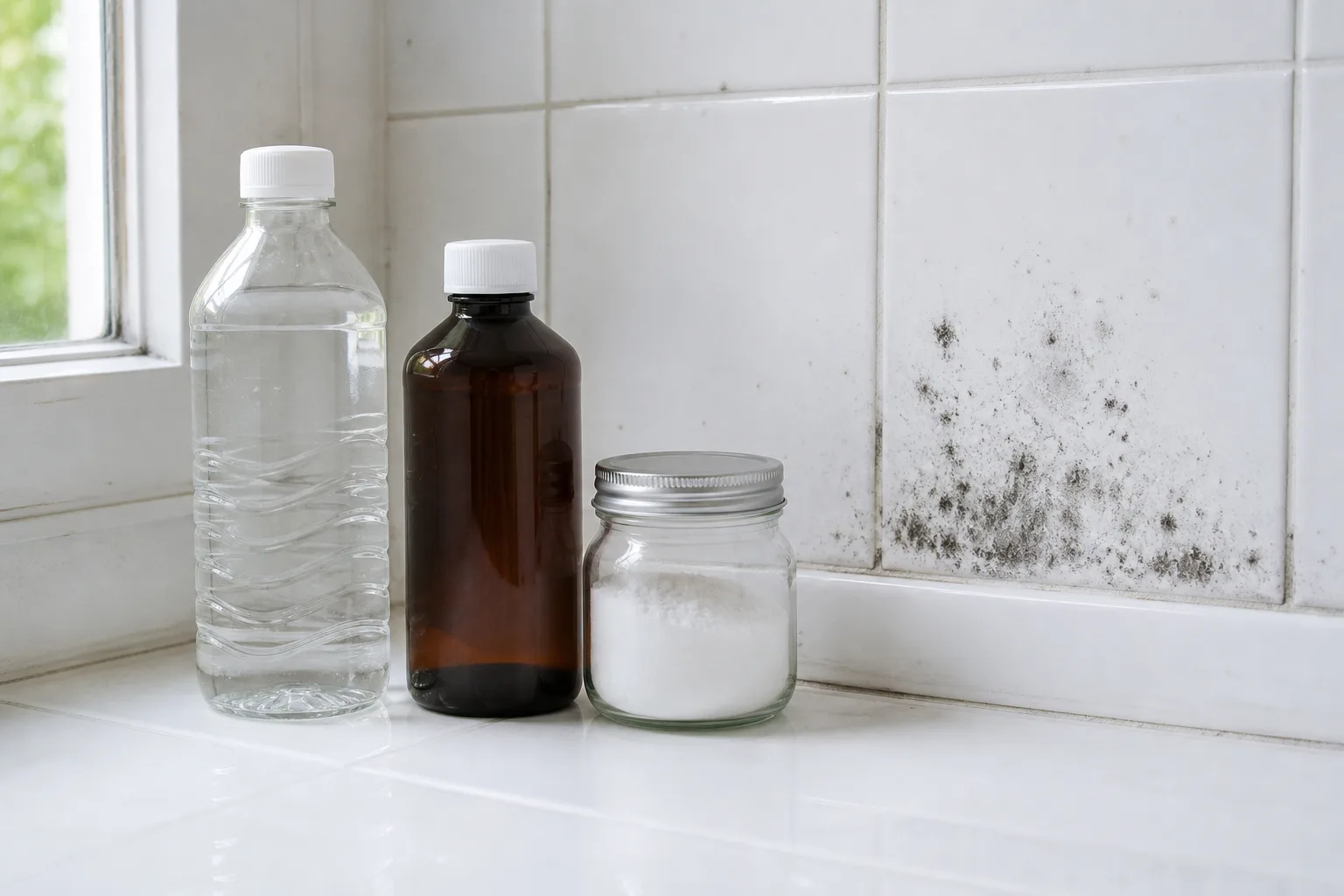
The internet loves mixing baking soda and vinegar because the fizz looks like science doing something dramatic. In a closed bottle, the reaction produces water, sodium acetate, and carbon dioxide — which means you neutralize much of the acidity from the vinegar and much of the alkalinity from the baking soda before either touches the mold.
Practical cleaners who have tested the combo, including DIY editors at Homedit, report better results using them separately:
- Spray undiluted or 50/50 white vinegar and water on the surface. Let it sit up to one hour on tough spots (test sensitive finishes first).
- Scrub lightly, rinse, and dry.
- Follow with baking soda paste to lift remaining staining and absorb moisture.
- Rinse again and dry completely.
Vinegar is acidic (~5% acetic acid) and can help on some hard, non-porous films, but it is still not a broad disinfectant for large mold jobs and can damage natural stone, waxed wood, and some metals with prolonged contact. Sequence the two; do not premix them for mold duty.
Baking Soda vs. Bleach, Hydrogen Peroxide, and EPA-Registered Products
Pantry cleaners compete with products labeled and tested for specific organisms and surfaces. Here is how they differ in real homes.
| Approach | Best for | Limits |
|---|---|---|
| Baking soda spray/paste | Light surface film on tile, tubs, glass | No tested disinfectant label; weak on porous materials |
| White vinegar (separate step) | Some hard-surface films; odor removal | Can etch stone; not a colony fix on drywall |
| 3% hydrogen peroxide | Small non-porous spots; may lighten staining | Can bleach fabrics and some finishes; test first |
| Chlorine bleach | Non-porous surfaces only, per label | Does not penetrate porous materials; EPA discourages routine biocide use; never mix with ammonia or acids |
| EPA-registered mold/mildew disinfectants | When you need labeled kill claims on approved surfaces | Follow label dwell time; still requires moisture fix |
The EPA’s Cleanup and Biocides section notes that routine use of bleach or other biocides is not recommended for typical mold cleanup, though professionals may judge otherwise when immune-compromised people are present. Bleach can sanitize non-porous tile and glass when used according to label directions and with ventilation, but it does not reach mold inside drywall — the water in bleach solution can even feed the paper facing. Killing mold without removing it leaves allergenic material behind.
For bathroom rings that might be mold, mildew, or mineral scale, our toilet bowl mold guide walks through diagnosis before you escalate cleaners.
Surface Guide: Where Baking Soda Helps and Where It Fails
Bathroom tile, tubs, and porcelain

Best use case. Spray or paste, scrub, rinse, dry, improve ventilation. Reseal porous natural stone yearly; baking soda abrasion is safer than long acid soaks on marble but still test a hidden spot.
Painted walls, wood, and fabric
Proceed with caution. Light misting and immediate wipe-dry might help a tiny surface spot on semi-gloss paint, but fuzzy growth on flat paint or drywall usually means cut out and replace the affected section after leak repair. Do not saturate wood trim — baking soda solution can raise grain and trap water. Machine-washable fabric with mold should be washed per care label and fully dried; if odor persists, discard.
Outdoor planters, patio cushions, and garden sheds
Gardeners see mold on damp pot saucers, wooden tool handles, and cushions left out overnight. Hard plastic and glazed pots: baking soda scrub, rinse, dry in sun. Teak and unfinished cedar: dry thoroughly, sand lightly if needed, oil if appropriate — do not leave alkaline paste soaking into grain. Outdoor fabrics with penetration: commercial outdoor-fabric cleaner or replacement; baking soda is a pre-wash deodorizer at best. Sheds with wall or roof leaks need carpentry and drying, not another box of sodium bicarbonate.
Safety, PPE, and Ventilation While You Clean
Even “natural” cleaners aerosolize spores when you scrub.
The CDC mold cleanup tips recommend gloves, goggles without vent holes, and an N-95 respirator when disturbing moldy areas — especially beyond tiny spots. Ordinary rubber gloves are fine for baking soda and detergent; use nitrile or neoprene if you switch to stronger disinfectants per label.
Do not mix cleaning products. The CDC explicitly warns against combining bleach and ammonia — a combination that produces toxic vapors. Acid toilet bowl cleaners plus bleach are another dangerous pair. Use one product at a time, rinse between changes, and ventilate.
If you have asthma, allergies, or immune suppression, talk to your clinician before aggressive cleanup, even with mild cleaners.
Stop Mold From Coming Back After You Clean
Cleaning without drying the house is painting over rust.
Fix the water path first: repair leaks, re-caulk tubs, insulate cold pipes that sweat, grade soil away from foundations, and empty saucers under outdoor pots after rain. The EPA and CDC both emphasize 24-to-48-hour drying after any wet event.
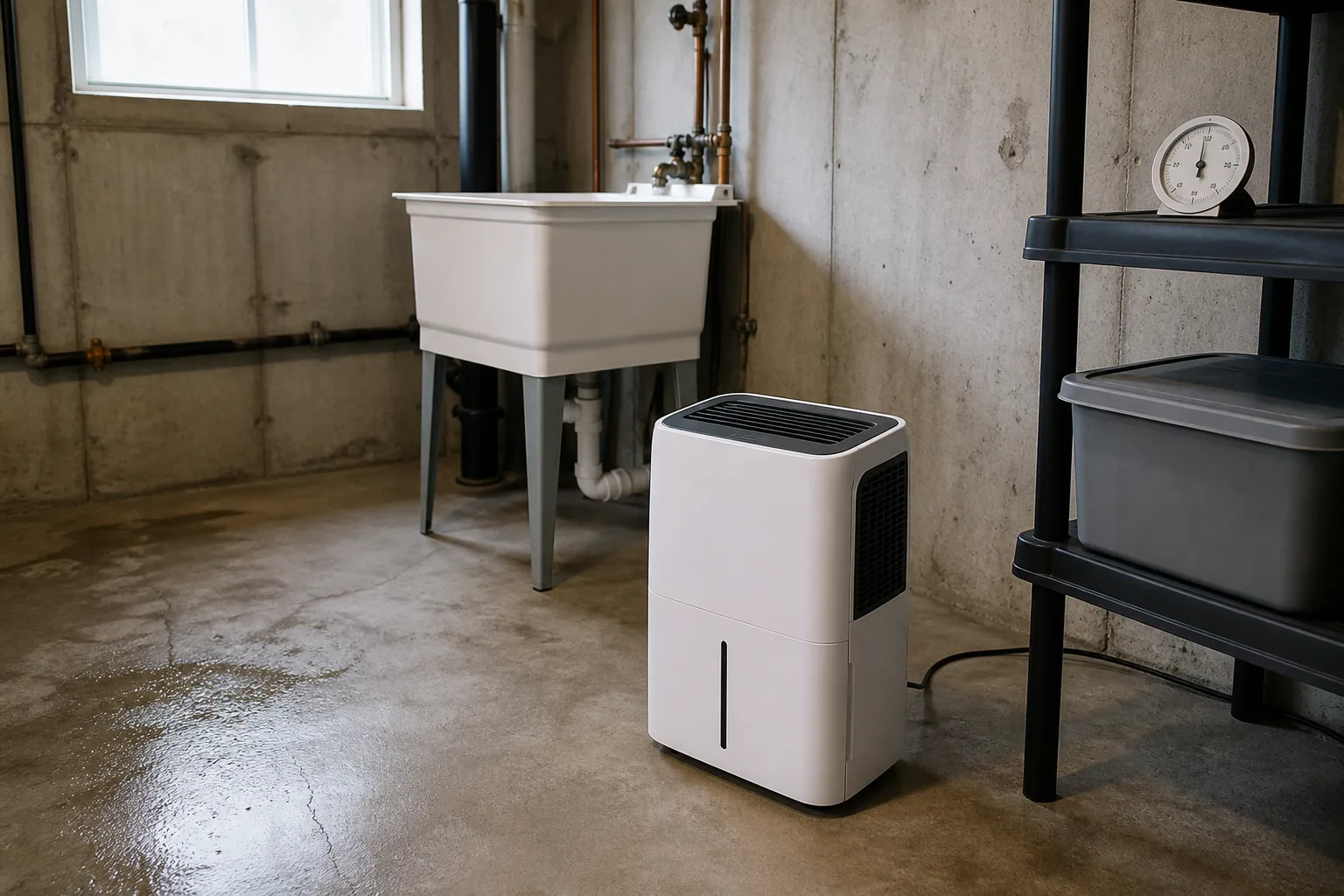
Lower humidity: run bath and kitchen exhaust fans to the outdoors, use a dehumidifier in basements above 50% RH, and wipe condensation from windows before it feeds sill mold. A $10 humidity meter removes guesswork.
Clean on a schedule in damp rooms — weekly wipes in busy baths, monthly checks under sinks and behind toilets, seasonal inspection of basement corners and stored patio furniture.
Know when cleanup is “done”: moisture source fixed, visible mold removed, no musty smell, no return after revisiting the site in a few days, and occupants without new symptoms. Staining alone may remain; recurring growth means the moisture story is not finished.
Conclusion
Baking soda does not kill all mold spores, but it is a useful, low-fume tool for small, surface-level growth on hard, dryable materials when you treat it as a cleaner and moisture helper, not a miracle disinfectant. Mix a simple spray, scrub, rinse, dry, and fix ventilation before you celebrate. Use vinegar and baking soda in sequence, not in one fizzing bottle. Step up to labeled disinfectants or professional remediation when growth is large, hidden, in ducts, on porous substrates, or tied to contaminated water — and remember that removing mold and controlling moisture matters more than any single killing claim on a pantry box.