How to Grow and Care for Spur Valerian
Spur valerian is drought-tough but can self-seed widely. Get practical planting, watering, pruning, propagation, and region-aware containment advice.
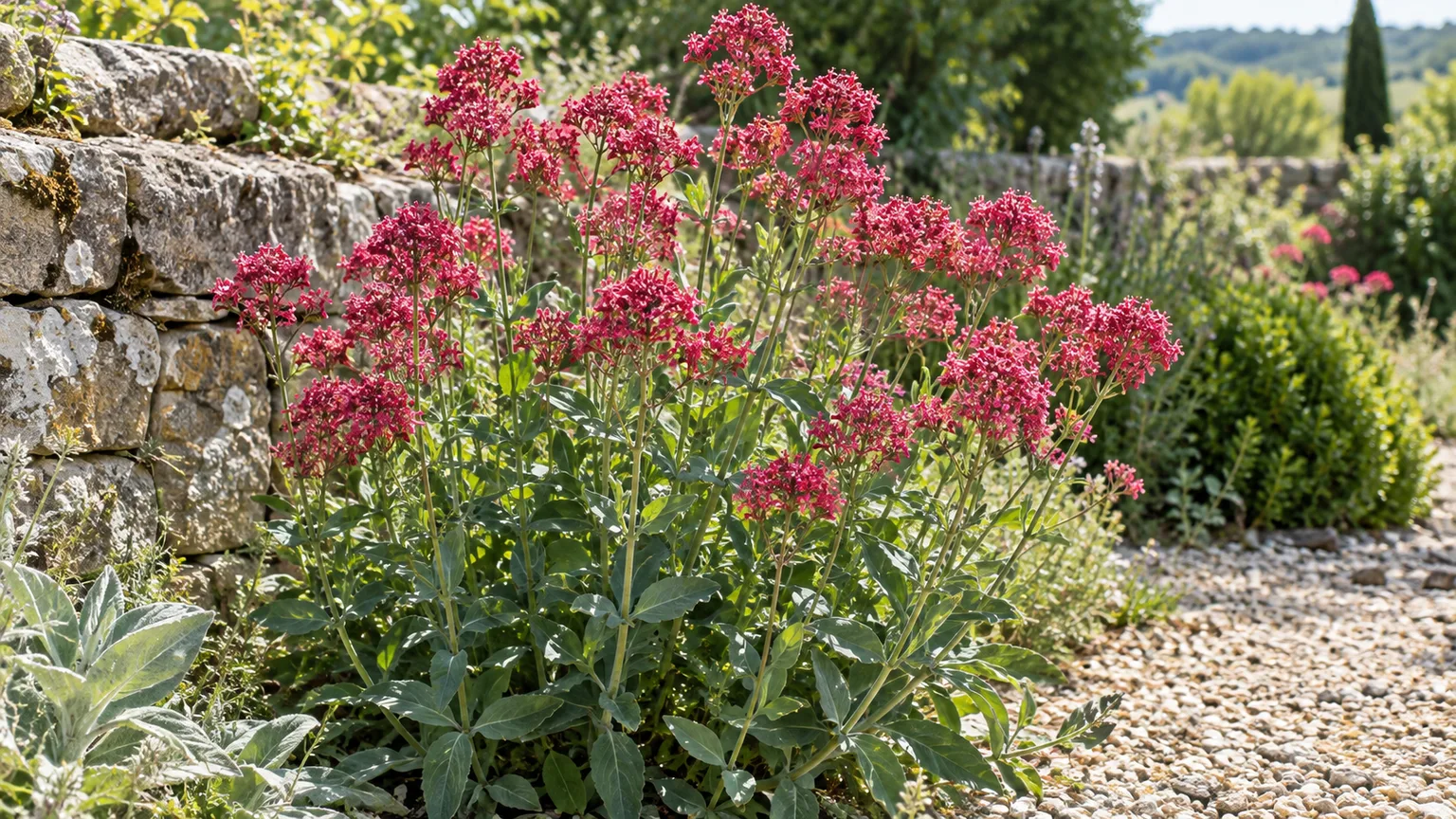
Spur valerian is a flowering perennial for places where many garden plants struggle: sunny slopes, dry walls, gravel beds, and lean soil. Once established, it needs little irrigation or feeding and can flower for months. The trade-off is its seed. Fluffy seeds travel on the wind, so a plant that looks neatly tucked into a border can turn up in cracks and beds beyond it.
Before planting, check whether it is appropriate for your region and whether you can keep seed heads in check. If it is a good fit, give it sun, sharply draining soil, and a light hand with water. That combination usually matters more than amendments or frequent pruning.
Identify the Plant and Its Names
Spur valerian, red valerian, and Jupiter’s beard are common names for an ornamental perennial commonly sold as Centranthus ruber. Some current taxonomic references use Valeriana rubra as the accepted name and list Centranthus ruber as a synonym; nursery labels and gardening references still widely use Centranthus ruber. Kew Plants of the World Online and NC State Extension both index the plant as Valeriana rubra, while the RHS profile retains Centranthus ruber. Kew POWO NC State Extension RHS plant profile
It belongs to the honeysuckle family, Caprifoliaceae, and is not the same plant as common valerian, Valeriana officinalis. Spur valerian grows upright from a woody base, with blue-green leaves and dense clusters of small, trumpet-shaped flowers. The blooms are most often rose or crimson, though white-flowered forms are sold too. Individual gardens may see different height and spread: NC State lists about 2 to 4 feet tall and 1 to 2 feet wide, while RHS gives a broader height range and notes that conditions influence mature size. NC State Extension RHS plant profile
Decide Whether Spur Valerian Belongs in Your Garden
The first care question is local, not horticultural: is red valerian listed as invasive or discouraged where you live? Its Mediterranean native range does not prevent it from naturalizing elsewhere. NC State Extension says it has high invasive potential and is listed in some U.S. counties; Kew records it as introduced in places including California, Oregon, Washington, and Hawaii. “Introduced” and “invasive” are not interchangeable labels, but these records are a reason to check a state, county, or local extension list before buying it. NC State Extension Kew POWO
Garden references do not describe the risk in exactly the same way. BBC Gardeners’ World says red valerian is manageable in the garden context it describes because seedlings are easy to pull and established clumps can be lifted; the RHS cites it among more than 200 species identified in research as potential future invaders. That difference is useful: a plant can be manageable in a regularly maintained bed yet be a poor choice near natural areas, dry-stone habitat, or anywhere seed can escape into unmanaged ground. BBC Gardeners’ World RHS potentially invasive plants
Plant spur valerian only if you are willing to inspect it during bloom and remove fading flowers before seeds ripen. Skip it if it is locally prohibited, if you garden beside sensitive habitat, or if you want a “plant it and forget it” perennial that will never need seed control. If you want similar color with lower spread risk, ask a local native-plant nursery or extension office for a regionally native substitute; a plant recommended as a replacement in one state may not be native or suitable in another.
Choose a Sunny, Open Site With Fast Drainage
Spur valerian performs best in an exposed spot with full sun and soil that sheds excess water. It tolerates poor, stony, or chalky ground better than heavy feeding or constant moisture. A location that dries between rains is more useful than a rich planting pocket amended to hold water. RHS plant profile
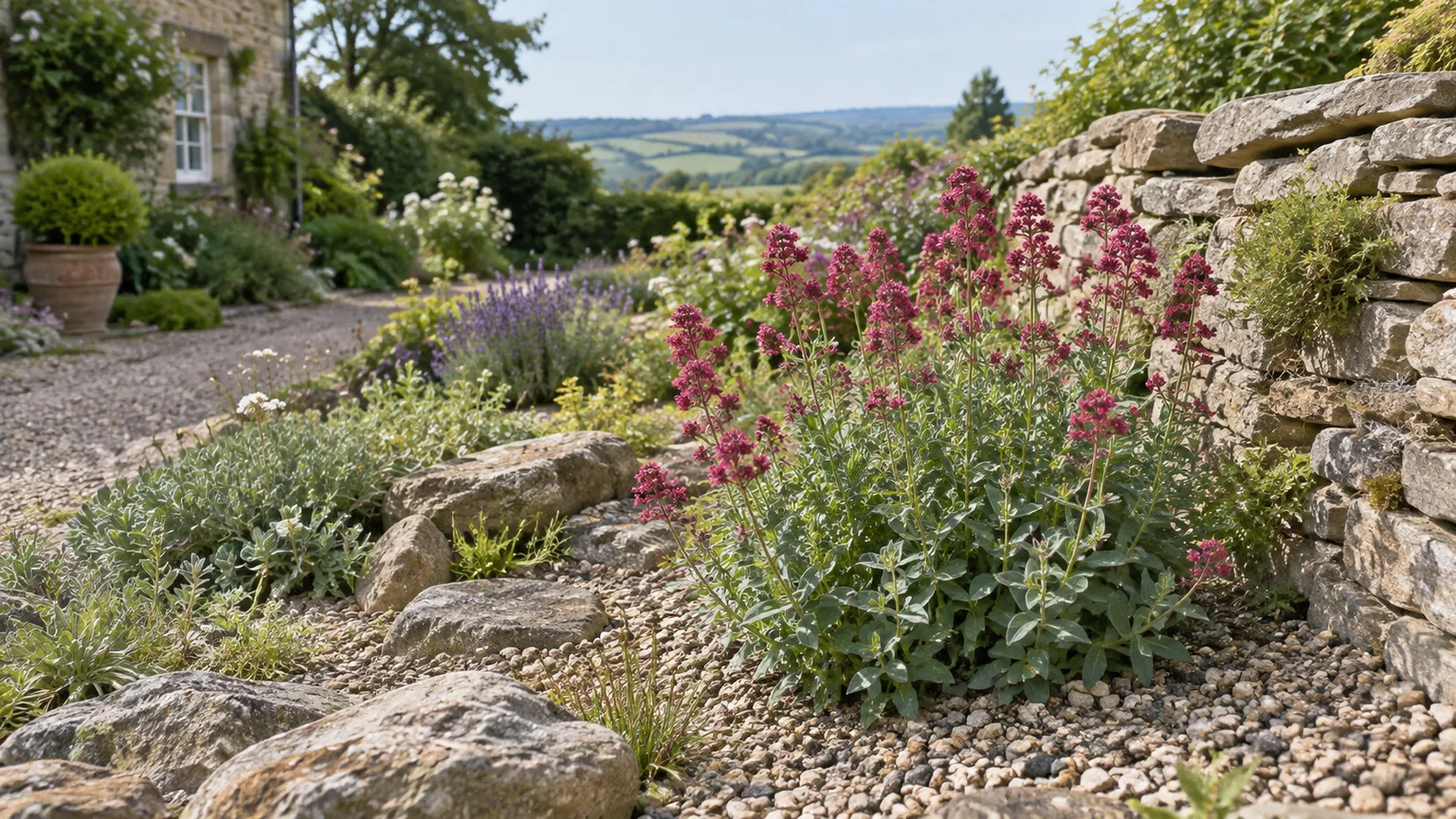
Sun, Heat, and Airflow
Choose a site that receives direct sun for most of the day if your summers are mild. In partial or light dappled shade the plant may live, but flowering can be thinner and stems may lean toward the light. If your summers are hot and humid, afternoon shade can ease stress, though prolonged heat and humidity are not ideal conditions for this Mediterranean plant; don’t try to compensate by keeping the crown constantly wet. NC State Extension BBC Gardeners’ World
Give it room for air to move through and around the clump. This helps stems dry after rain and makes it easier to spot new seedlings at the edges. Avoid planting it in a low pocket where runoff collects or against a wall that stays wet; a sunny, dry wall or bank is a very different setting from a shaded, saturated one.
Soil and Root-Zone Conditions
Use existing well-drained soil rather than building a deep pocket of potting mix or compost around the roots. Spur valerian grows in neutral to alkaline soil and tolerates poor to moderately fertile conditions; RHS lists chalk, loam, and sand as suitable soil types. If the bed is clayey, improve drainage across a broad area or choose a raised, sloping, or gravelly site instead of filling a small hole with grit, which does not reliably correct a waterlogged planting pocket. RHS plant profile
Avoid adding lime just because the plant can grow in alkaline soil. If you do not know your soil pH and the surrounding plants are growing well, there is no reason to adjust it for spur valerian. A simple drainage check is more relevant: after rain, the root zone should not remain soggy for days.
Plant It Without Overwatering the Root Crown
Plant nursery starts in spring or fall when the soil is workable and weather is mild. If you have a choice, planting during a naturally wet season reduces the amount of supplemental watering needed while roots settle in. Avoid transplanting a small, newly purchased plant during a heat wave unless you can shade and water it carefully during establishment. BBC Gardeners’ World
Planting Nursery Starts
Water the nursery pot first, then remove the plant and loosen only roots that circle tightly around the root ball. Dig a hole roughly as deep as the root ball and about twice as wide, set the top of the root mass level with the surrounding soil, and backfill with the soil you removed. Planting too deep leaves the crown wetter than it needs to be, which is a particular problem in heavy soil.
Water once after planting to settle soil around the roots, then allow excess to drain. Keep the root zone lightly and evenly moist during establishment, especially when weather is dry, but check the soil before watering again. A young plant’s need for regular checks does not mean it needs a permanently damp bed.
Spacing and Container Growing
Leave about 12 to 18 inches between plants for a connected drift with room to inspect the base and remove seedlings. Use more space if you want the plants to read as separate clumps or if the site is humid and still. The plant can also grow in a container, but the pot must have drainage holes and the mix should drain freely; a container limits some root expansion but does not stop wind-dispersed seed from escaping. BBC Gardeners’ World
A pot dries faster than in-ground soil, so check it more often during warm spells and water when the mix is beginning to dry, not by a fixed weekly schedule. Do not keep the saucer full of water. After flowering, remove seed heads promptly and check the potting area for volunteer seedlings, since seed can land in nearby cracks or beds.
Water for Establishment, Then Let Soil Guide You
During the first growing season, water deeply when the root ball and surrounding soil begin to dry. A thorough soak encourages roots to move beyond the nursery pot; frequent light sprinkling wets the surface but may leave the lower root zone dry. Check a few inches down with a finger or trowel, because the surface can look dry while the root ball is still moist.
Once established, spur valerian is drought-tolerant and usually needs little or no supplemental water in a temperate garden. Water during a prolonged dry spell if the plant wilts in the morning or if the soil has dried well below the surface, then let it drain. In very hot or humid climates, resist the impulse to keep watering to “cool” the plant; consistently wet soil can lead to crown rot, and heat stress is not solved by waterlogging the roots. NC State Extension BBC Gardeners’ World
Container plants are the exception because their limited soil volume dries quickly. Lift or tilt the pot occasionally to judge whether it has become unusually light, and confirm moisture below the surface rather than wetting the leaves on a calendar. In winter, reduce watering as growth slows, but do not let a container root ball become bone-dry for long periods.
Fertilizer, Mulch, and Support
Skip routine fertilizer unless a soil test or broader garden problem points to a genuine nutrient shortage. Red valerian flowers in relatively lean conditions; excess fertility can produce lush, floppy stems instead of a more compact clump. If it is growing poorly, first check drainage, light, and crown depth rather than applying a high-nitrogen feed. RHS plant profile BBC Gardeners’ World
A thin layer of gravel or mineral mulch can suit a dry, sunny site and makes seedlings easier to see. In colder climates, a modest organic mulch over the root zone can reduce temperature swings, but keep mulch away from the crown so it does not trap moisture against the plant. Tall stems may need a discreet stake if they are exposed to wind or growing in richer soil; moving the clump to more sun and leaner soil is the longer-term fix for repeated flopping.
Keep Flowers Coming Without Letting Seed Escape
The clusters open over an extended season, commonly from early summer into fall, with timing shifted by climate and cultivar. Flowers are described as slightly fragrant by the RHS and nectar-rich by BBC Gardeners’ World, which notes visits from bees and butterflies. Horticulture magazine’s garden column likewise describes a long summer display and frequent butterfly visits, while candidly calling the plant a bit weedy. RHS plant profile BBC Gardeners’ World Horticulture magazine
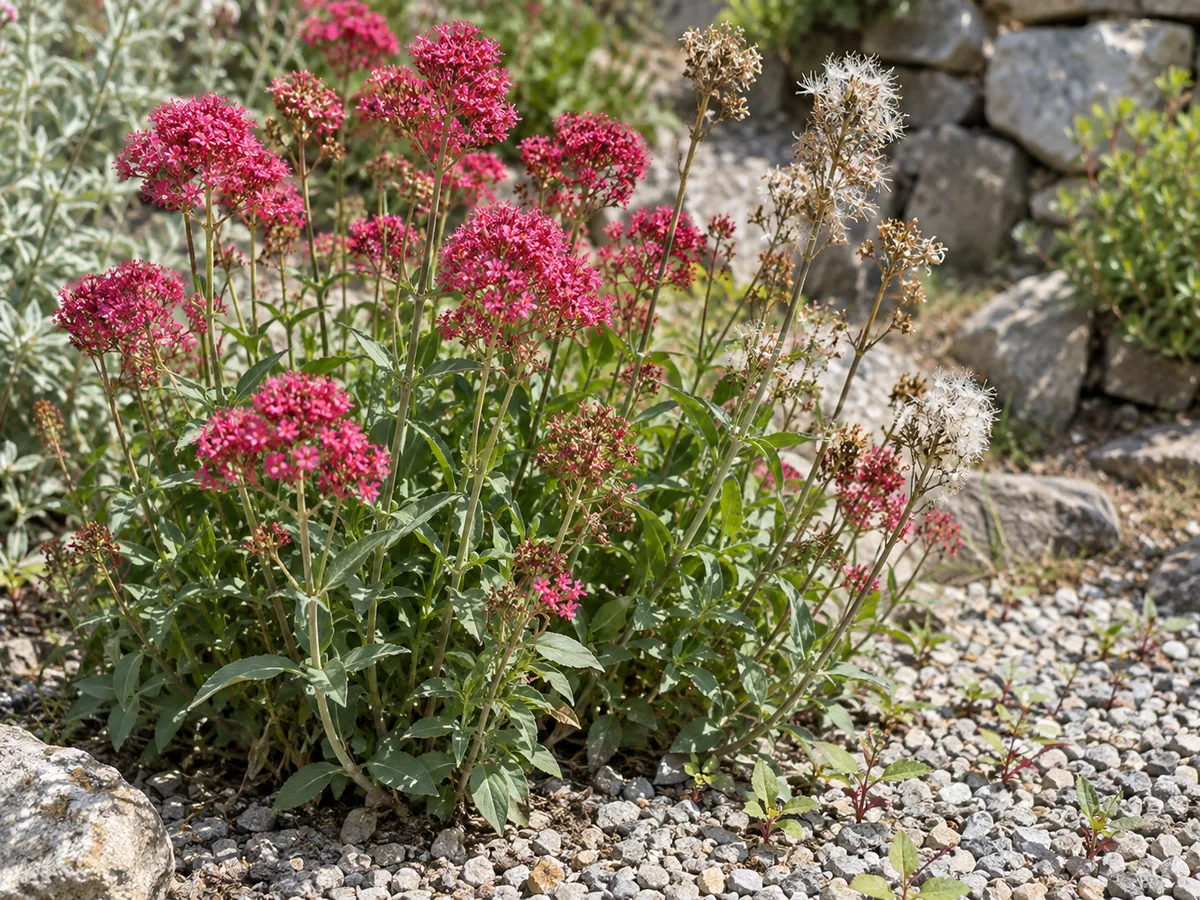
Deadhead by Flower Stage, Not Calendar Date
For a tidy plant and fewer seedlings, cut an individual flower stem once most of its blooms have faded and before the seed heads turn fluffy or begin shedding. Follow that stem down to a leafy joint or to its base and use clean pruners. Do not wait until every stem has finished if the earliest clusters are already developing seed; wind can carry mature seed away while later flowers are still opening.
If you want to encourage another flush, cut back the first wave of spent stems after flowering has begun to fade, rather than shearing the entire plant while it is still in peak bloom. RHS recommends a hard cutback in July when self-seeding is a problem after the first flowers, while Gardeners’ World advises cutting fading blooms to limit spread and extend flowering. Translate those dates to your own garden: act after the first flush and before seed ripens, whether that is July or earlier or later. RHS plant profile BBC Gardeners’ World
Grow Spur Valerian From Seed
Seed is the easiest route when you want several plants and have checked that growing them is appropriate in your area. Start indoors in spring by sowing onto damp, free-draining seed compost and covering the seeds lightly; keep the tray bright and evenly moist, not waterlogged. Gardeners’ World reports germination in roughly three to four weeks under its sowing method, though temperature and seed freshness can change the timing. BBC Gardeners’ World
When seedlings are sturdy enough to handle, move them into small pots and grow them on until they can tolerate outdoor conditions. Harden them off gradually over about a week, then plant them out after severe frost risk has passed, spacing them roughly 12 inches apart for a close drift. If you direct-sow, prepare a weed-free patch of loose soil, scatter seed thinly, cover it lightly, and thin crowded seedlings once you can identify the strongest plants.
Avoid sowing extra seed “just in case” and then discarding the surplus in the garden. A few tiny seedlings can establish quickly in gravel and cracks. If you are testing the plant for the first time, grow one start and learn how it behaves in your site before sowing a large patch.
Divide or Take Cuttings From an Established Clump
Division is the practical choice if you already have a healthy plant and want to move or reduce it. Dig around the clump in spring as new shoots emerge or in fall after flowering has finished, lift it with a garden fork, and separate the outer sections so each division has roots and several shoots. Replant divisions at their original depth and water them in, then keep them from drying out while they re-establish. BBC Gardeners’ World
An old clump may have a woody or tired center. Keep the vigorous outer growth and discard the dead center instead of planting a weak piece and expecting it to fill in. Division also gives you a chance to remove seedlings and decide whether the parent plant has spread farther than you want.
Basal cuttings are another option in spring, when new shoots are actively growing. Take healthy non-flowering shoots with a clean knife, remove lower leaves, and place them in a gritty, freely draining propagation mix. Keep the medium lightly moist and the cuttings in bright shade while they root; avoid enclosing them in a hot, stagnant spot where rot is more likely. For most home gardens, a single potted start or a carefully divided clump is simpler than producing many cuttings.
Manage Seedlings and Remove Unwanted Plants
Inspect the ground around the plant during bloom and for several weeks after cutting back. The first sign of spread is usually a scatter of small, paired-leaf seedlings in gravel, wall crevices, bare soil, and the edges of neighboring beds. Pull seedlings while the soil is damp and they are small; once they establish a substantial root, remove them with a hand fork rather than snapping off the top.
For an unwanted mature plant, loosen the soil around the crown and lift as much of the root mass as practical. Check the area again later in the season and the following spring because seedlings may appear after the parent is gone. On a dry-stone wall, do not yank a deeply rooted plant in a way that loosens the wall; work carefully and seek local masonry advice if the roots are holding stones in place. BBC Gardeners’ World
Put cut flower heads directly into a bag before carrying them across the garden if seeds are nearly ripe. Do not leave them on the ground or add seed-bearing stems to a home compost heap that may not heat consistently. Follow local green-waste rules for disposal. If local guidance lists the plant as invasive, do not share divisions or seeds with other gardeners; replace it with a locally recommended native perennial.
Choose Cultivars and Neighboring Plants
The common forms include ‘Coccineus’, associated with crimson-red flowers, and ‘Albus’, the white-flowered form. The actual color can vary from deep red through pink, and plants sold under a cultivar name may still self-seed unless they are sterile, so do not assume that a named selection solves the spread issue. NC State lists both forms, and the RHS profile describes red, pink, and white flower colors across the species. NC State Extension RHS plant profile
In a suitable region, pair spur valerian with plants that like the same sunny, well-drained conditions rather than thirsty companions that require frequent irrigation. It can fit an informal gravel garden, sunny bank, or cottage border, but give it a defined edge and leave access for deadheading. If you want a low-maintenance pollinator planting without regular seed checks, choose a locally native species that supports wildlife and is not flagged for spread in your county.
Seasonal Care and Overwintering
Spring: Remove dead stems if you left them over winter, divide mature clumps if needed, and pull seedlings before they become difficult to distinguish from wanted plants. Sow or plant new starts once soil is workable and the weather is mild.
Early to midsummer: Water new plants during dry spells, but leave established plants alone unless the root zone dries significantly. Watch the earliest flower clusters and begin deadheading fading stems before fluffy seed appears. If the first flush has finished and the clump needs control, cut it back then rather than waiting for all flowers to set seed.
Late summer and fall: Keep removing seed heads while they are still intact. After flowering ends, cut down dead stems for a neater bed or leave some structure briefly if you want winter interest, as long as seed has already been removed. In-ground plants in suitable climates generally need no elaborate winter covering; a container may need shelter because its roots are more exposed to freeze-thaw cycles.
Do not mistake seasonal dieback for failure. The aboveground stems may decline in cold weather while the perennial crown survives to send up new growth. Mark the plant if you plan to remove it, so a dormant clump is not accidentally dug out in spring.
Troubleshoot Sparse Flowers, Flopping, or Rot
If a plant produces leaves but few blooms, check light first. A shaded position can reduce flowering, while an overly rich or frequently watered bed may push soft growth; improve exposure or drainage before feeding. If the clump is crowded or woody at the center, divide it and replant the healthy outer sections.
If stems flop, look for a combination of shade, rich soil, and wind exposure. Add a discreet support during the current season, then improve the site or divide and move the plant when conditions are mild. Avoid staking every stem tightly, which can create a dense, damp center and make the plant harder to inspect.
If the crown looks soft or blackened and the soil stays wet, suspect root or crown rot rather than drought. Stop watering until the soil drains, remove badly damaged sections, and relocate the plant to a raised or better-drained area if the problem repeats. Aphids or mealybugs may occasionally appear, but serious pest problems are not typical; inspect before treating, and use a product only if needed and labeled for the site. NC State Extension
Conclusion
Spur valerian is easy to grow when it has sun, lean soil, and fast drainage, but its wind-carried seed makes it a plant to manage rather than forget. Check local invasive guidance before planting, start with a small clump, and deadhead as soon as flower clusters fade if you want to prevent seedlings.
Water new plants while they establish, let mature in-ground plants dry between rains, and use division or seed only when you want more. If regular seed control does not fit your garden, choose a locally native perennial with similar color or pollinator value instead.