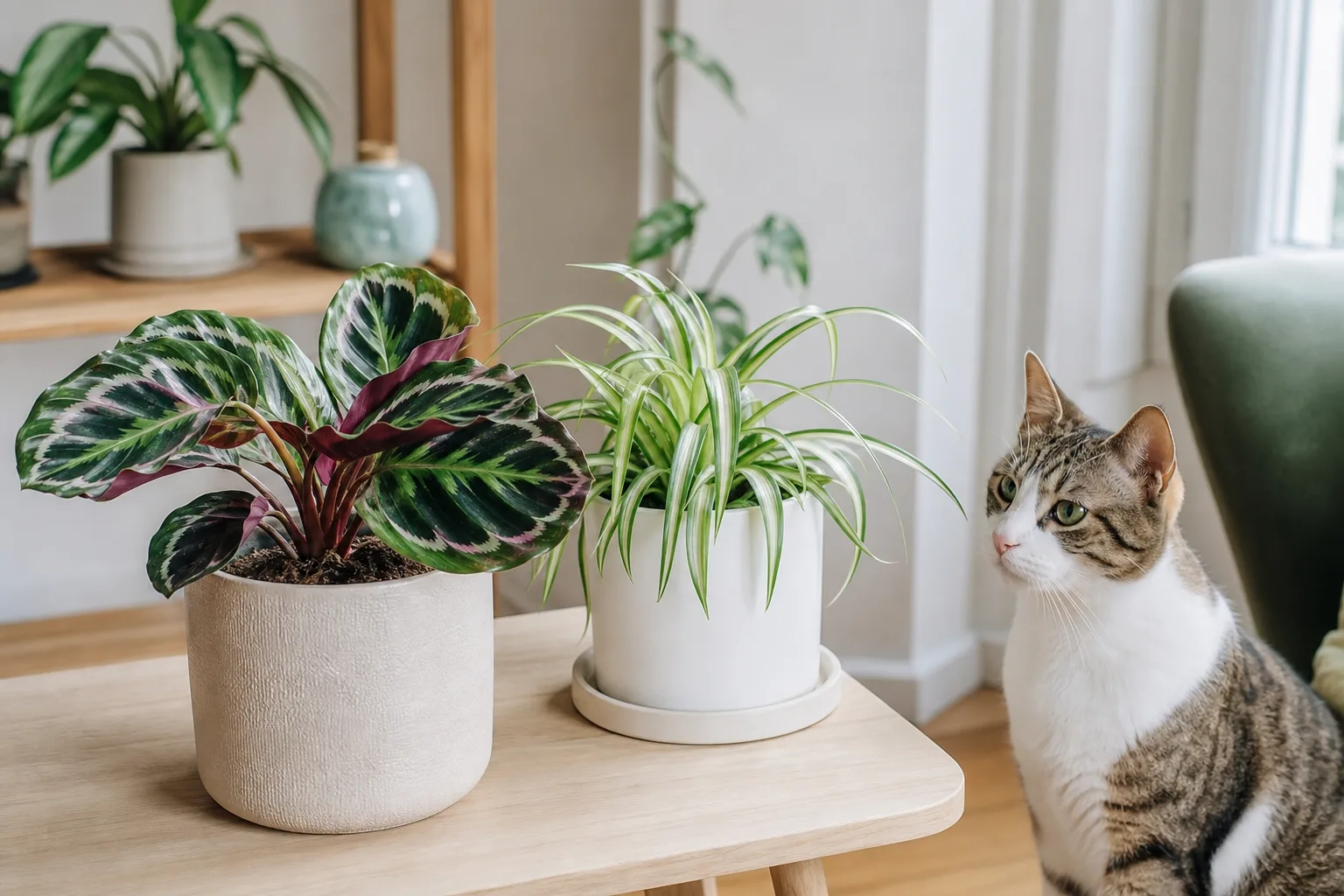
Are Pothos Toxic to Cats? Symptoms and What to Do Now
Find out whether pothos are toxic to cats, what to do after a bite, when breathing or swallowing trouble is an emergency, and how to keep vines out of reach.
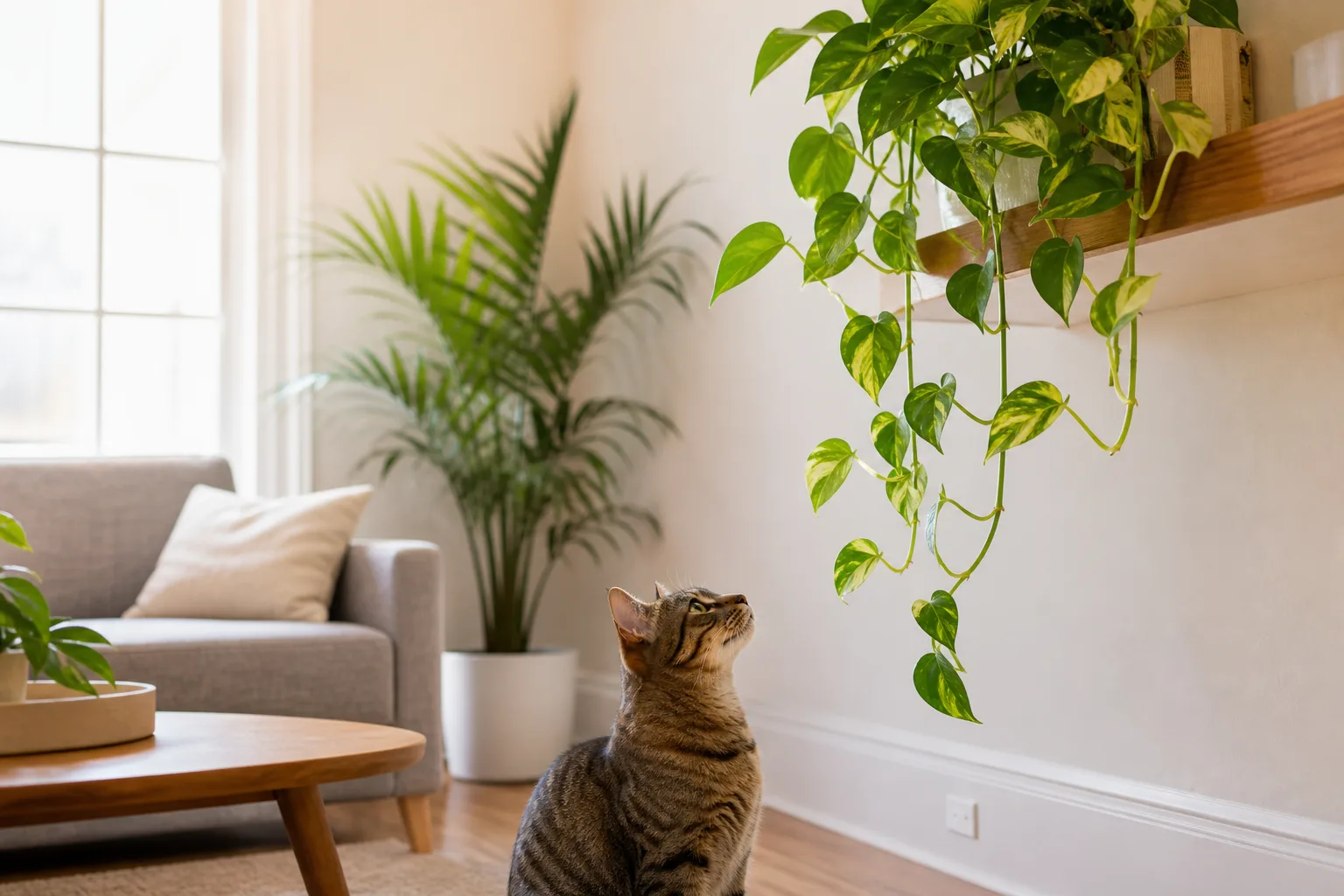
Yes. Pothos is toxic to cats if chewed or swallowed. The ASPCA lists golden pothos as toxic to cats because it contains insoluble calcium oxalates; reported signs include mouth irritation, drooling, vomiting, and difficulty swallowing. If you think your cat has bitten the plant, contact a veterinarian or animal poison-control service for case-specific guidance rather than waiting for symptoms or trying a home remedy.
Quick Answer: Are Pothos Toxic to Cats?
Pothos is a common name for plants sold as golden pothos, devil’s ivy, taro vine, and ivy arum. The ASPCA listing identifies the plant as Epipremnum aureum and names insoluble calcium oxalates as its toxic principle. Chewing can irritate a cat’s mouth and digestive tract, so a small-looking bite still deserves a call for professional advice if ingestion is possible. (ASPCA’s golden pothos listing)
That classification tells you the plant is unsafe to eat; it does not predict exactly how your cat will react or how much plant material was swallowed. If your cat is having trouble breathing or swallowing, treat that as an emergency and go to an emergency veterinary clinic now. For a suspected bite without severe signs, call your veterinarian promptly and share the details you can confirm.
Which Plants Count as Pothos?
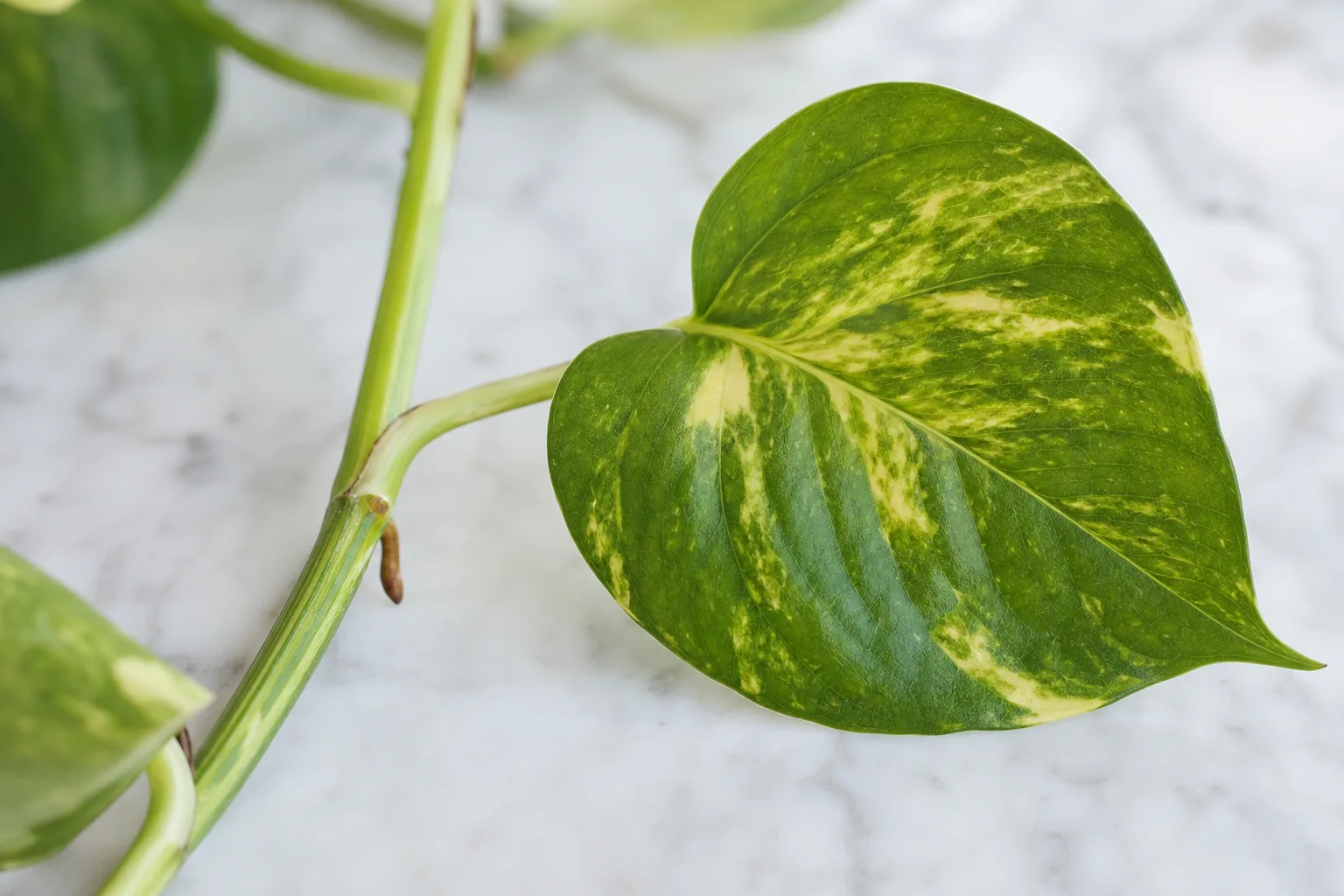
“Pothos” is used loosely on plant tags and in casual conversation, which makes identification harder than the yes-or-no answer suggests. The ASPCA lists Epipremnum aureum under Golden Pothos and Ivy Arum, with common names including pothos, devil’s ivy, and taro vine. If your plant tag gives a botanical name, keep it; if it does not, photograph the whole plant and a leaf so a veterinary professional or poison-control specialist can help identify it. (ASPCA’s Ivy Arum entry)
Cultivars of Golden Pothos
Golden, Marble Queen, Neon, Jade, and other named cultivars are sold for different leaf colors and patterns, but they remain forms of Epipremnum aureum. A pale or mostly green leaf is not evidence that the plant is a safer cultivar. If the plant is a pothos cultivar of this species, use the same cat-safety rule for every leaf, stem, and cutting: keep it away from chewing.
The visible plant may also be a juvenile vine, a cutting rooting in water, or a plant with unusually plain leaves. Those differences do not change the species listed on the label. If you cannot confidently distinguish a pothos from another houseplant, do not use a quick visual guess to decide that an exposure is harmless; give the plant photo and label information to a professional.
When the Label Uses Another Common Name
Some plants share a casual name without being the same botanical species. “Satin pothos” is a common name for Scindapsus pictus, not a variegated cultivar of golden pothos; the ASPCA has a separate listing for satin pothos and classifies it as toxic to cats as well. The word “pothos” on its own therefore cannot settle an identification question, and a different species name does not prove the plant is safe. (ASPCA’s Satin Pothos listing)
Check the exact scientific name against a current cat-toxicity database, such as the ASPCA’s plant list. If you are asking for help after a bite, tell the clinic that the identification is uncertain instead of substituting a likely plant name. A photo of the entire plant, close-up leaves, and nursery tag gives the care team more to work with than a common name alone.
Why Pothos Can Hurt a Cat
The ASPCA identifies insoluble calcium oxalates as the toxic principle in golden pothos. Texas A&M AgriLife Extension also places pothos among plants with calcium oxalate crystals and explains that chewing can irritate the mouth and throat. This is why the first clues are often visible around the mouth: a cat may drool, paw at its face, or resist swallowing after biting the foliage. (Texas A&M AgriLife Extension’s plant-toxicity guidance)
The details matter because a label like “toxic” does not describe one uniform kind of poisoning. For pothos, the cited plant-safety references focus on local irritation and signs involving the mouth and stomach. That description is useful for recognizing a plausible exposure, but it is not a home diagnostic test and does not replace an examination when signs are severe, persistent, or unclear.
What Insoluble Calcium Oxalates Do
Calcium oxalate crystals are contained in plant tissue. When a cat bites or chews that tissue, the crystals can irritate the mouth and throat where contact occurs. The ASPCA lists intense burning or irritation of the mouth, tongue, and lips, along with excessive drooling, vomiting, and difficulty swallowing. The reference does not provide a safe amount for a cat to eat, so it is not possible to clear an exposure by estimating that only a little leaf is missing.
This mechanism also helps explain why chewing is the key concern in a household. A cat that merely sits near an intact plant has not necessarily been exposed; a cat that has a leaf in its mouth, a chewed stem nearby, or new mouth symptoms after plant access may have been. When you are unsure which happened, describe the uncertainty to the veterinarian and let them decide what evaluation is appropriate.
Signs After a Cat Chews Pothos
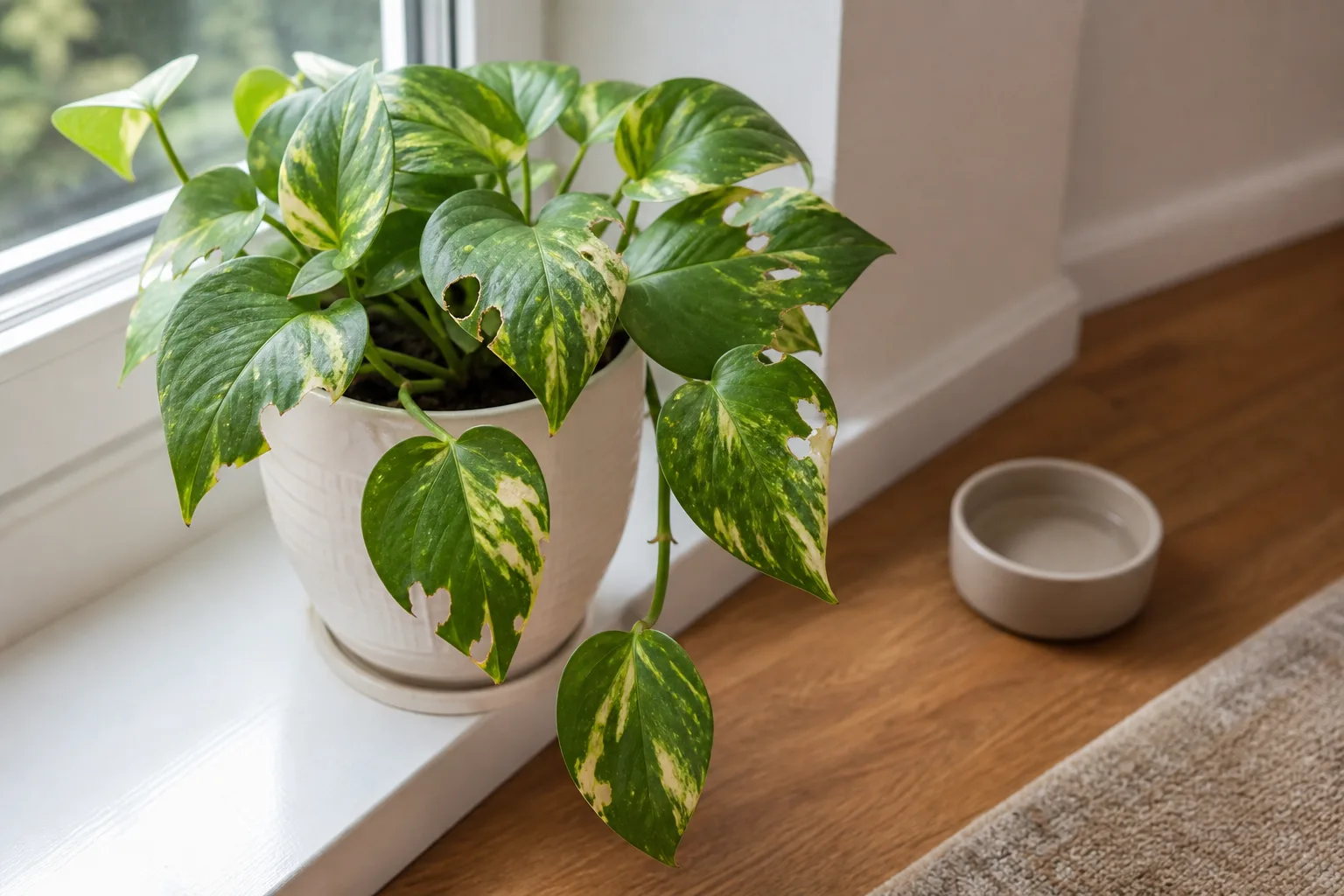
Look for a sudden change after the cat has had access to the plant, especially if a leaf or stem is damaged. The ASPCA lists mouth irritation, burning and irritation of the tongue and lips, excessive drooling, vomiting, and difficulty swallowing as clinical signs. These signs can occur with other problems too, so they can support concern about exposure but cannot establish pothos as the cause on their own. (ASPCA’s clinical-sign list)
Common Signs to Watch For
The most useful signs to notice are those named by the ASPCA: irritation or burning in the mouth, tongue, or lips; unusual or heavy drooling; vomiting; and difficulty swallowing. You might also notice repeated pawing at the mouth, reluctance to eat, or an abrupt change in behavior around food or water. These added observations are not proof of a particular toxin, but they are valuable details to share when you call.
Check the cat without forcing its mouth open. Note when the plant may have been chewed, whether leaves or stems are missing, whether the cat has vomited, and whether breathing and swallowing look normal. A short video of the behavior can help the clinic understand what you mean by “acting strangely,” but do not delay a call or trip to record one.
Signs That Need Emergency Attention
Difficulty breathing or swallowing needs urgent veterinary attention. Texas A&M AgriLife Extension notes that calcium-oxalate plant irritation can include swelling of the face and lips and, in some cases, difficulty breathing. Go to an emergency veterinary clinic immediately if you see labored or noisy breathing, a rapidly swelling mouth or face, choking, inability to swallow saliva, collapse, or severe weakness. (Texas A&M AgriLife Extension)
Do not wait for a routine appointment or spend time trying a home treatment if your cat’s airway or ability to swallow seems affected. Call the emergency clinic while arranging transport if someone else can make the call. Tell them the plant may be pothos, give the time of possible exposure, and bring the tag or a clear photo if doing so does not slow you down.
What to Do if Your Cat Ate Pothos
The safest first move is to prevent another bite and get veterinary guidance. The ASPCA advises contacting a veterinarian or its Poison Control service as soon as possible when a pet may have ingested a potentially toxic substance; Texas A&M AgriLife Extension likewise says to call a veterinarian if ingestion is suspected. A professional can ask about your cat’s condition and exposure and decide whether the cat needs to be seen. (ASPCA Poison Control guidance; Texas A&M AgriLife Extension)
The First Steps
- Separate your cat from the plant. Move the pothos and any loose clippings where the cat cannot reach them. If there are other cats, keep them out of the area too.
- Record what you know. Note when the cat may have chewed it, which part seems missing, and any signs you have seen. Do not estimate a precise dose if you cannot tell how much was swallowed.
- Save identification details. Take a clear photo of the plant and its tag or write down the botanical name, if available. Keep a leaf or clipping only if you can do so safely and it will not delay care.
- Call your veterinarian or an animal poison-control service. In the United States, the ASPCA Poison Control number listed on its plant entry is 888-426-4435; a consultation fee may apply. If your cat has a severe sign, contact an emergency clinic and go now rather than waiting for a routine callback.
If your cat is alert and breathing normally, a phone call is still the right next step when you saw or reasonably suspect a bite. Have your cat’s age, approximate weight, any known health issues, time of possible exposure, and the plant information ready. These details let the professional ask focused questions; they do not mean you need to diagnose the problem yourself.
What Not to Try at Home
Do not induce vomiting or give a human medication, milk, oil, or another home remedy unless a veterinarian or poison-control professional specifically tells you to. A cat who is already drooling or struggling to swallow can be difficult to handle safely, and forcing a liquid or opening the mouth may create more distress. Keep hands away from the back of the mouth; do not pry the jaws apart to look for plant pieces.
Avoid using a folk remedy or a social-media checklist as a substitute for a call. Even if a cat seems better a few minutes later, that observation does not identify the plant or establish that the exposure is harmless. If the professional gives you instructions tailored to your cat, follow those directions and call back if the signs change.
How Soon Can Signs Start?
Because the crystals irritate tissue when the plant is chewed, mouth signs can show up during or soon after contact. There is no dependable symptom-free waiting period in the ASPCA listing, and timing or severity can vary with the individual cat and the exposure. Do not wait for drooling or vomiting to begin before calling if you know your cat has chewed pothos.
If you only noticed a damaged leaf and did not see a bite, the situation is less certain, not automatically safe. Record when you last saw the plant intact and check the cat for the listed signs, but contact your veterinarian for advice rather than treating the clock as proof. New or worsening signs should prompt another call or an in-person evaluation according to the clinic’s guidance.
Does Every Exposure Mean an Emergency Visit?
Not every suspected nibble means a cat must be rushed to an emergency hospital, but only a veterinary professional can judge a particular exposure. Your cat’s current signs, health, size, the amount and part of the plant involved, and uncertainty about the plant’s identity all affect the decision. The right response to a stable cat may be different from the right response to one with mouth swelling or trouble swallowing.
Use a phone consultation to make that distinction. The ASPCA lists a poison-control number and advises prompt contact, while Texas A&M AgriLife Extension directs owners to call a veterinarian when ingestion is suspected. If you cannot reach your regular clinic, call an emergency hospital or the animal poison-control service available where you live; if breathing is affected, start emergency transport immediately.
How to Keep a Cat Away From Pothos
If your cat routinely mouths greenery, the reliable choice is to remove pothos from areas the cat can enter. If you keep it, assess the room from your cat’s perspective: include the tops of bookcases, windowsills, counters, the back of a sofa, and nearby furniture that could become a launching point. A leaf that is out of reach while the cat is standing on the floor may be easy to reach after one jump.
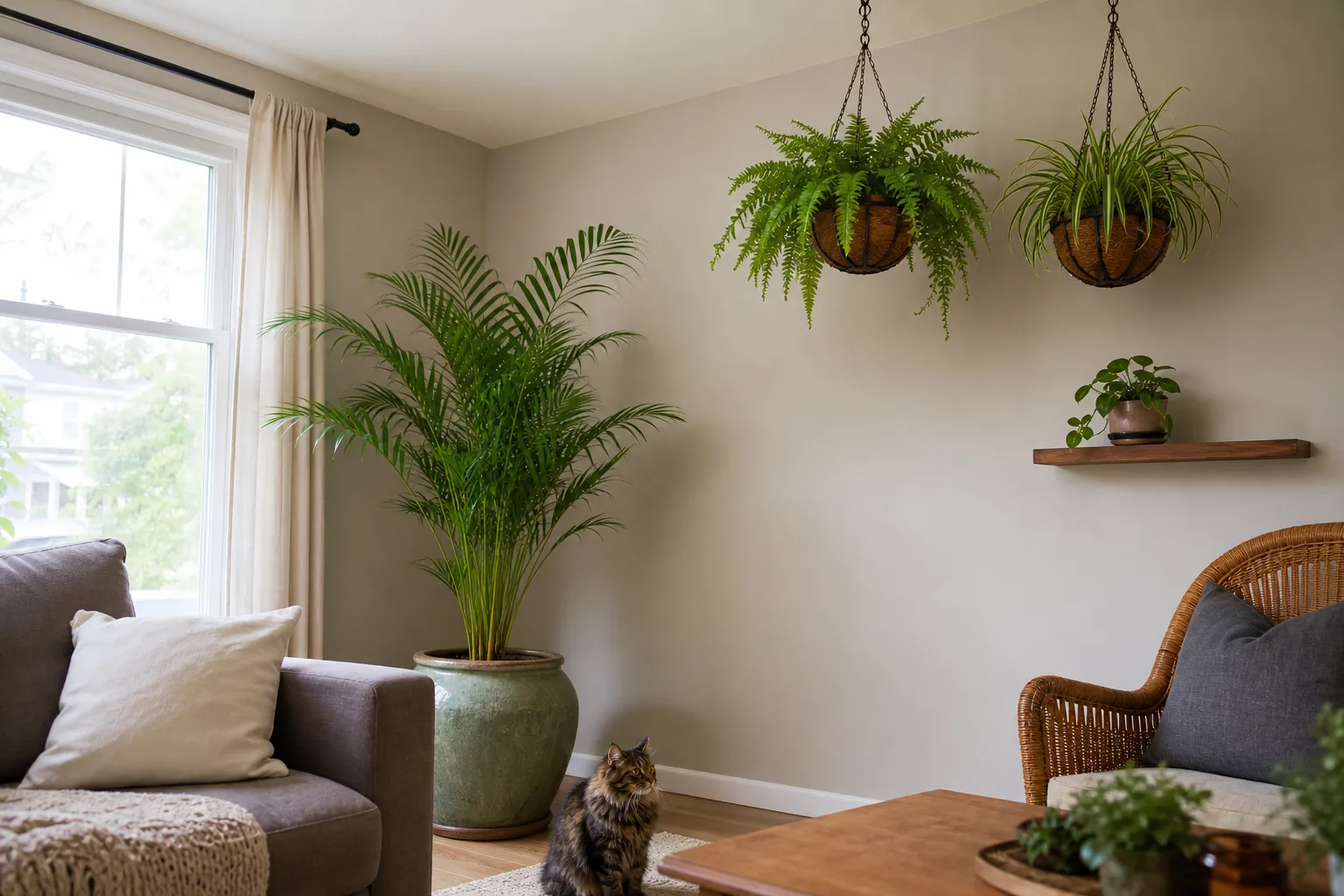
Why a Hanging Basket May Still Be Reachable
A hanging basket can help, but it is not a safety guarantee. Cats can climb shelving and furniture, leap to ledges, or play with vines that hang low enough to swing within reach. Gardening Know How similarly cautions that high shelves only work for cats that are not jumpers, and Epic Gardening notes that hanging plants need their vines kept short enough to stay out of reach. (Gardening Know How’s pothos and pet guidance; Epic Gardening’s pet-proofing advice)
Look for the whole access path, not just the pot. A plant hung over a chair, a shelf beside a bookcase, or a long vine that drapes toward a cat tree is still an invitation. If you cannot confidently rule out access when the cat is alone, choose a closed room or a different plant instead of relying on supervision.
Build a Reliable Barrier or Choose a Different Plant
For a cat that has already chewed the plant, stronger separation is sensible. Put pothos in a room with a door the cat cannot open, use a sturdy closed plant cabinet with suitable light and ventilation, or move the plant to a home without cats. An open shelf or ceiling hanger is a distance strategy; a closed barrier is much easier to evaluate because it does not depend on predicting every jump.
Pruning can reduce tempting trailing stems, but treat the cuttings as plant material that still needs to be put away. Trim over a work surface, gather every piece, and dispose of or store the clippings where pets cannot reach them. Also check the floor and nearby furniture for fallen leaves after routine plant care, since a small clipping is easy to overlook.
Avoid relying on scents, pepper, or a spray as the main safeguard. A deterrent may not work for a particular cat, can encourage play or investigation, and does not change the plant’s toxicity. Practical gardening advice from Epic Gardening discusses several placement options, but physical separation or replacing the plant is the clearer choice when a cat is persistent or unsupervised.
Cat-Safe Alternatives to Pothos
If you want greenery your cat may approach, pick a species from a current cat-specific toxicity reference rather than shopping by a vague “pet-friendly” label. The ASPCA’s plant list separates cat entries and gives plants by name; compare the scientific name on the nursery tag with the database entry before buying. You can also browse our guide to non-toxic plants for cats for indoor options and the limits of the phrase “non-toxic.” (ASPCA’s cat plant list)
“Non-toxic” is not the same as “edible” or “safe in unlimited amounts.” Chewing a large quantity of any foliage can upset the stomach, and the soil, fertilizer, plant treatment, or container may create separate hazards. If your cat persistently eats plants, keep all greenery inaccessible while you talk with your veterinarian about what is appropriate for that cat.
Some owners grow a designated pot of cat grass, but it should be treated as a separate, supervised option—not as a way to make pothos safe or to guarantee a cat will leave other plants alone. Check the seed and plant identity, keep the pot clean, and remove it if the cat eats it excessively or becomes unwell. A replacement plant solves the pothos question only when the exact species has been checked and its placement also fits your cat’s behavior.
Conclusion
Pothos is toxic to cats, and changing the leaf color or cultivar name does not make an Epipremnum aureum safe to chew. The ASPCA lists insoluble calcium oxalates and signs that include mouth irritation, drooling, vomiting, and difficulty swallowing; a suspected bite is a reason to contact a veterinarian or animal poison-control professional for advice.
Move the plant and clippings out of reach, save the label or a photo, and share what you observed. Breathing trouble, inability to swallow, or progressive swelling calls for emergency veterinary care. For the long term, either use a barrier your cat cannot bypass or replace the pothos with a plant verified by its scientific name.