15 Apartment Plants for Every Light Level
Choose the best apartment plants for bright windows, dim corners, shelves, and small rooms. Get 15 realistic picks plus light, watering, pot, and pet-safety tips.
The best apartment plant is not the one with the toughest reputation. It is the one whose light, size, watering rhythm, and safety profile fit the room you actually have. A forgiving plant in the wrong window still declines; a slightly fussier plant in the right place can become the easiest one you own.
Start with light, then consider your ceiling height, floor space, schedule, and pets. The 15 choices below include dependable low-light foliage, shelf-friendly trailers, compact bloomers, and a few plants for the brightest window in the home. “Easy” means forgiving when you miss a task—not able to grow in a dark closet or a pot with no drainage.
Start with your apartment’s limits, not the plant label
Light comes before looks
Light is the first constraint because it powers growth. UGA Extension classifies indoor areas at roughly 25–75 foot-candles as low light, 75–200 as medium light, more than 200 without direct sun as high light, and four or more hours of direct sun as sunny. You do not need to memorize those numbers, but they explain why a plant can survive on a shelf yet stop producing healthy new leaves there.
Use the daylight test: if you can read comfortably in the spot without switching on a lamp, it has usable light; if the room needs artificial light all day, it does not have enough natural light for long-term plant growth. A north-facing window usually gives the least light, an east window offers gentle morning sun, and south or west windows can be bright enough for sun-loving plants—but nearby buildings, curtains, trees, and overhangs can change the result.
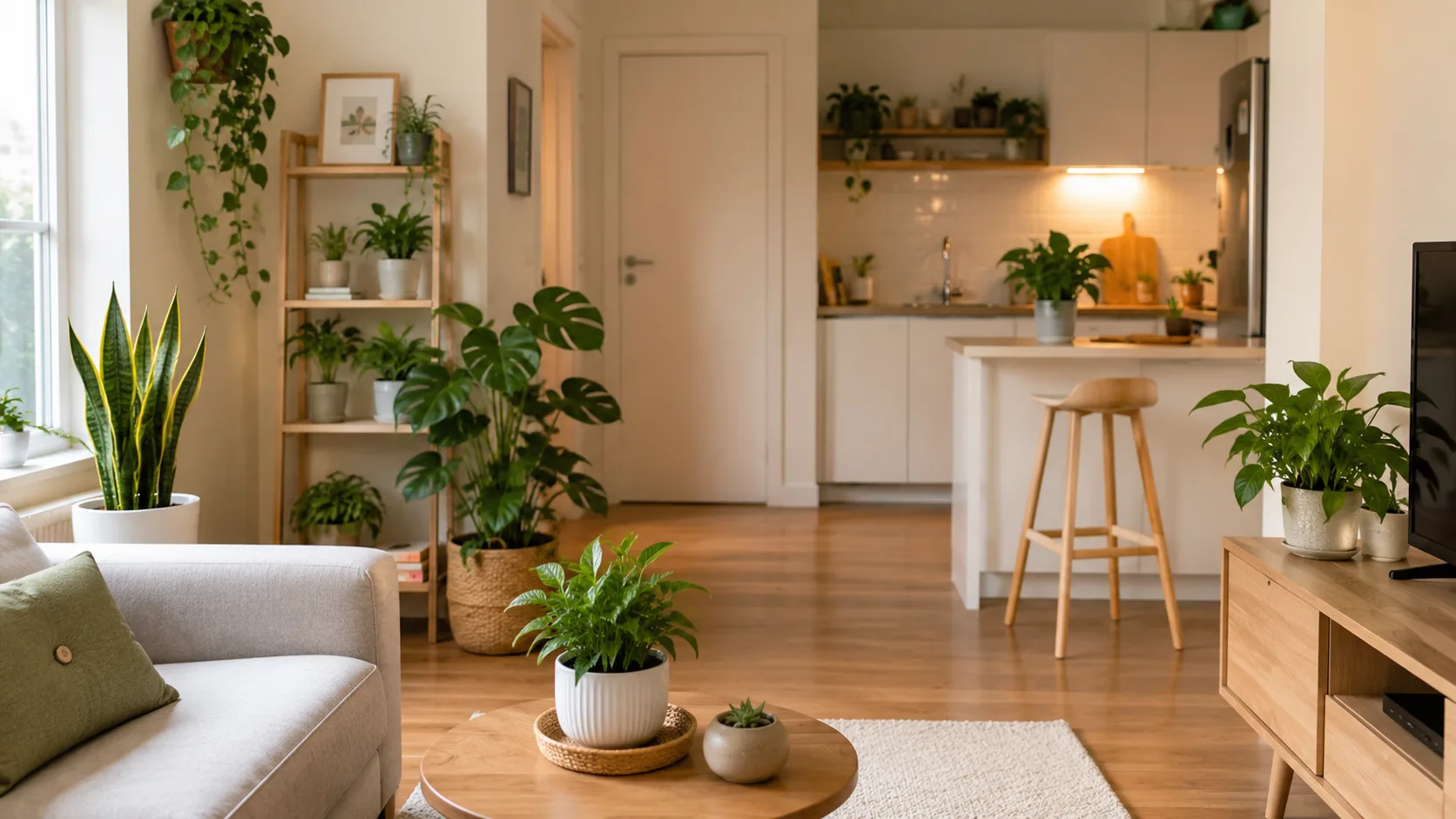
Match growth habit to the room
In a small apartment, the plant’s shape can matter more than its mature height. Upright snake plants and dragon trees use vertical space, pothos and heartleaf philodendrons turn a high shelf into a trailing display, and a compact African violet can give you flowers without claiming a floor corner.
Measure the spot before you buy. Leave enough room to rotate the pot, reach the soil, and carry it to a sink or shower. A plant that barely fits when watered will become an annoying plant, and annoyance is one of the fastest routes to missed care.
The 15 best apartment plants, sorted by real-life use
Low-light and low-water picks
These are the strongest choices for dimmer rooms, dry heated air, or a new plant parent who prefers to check soil occasionally rather than daily. They still need daylight, and their growth will be slower when light is weak.
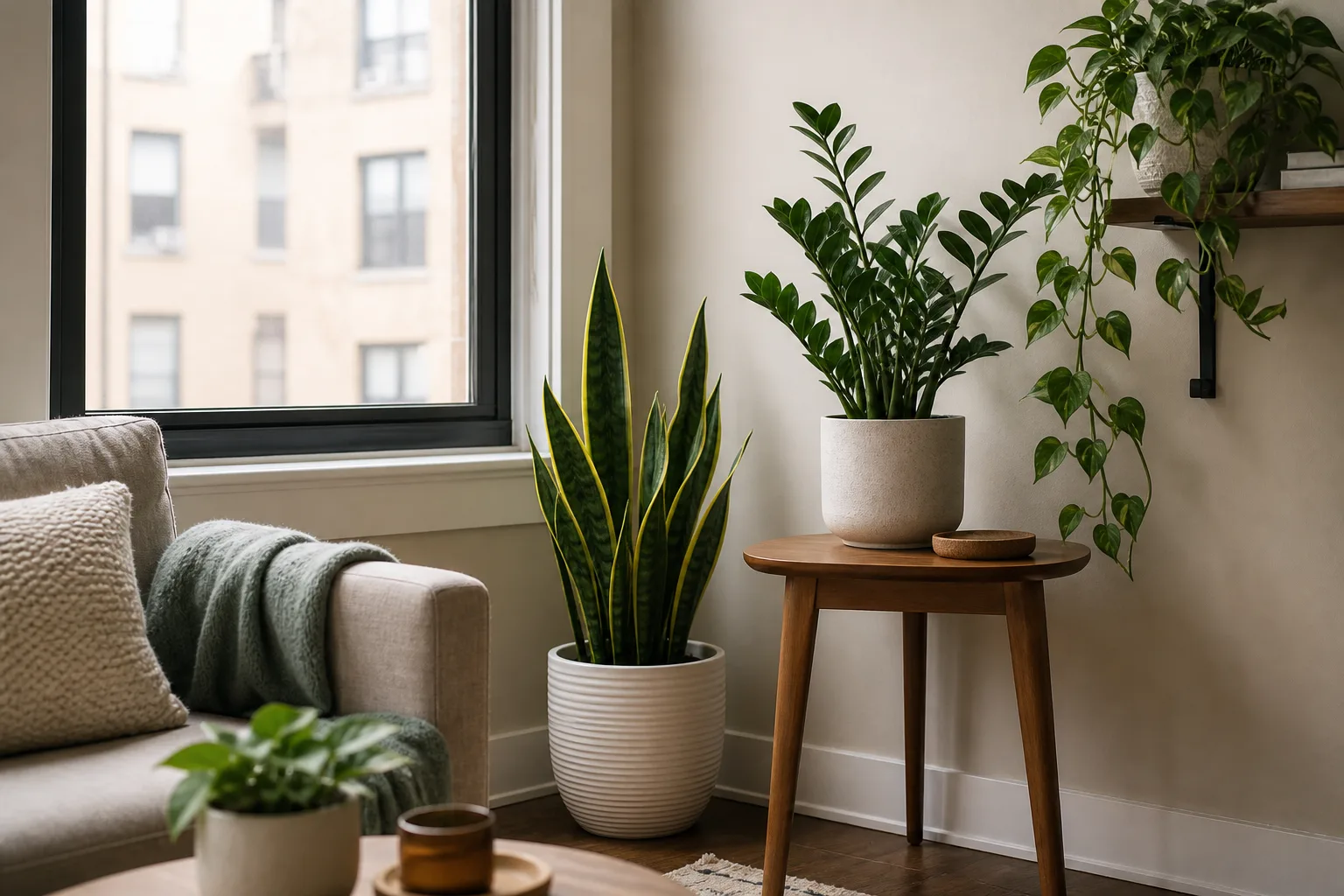
1. ZZ plant (Zamioculcas zamiifolia)
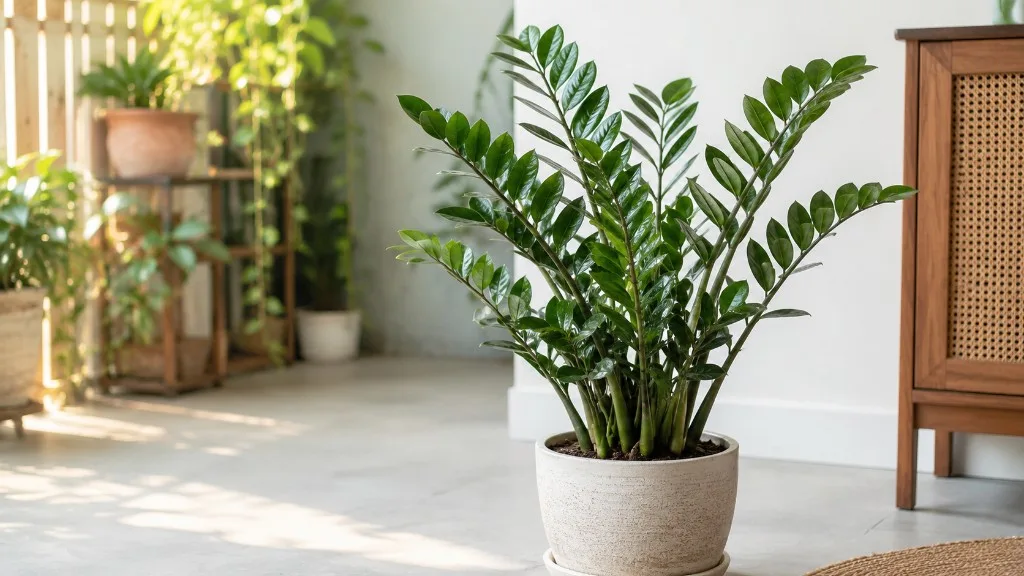
The ZZ plant is the best match for a dim room and an irregular watering routine. Its fleshy underground rhizomes help it store water, so NC State Extension recommends well-drained potting soil and allowing the mix to dry between waterings; the plant tolerates very low light but grows better in bright indirect light. That distinction matters: a dark office may keep it alive, while a brighter position keeps the stems fuller.
Choose a compact pot for a desk or a larger upright form for a floor corner. Water only after the mix has dried well, especially in a dim spot, and keep it away from pets that chew plants because the species is considered toxic to cats and dogs.
2. Snake plant (Dracaena trifasciata)
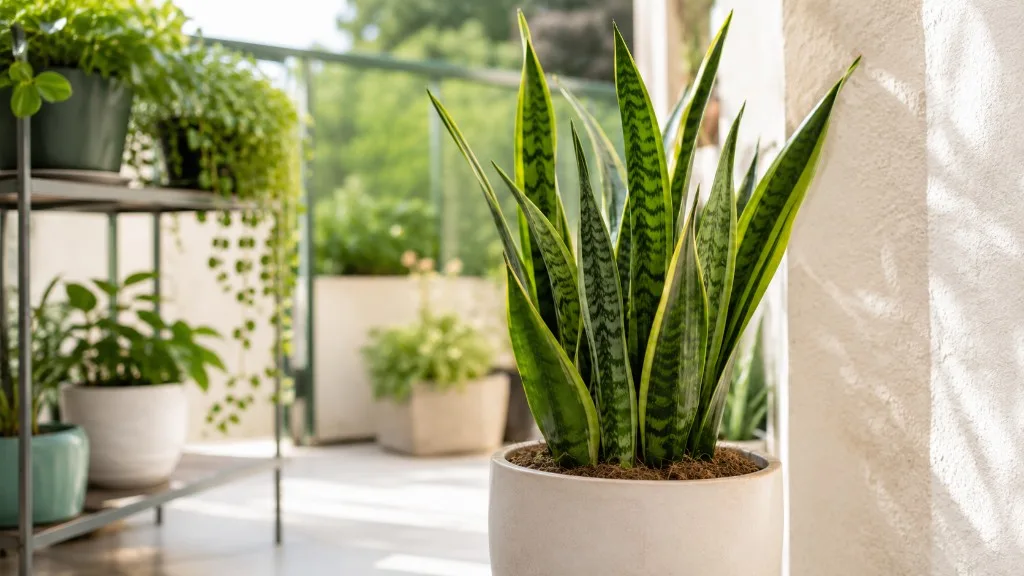
Snake plant solves the narrow-space problem better than almost any other houseplant. Its vertical leaves fit beside a sofa, in a hallway with ambient daylight, or near a north-facing window, and the plant handles dry air better than soft-leaved tropicals.
Let the potting mix dry thoroughly before watering again; in a low-light apartment, that may take much longer than a care tag suggests. The ASPCA lists snake plant as toxic to cats and dogs, so place it where a curious pet cannot reach the leaves.
3. Cast iron plant (Aspidistra elatior)
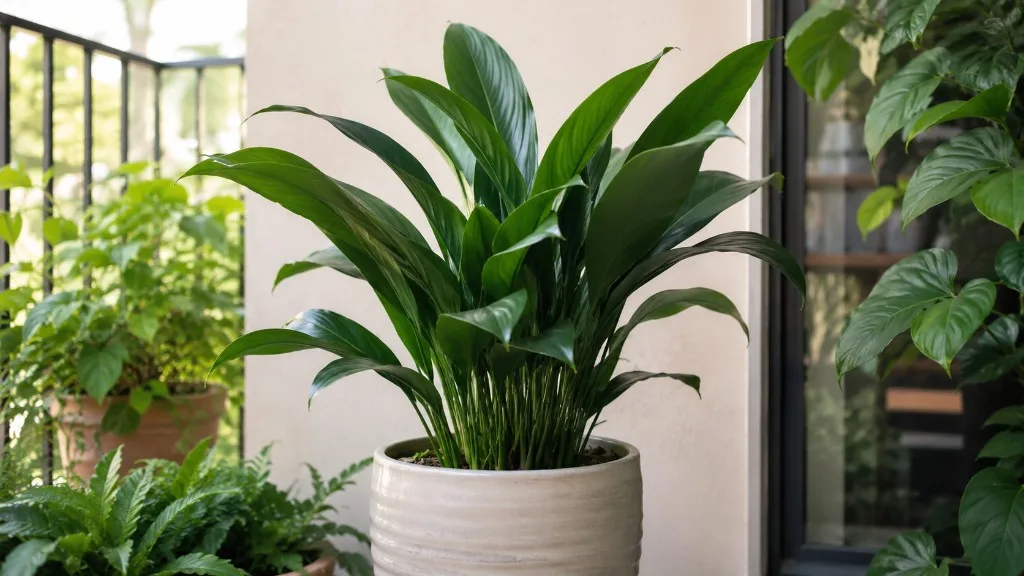
Cast iron plant is a quiet, slow-growing choice for an apartment that is shaded, cool, or short on attention. It has broad leaves rather than a tall architectural silhouette, so it works best on a low stand or in a corner where you want dependable green without rapid sprawl.
Give it indirect light and let the surface of the mix dry slightly before watering. Do not keep it permanently wet just because the plant tolerates shade; low light slows water use. It is listed by the ASPCA as non-toxic to cats and dogs, although pets can still get stomach upset from eating plant material.
4. Lucky bamboo (Dracaena sanderiana)
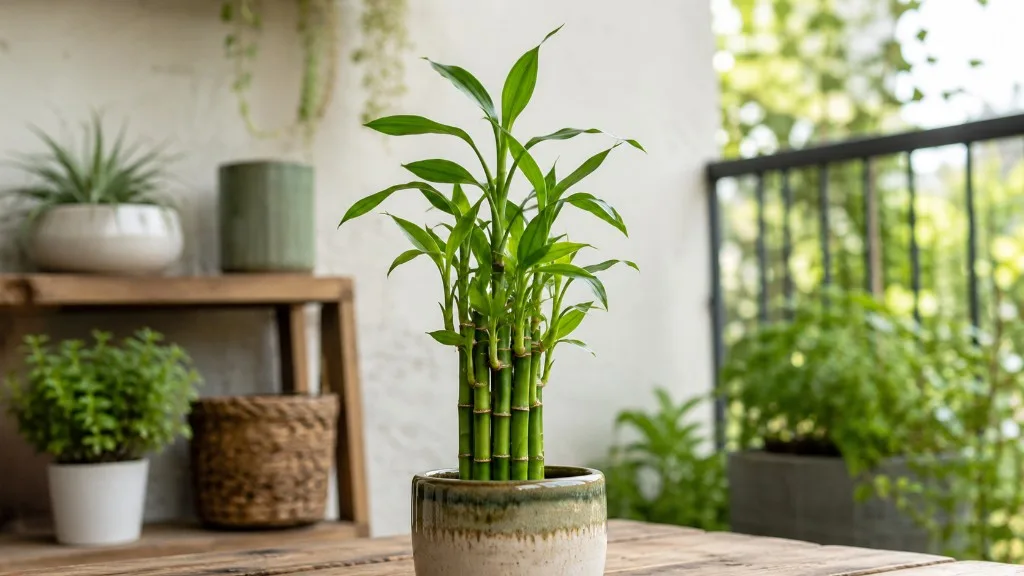
Lucky bamboo earns its place in small apartments because it has a slim, upright shape and can be grown in soil or in water. Put it in bright, filtered light rather than direct sun, and keep the water clean if you are using a water-grown arrangement. For soil-grown plants, use a pot with drainage and water when the mix begins to dry.
The common name can hide the fact that this is a dracaena, not a true bamboo. Treat it as a potentially toxic plant around pets and verify the exact species before placing it within reach. It is a good desk plant, but a cold windowsill or a heater blowing directly on it is a poor long-term location.
Trailing plants for shelves and high spots
Trailing plants make use of apartment height, but a high shelf is not automatically a good plant location. Make sure the light reaches the shelf, the pot cannot tip, and you can bring it down to water without dripping onto furniture.
5. Golden pothos (Epipremnum aureum)
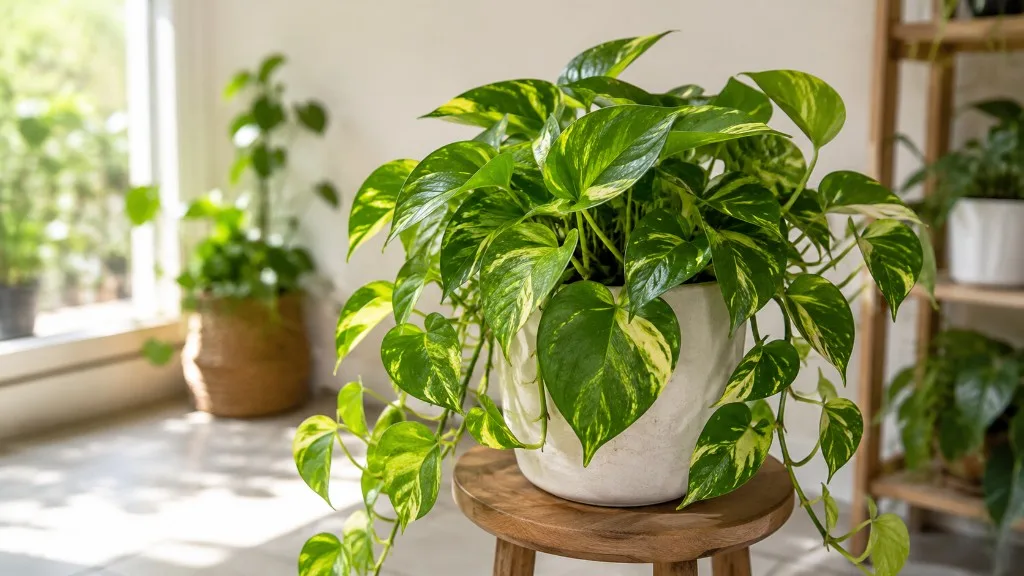
Golden pothos is a fast, forgiving trailer for a shelf, bookcase, or hanging planter. Bright indirect light produces stronger growth and better variegation, while lower light usually means slower growth and less color. Let the top portion of the mix dry before watering, then empty the saucer so the roots are not left in standing water.
Trim the vines when they reach a walkway or begin shading the plant below. ASPCA identifies golden pothos as toxic to cats and dogs, with insoluble calcium oxalates that can irritate the mouth if chewed, so use a truly inaccessible shelf in pet homes rather than assuming a trailing plant is safe overhead.
6. Heartleaf philodendron (Philodendron hederaceum)
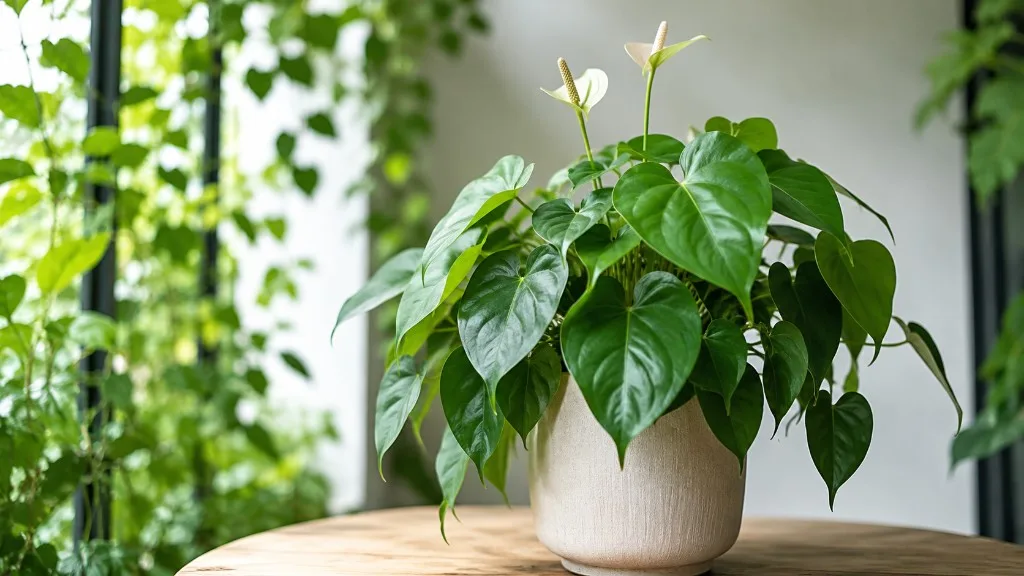
Heartleaf philodendron has soft, heart-shaped leaves and a more relaxed trailing habit than a tall floor plant. It is a useful choice for a bookshelf or the top of a cabinet where you want greenery to spill down, provided the light is bright enough to prevent long, sparse gaps between leaves.
Let the upper layer of potting mix dry before watering and rotate the pot every few weeks so one side does not lean permanently toward the window. ASPCA lists heartleaf philodendron as toxic to dogs, cats, and horses. Keep it out of reach and wipe up fallen leaves promptly if animals investigate plants on the floor.
7. Spider plant (Chlorophytum comosum)
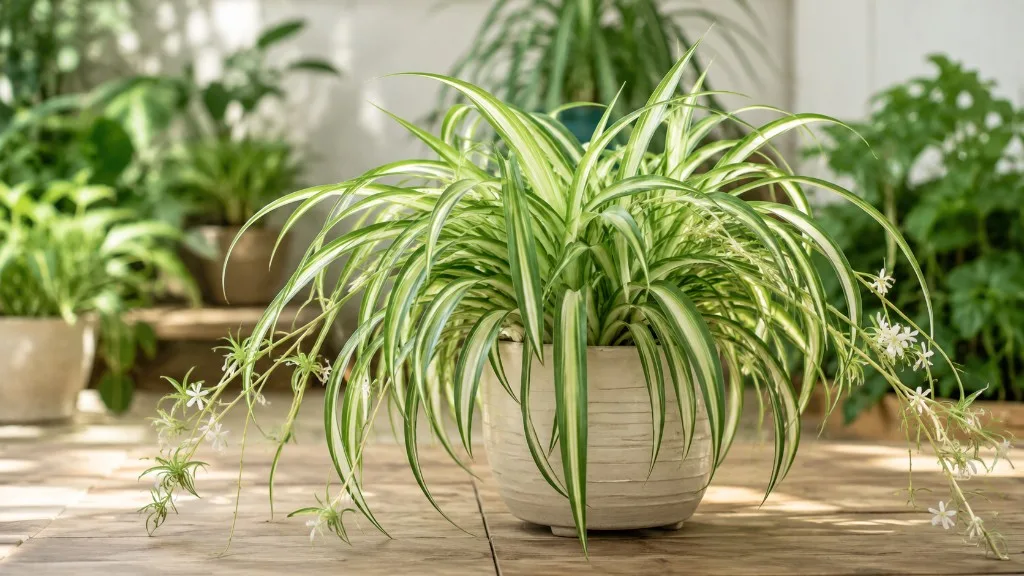
Spider plant is a strong starter choice when you want a forgiving hanging plant that can make offsets, or “pups,” after it settles in. It tolerates a range of indoor light, but bright indirect light keeps the striped leaves denser and helps it produce a fuller cascade. Give it a pot with drainage and water when the mix is partly dry.
Brown tips do not automatically mean the plant is thirsty. Dry air, salt buildup, inconsistent watering, and water quality can all play a role; UGA Extension notes that long, linear leaves such as spider plant can be sensitive to fluoride. The ASPCA lists spider plant as non-toxic to cats and dogs, making it one of the best first picks for a pet household.
Flowers and foliage color
Flowering plants and strongly variegated foliage usually ask for more light than their low-light reputations suggest. Use the brightest filtered spot in the apartment, and accept that bloom frequency or leaf color may decrease in a dim room.
8. Peace lily (Spathiphyllum)
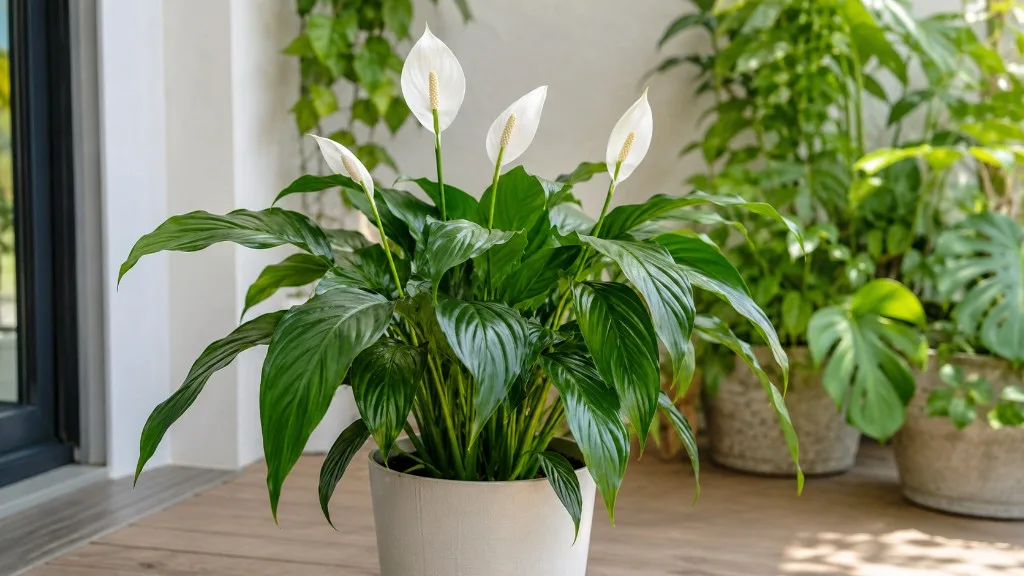
Peace lily is one of the few foliage plants that can flower in low light, though it generally blooms more reliably in bright indirect light. Clemson Extension recommends a well-drained mix kept moist but not soggy, room-temperature water, and no standing water in the saucer. A drooping plant may need water, but repeated wilting and flooding is a stressful cycle rather than a care strategy.
Keep it away from heat and AC vents, and do not place it in direct midday sun. Peace lily contains calcium oxalate crystals and is toxic to pets and children if consumed, so it is not a casual choice for a reachable floor stand.
9. Chinese evergreen (Aglaonema)
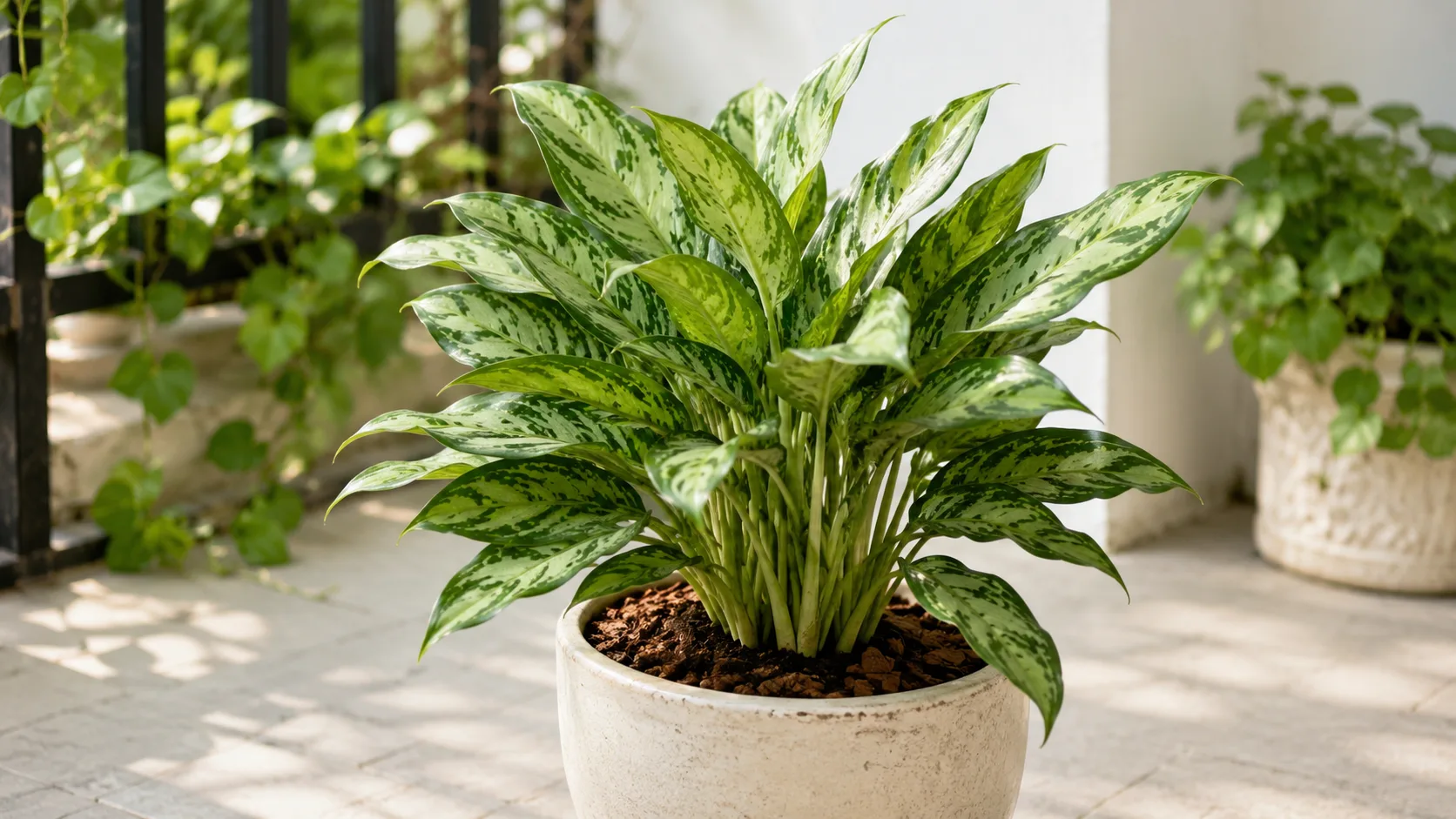
Chinese evergreen brings color to a room where flowering plants may struggle. Dark-green cultivars are usually the safer choice for dimmer spots; silver, pink, or strongly variegated forms need brighter indirect light to keep their patterns from fading.
Use an airy potting mix, water after the upper layer dries somewhat, and protect the plant from cold glass and drafts. The ASPCA lists Aglaonema modestum as toxic to cats and dogs, with insoluble calcium oxalates that can cause oral irritation, so display it behind a barrier in a pet home.
10. African violet (Saintpaulia)
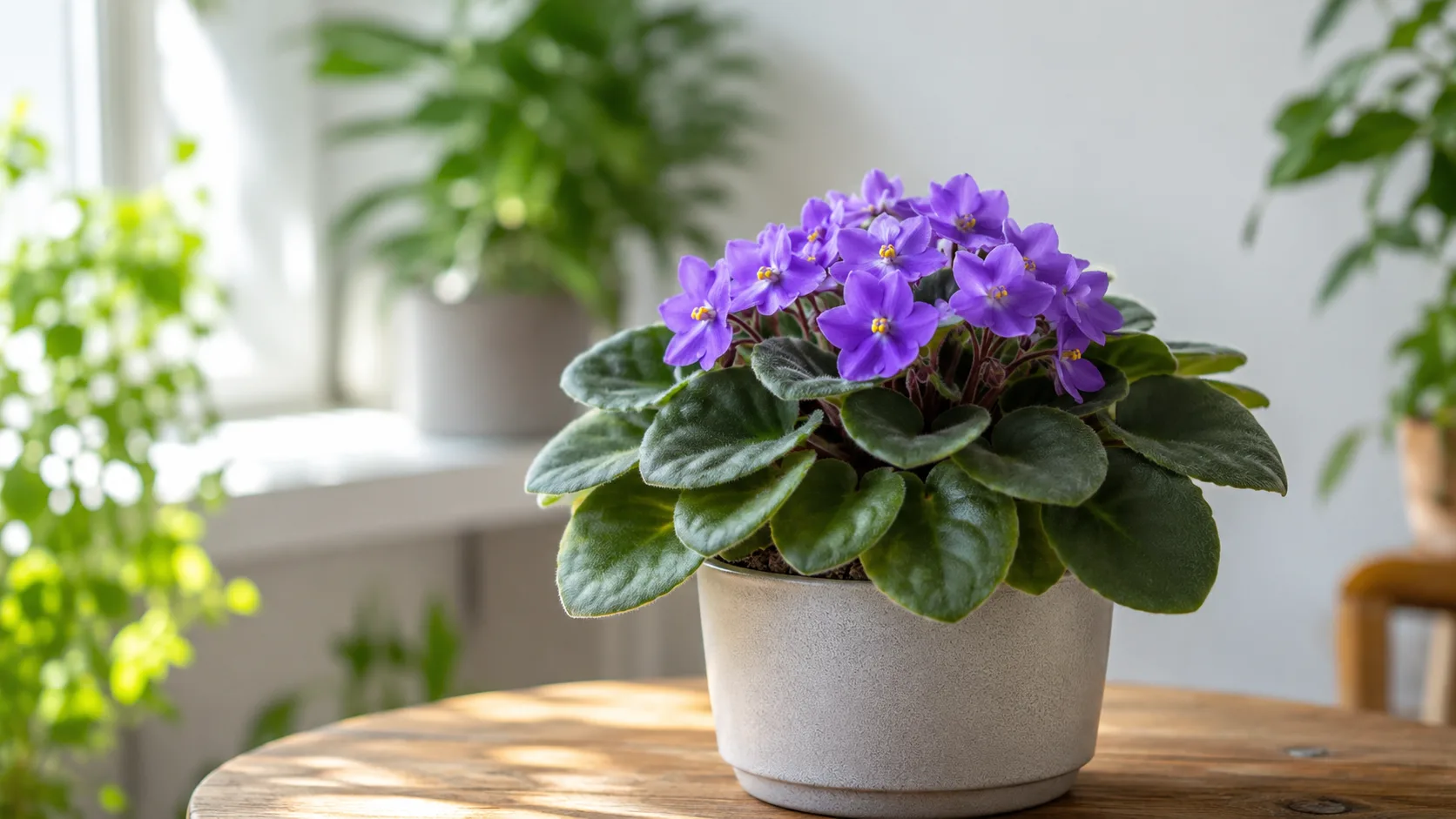
African violet is a smart small-space flowering plant because its rosette stays compact while it can bloom repeatedly in the right light. A bright east window or filtered south or west light is usually more useful than a dim shelf. Keep water off the fuzzy leaves, water the soil carefully, and avoid placing the pot against cold glass.
It prefers an evenly but lightly moist mix rather than the wet-dry swings that suit a snake plant. A small pot and a dedicated African-violet mix make the routine easier, and the ASPCA lists African violet as non-toxic to cats and dogs.
11. Christmas cactus (Schlumbergera)
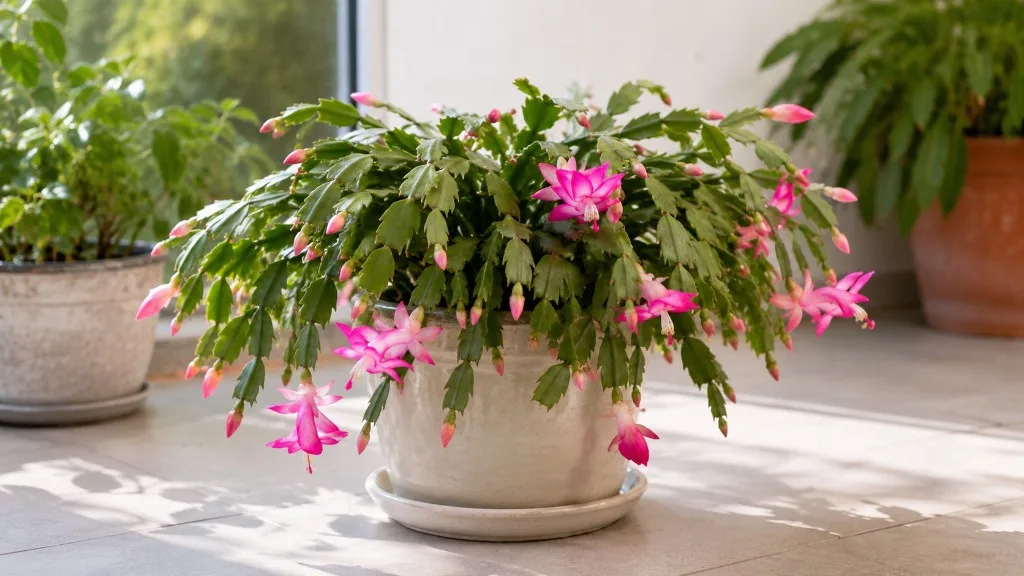
Christmas cactus gives an apartment seasonal color without the full-sun demands of many flowering plants. Its segmented stems prefer bright, indirect light and a stable location; a little direct morning sun can be fine, but hot afternoon glass can scorch the plant.
Unlike a desert cactus, it should not be left bone-dry for long periods. Water when the mix has partly dried, then let excess drain completely. Avoid sudden moves, cold drafts, and constantly wet soil, which can encourage root problems. The ASPCA lists Christmas cactus as non-toxic to cats and dogs, but a pet that eats any large amount of plant material can still develop stomach upset.
Tall, structural plants
Use these when the apartment has height but not much floor width. Buy a manageable size, check the mature habit, and leave clearance from doors, radiators, ceiling fans, and walking paths.
12. Monstera deliciosa
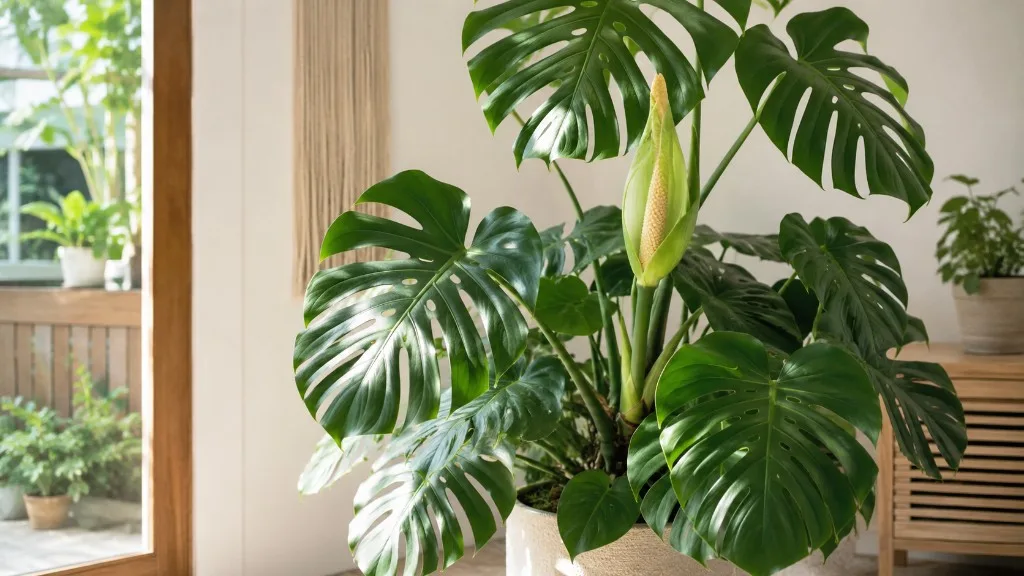
Monstera is the statement plant for an apartment with a bright east window, filtered south light, or a well-placed grow light. Its large leaves give a room an instant focal point, but it is not a tiny-space plant in disguise: it eventually needs width, support, and a way to move around it for watering and cleaning.
Give it bright indirect light, a sturdy pot, and a support if the stems begin to sprawl. Let the mix dry partially between thorough waterings rather than using a weekly calendar. Because ASPCA lists Monstera deliciosa as toxic to cats and dogs, keep it away from pets that chew leaves.
13. Dragon tree (Dracaena marginata)
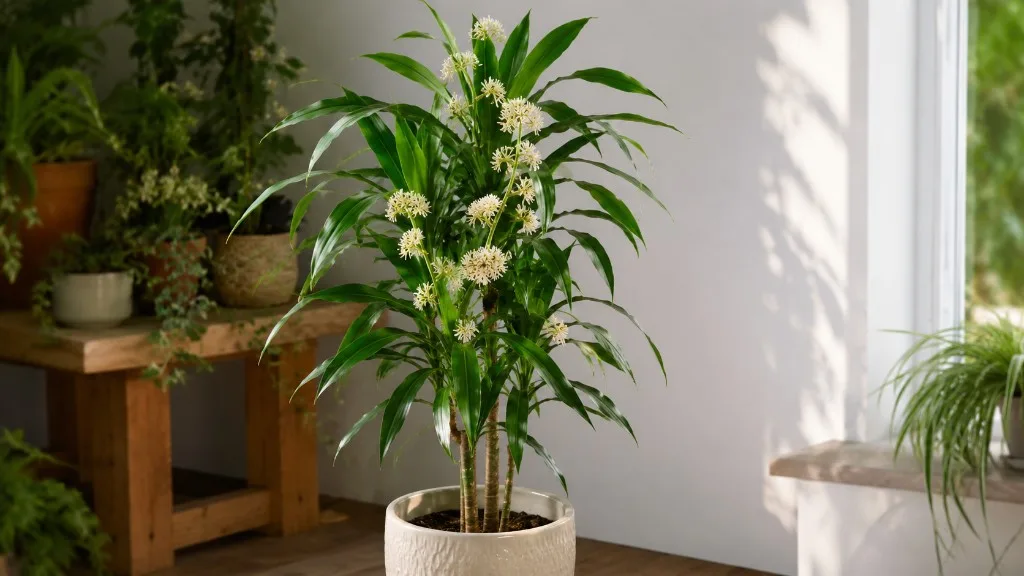
Dragon tree has a narrow, upright profile that works in a hallway, beside a desk, or in a corner where a spreading plant would block the room. Bright indirect light supports better growth, though established plants can tolerate less for a while. Rotate it so the crown does not lean toward one window.
Water after the upper part of the mix dries and empty the saucer. Protect the plant from cold drafts and heating vents, and watch for brown tips if the air is dry or salts accumulate. Dracaenas are toxic to pets if eaten, so choose a high, stable location or a different plant for a household with a leaf-chewing animal.
14. Parlor palm (Chamaedorea elegans)
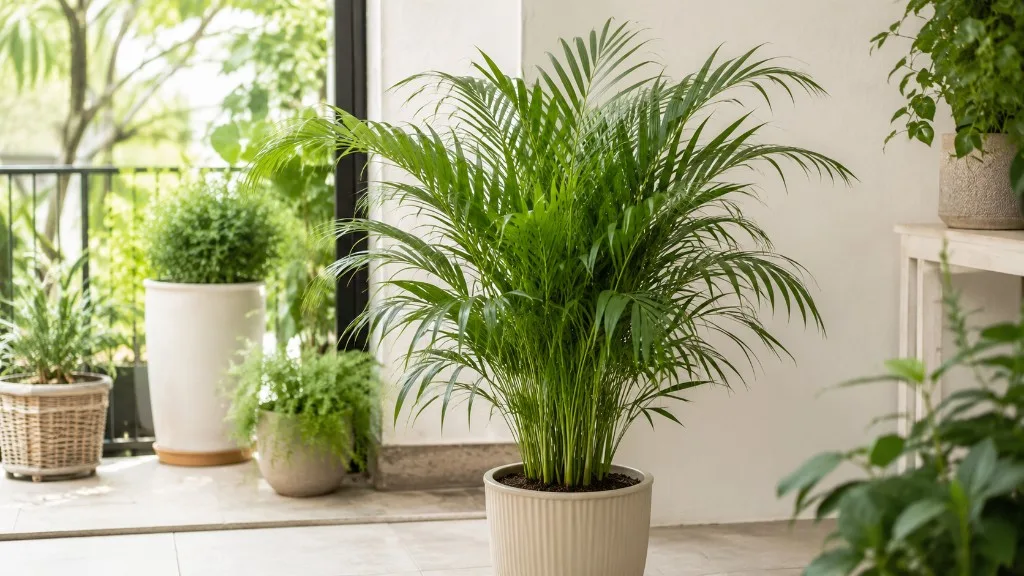
Parlor palm creates a soft, airy floor display without the rigid silhouette of a snake plant. It tolerates lower light better than many palms, but it still needs usable daylight and performs best in bright filtered light. Keep the fronds away from a radiator, forced-air vent, and a narrow doorway where they will be brushed constantly.
Let the top of the soil dry slightly, then water thoroughly and drain the pot. It is slower and more sensitive to chronic sogginess than its relaxed appearance suggests. The ASPCA lists parlor palm as non-toxic to cats and dogs, making it a strong tall option for pet-aware homes.
The brightest-window choice
15. Jade plant (Crassula ovata)
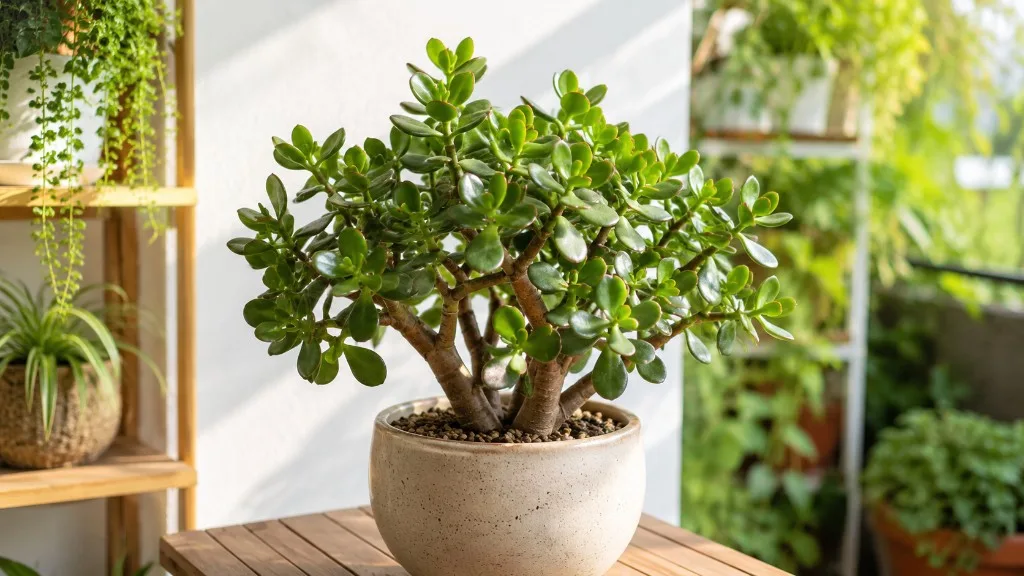
Jade plant is the right answer for the apartment with a sunny south- or west-facing window, not the dark room where you wish a succulent would survive. Its thick leaves store water, but the plant also needs strong light to stay compact rather than stretching toward the glass.
Use a gritty, fast-draining mix and a pot with a drainage hole. Let the mix dry thoroughly before watering, and reduce watering when winter light is weak. Give the plant space from cold glass and protect it from a sudden jump into harsh sun. Jade is toxic to pets if eaten, so a sunny windowsill is only appropriate when animals cannot reach it.
Set up any apartment plant to last

Use a draining pot and the smallest practical size
The most attractive pot is often the outer pot, not the pot that should hold the roots. Keep the plant in a nursery pot with drainage holes and place that inside a cachepot if you want a cleaner look. After watering, lift the inner pot and empty collected water; do not let the root ball sit in a hidden reservoir unless the plant and system were designed for it.
Choose a new pot only one size larger when roots circle the mix, emerge from drainage holes, or the plant becomes unstable. A much larger pot holds more wet soil around a small root system and can stay damp for too long. Clemson Extension’s peace-lily guidance makes the same practical point: oversizing a pot increases the risk of wet mix and root rot.
Water by soil and plant type
Do not water every apartment plant on the same weekday. Light, pot size, plant size, soil, season, and plant type all change how quickly the mix dries; UGA Extension specifically lists these factors as drivers of watering frequency. A sunny jade and a dim cast iron plant can sit in the same room and still need very different timing.
Push a finger into the mix, lift the pot to learn its dry weight, or use a moisture meter as a second opinion. When it is time, water slowly until some drains from the bottom, then empty the saucer. Trees.com and House Beautiful both emphasize matching watering to the plant and soil rather than blindly following a calendar.
Control dry air, heat, and drafts
Apartment air can swing from dry winter heating to strong summer AC, and a plant beside a vent experiences a different climate from one on a shelf across the room. UGA Extension defines relative humidity below 20 percent as low and notes that low humidity increases water loss from leaves. A hygrometer tells you whether humidity is actually low; crispy tips alone cannot diagnose it.
Group plants, use a humidifier when the room is genuinely dry, and leave enough space for air movement. Misting is a short-lived surface treatment, not a dependable room humidifier, and wet leaves that stay wet can create disease opportunities. Move plants away from cold glass, radiators, and direct vent airflow before changing soil or fertilizer.
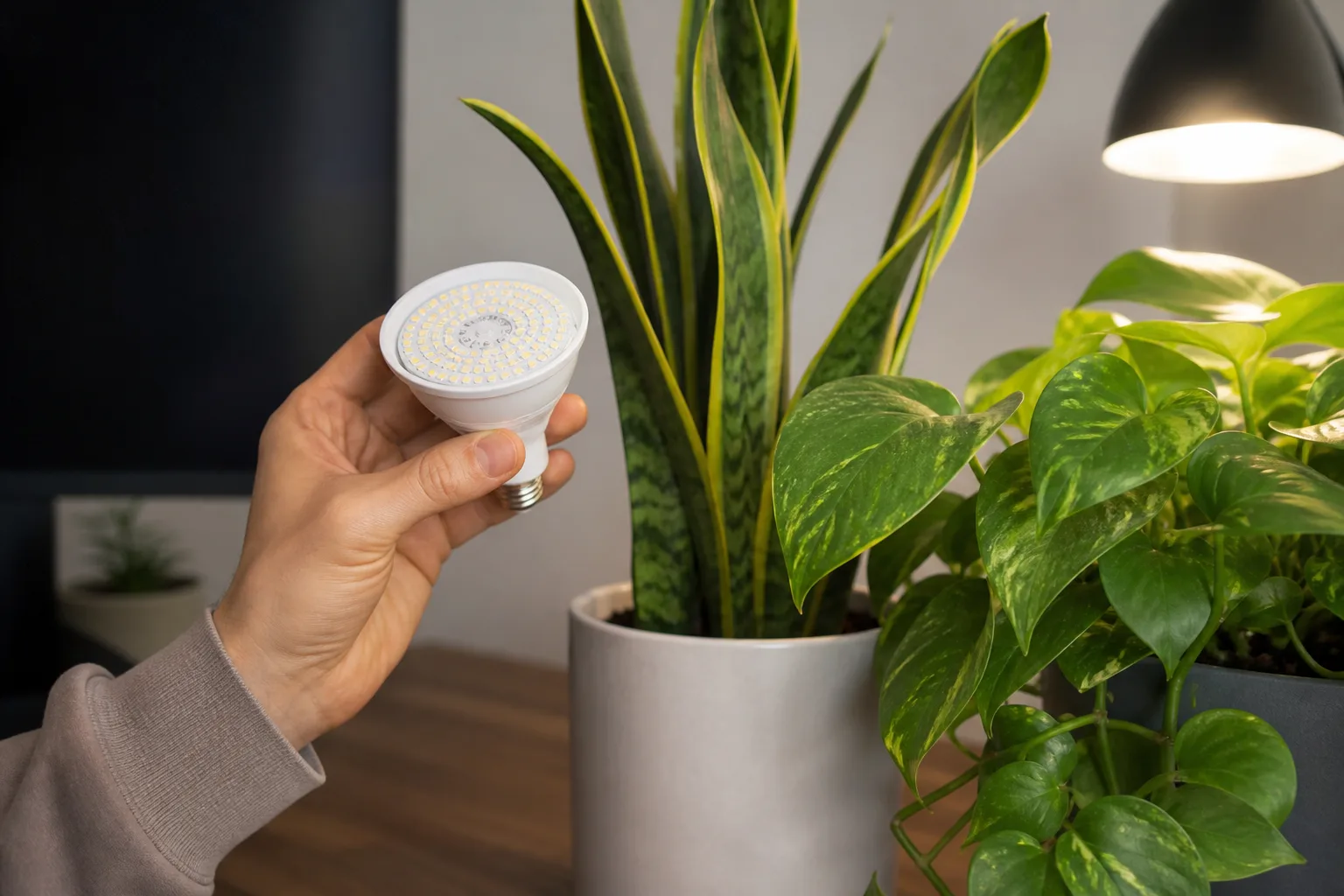
If a room is truly windowless, use a grow light on a timer rather than asking a “low-light” plant to live in darkness. UGA Extension notes that artificial light can supplement inadequate natural light and that extending the daily light period can help plants receive enough exposure. Start with the light’s instructions, keep it close enough to illuminate the foliage without heating it, and watch new growth for improvement.
Pet safety belongs in the buying decision
Safer choices for homes with pets
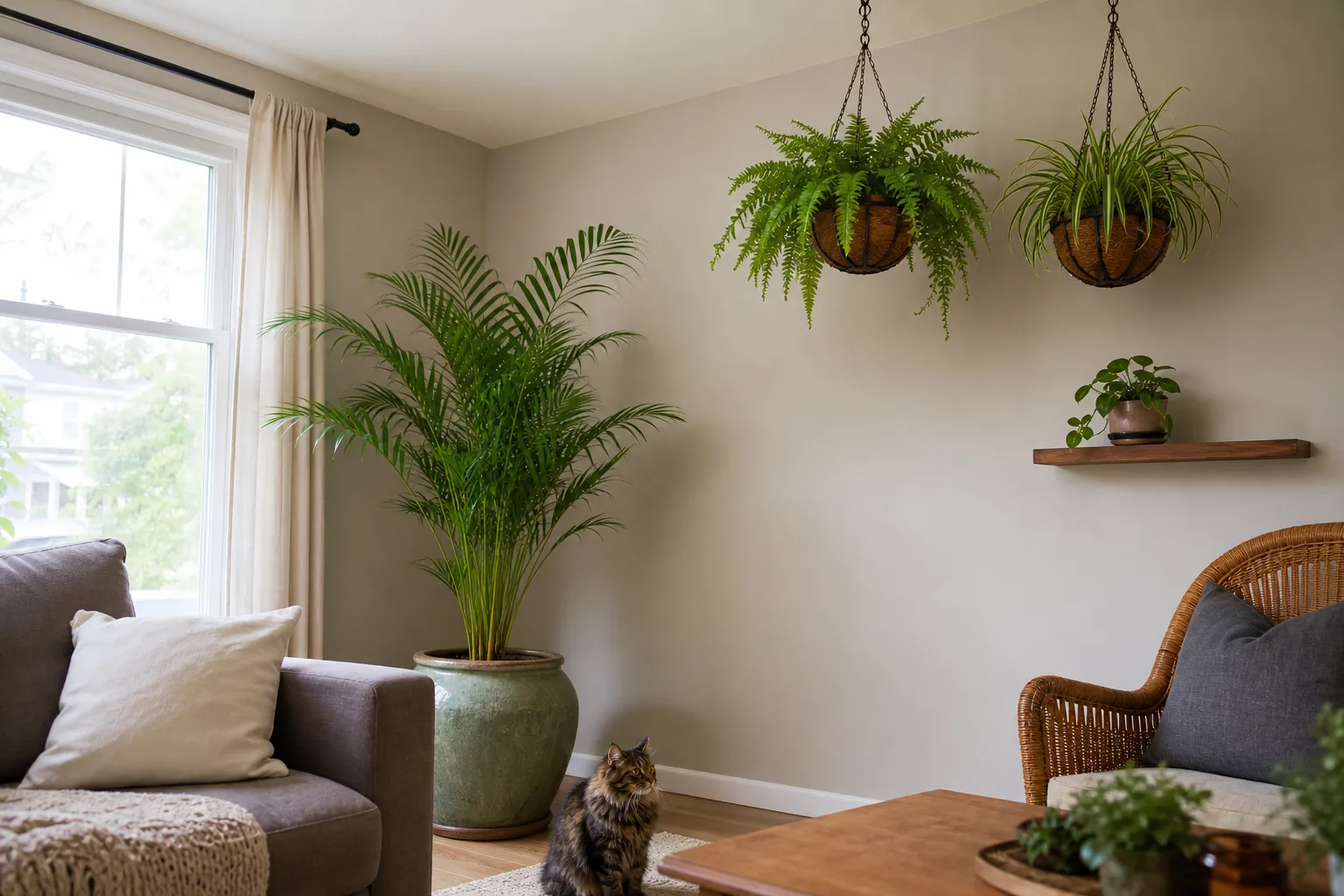
The easiest pet-safe shortlist from this article is spider plant, cast iron plant, African violet, Christmas cactus, and parlor palm. The ASPCA entries identify these species as non-toxic to cats and/or dogs, but the database is not a guarantee that every plant, cultivar, or individual animal will respond identically.
“Non-toxic” also does not mean “edible.” The ASPCA warns that eating any plant material can cause gastrointestinal upset in dogs and cats. Keep plants stable, prevent access to potting mix and fertilizer, and check the exact botanical name on the label before bringing a new plant home.
Toxic or irritating picks to place out of reach
ZZ plant, snake plant, pothos, heartleaf philodendron, monstera, peace lily, Chinese evergreen, dragon tree, lucky bamboo, and jade plant should be treated as unsafe for pets to chew. Several of the aroids on this list contain insoluble calcium oxalates, while snake plant and dracaena have different toxic principles; the correct response is to verify the exact species, block access, and contact a veterinarian or animal poison service promptly if ingestion occurs.
Do not rely on a plant’s common name. “Bamboo,” “palm,” and “lily” can describe unrelated plants with different safety profiles. The ASPCA plant database says its list is a compilation rather than an all-inclusive record, so use it as a verification step, not as permission to guess.
Common apartment mistakes that shorten a plant’s life
Most apartment plant failures come from a mismatch, not bad luck. The plant may be labeled low-light but sit in a room that is effectively dark; a decorative pot may have no drainage; or a weekly watering habit may keep soil wet after the plant’s light level has dropped for winter.
Use this quick diagnosis before you replace a plant:
- Long gaps between leaves, small new leaves, or pale new growth: move the plant closer to a window or add a grow light before fertilizing. UGA Extension identifies these as signs of inadequate light.
- Yellow lower leaves with wet soil: check drainage and roots before adding water. Low light plus overwatering is a common apartment combination.
- Brown tips: check dry air, salt crust, fertilizer strength, inconsistent watering, direct sun, and water quality in that order. Do not assume one cause from the symptom alone.
- A plant that always leans: rotate it, improve the light, or add support. Moving the pot repeatedly without addressing the light only resets the lean.
- Fungus gnats: allow the surface to dry more between waterings, remove dead debris, and correct the wet-soil pattern; spraying the leaves will not fix a root-zone problem.
- A plant that keeps declining in a dark room: stop buying replacements and install a grow light. Low-light tolerance is a slower rate of decline, not photosynthesis without light.
Conclusion
For the dimmest apartment, begin with a ZZ plant, snake plant, cast iron plant, or lucky bamboo. For shelves, choose pothos, heartleaf philodendron, or spider plant; for flowers, use peace lily, African violet, or Christmas cactus in the brightest filtered spot you have. If you have a sunny window, jade is a better match than a plant marketed for shade, while monstera, dragon tree, and parlor palm give height when the room has enough clearance.
Whichever plant you choose, spend the first week observing the room before changing the care routine. Check the light, let the soil tell you when to water, use a draining inner pot, protect the plant from vents and cold glass, and verify pet safety by botanical name. Those small decisions turn an apartment plant from temporary decor into a plant that can actually live there.