Black Spots on African Milk Tree: Stem & Leaf Checks
Quick answer
Black spots on African Milk Tree (Euphorbia trigona) on stems or small ridge leaves can mean rot at the soil line, scale insects, cold injury, or fungal leaf spot—not one single disease. First step: press the stem base where spots appear; soft wet black at soil level is urgent rot, not a leaf spray problem.
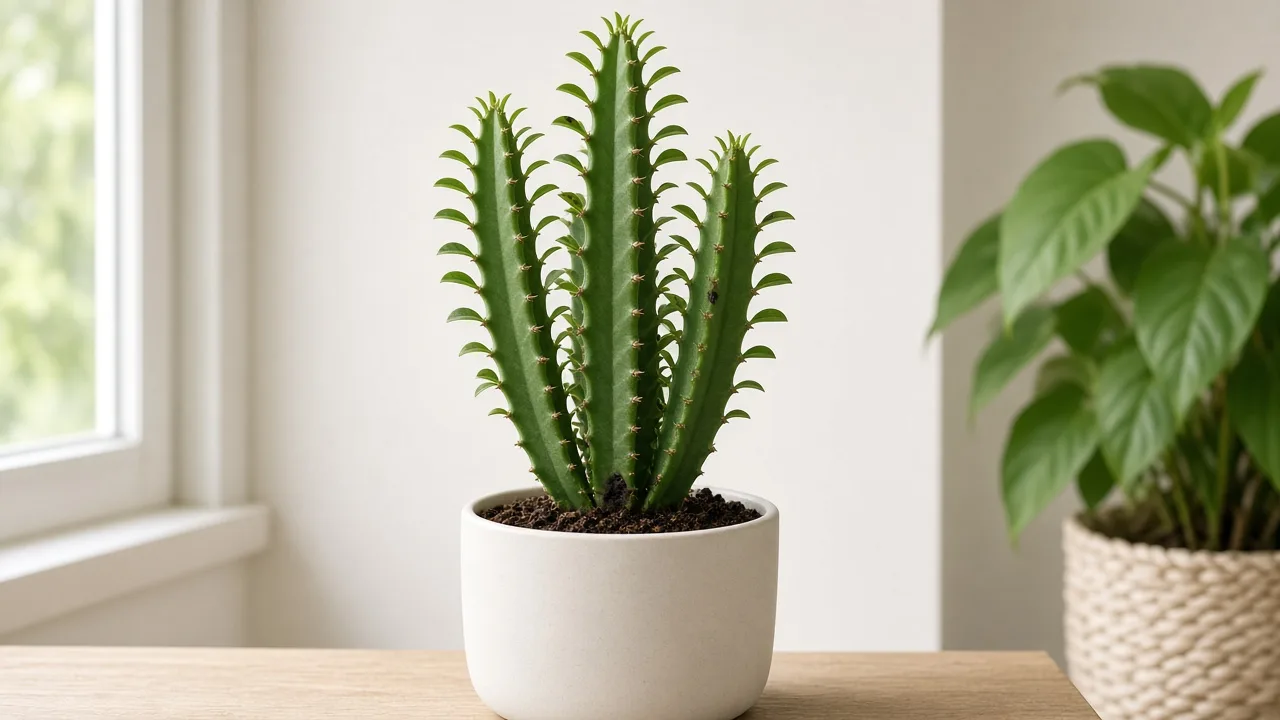
Black Spots on African Milk Tree: Causes, Checks & Fixes
This guide covers black spots on African Milk Tree. See also the general Black Spots guide, watering, and light pages for this plant.
Black Spots on African Milk Tree: Causes, Checks & Fixes
Quick answer
Black spots on Euphorbia trigona (African milk tree) appear on small ridge leaves, stem faces, or—most critically—the soil line. For general black spot patterns, see our black spots guide. On this columnar euphorbia, stem-base softness separates rot emergencies from superficial leaf specks.
First step: press the stem exactly where black appears. Soft, wet, spreading black at the soil line means overwatering or root rot—not a fungicide-on-leaves fix.
When to use this page vs other African Milk Tree guides
| Pattern | Read next |
|---|---|
| Soft black base on wet mix | Root rot |
| Dry bumps under leaf spots | Scale insects |
| Black after cold window | Cold damage |
| Yellow leaves + wet soil | Overwatering |
What black spots look like on African Milk Tree
Healthy African milk tree shows firm triangular green (or red) columns with small oval leaves tucked into stem ridges. Black spots present differently:
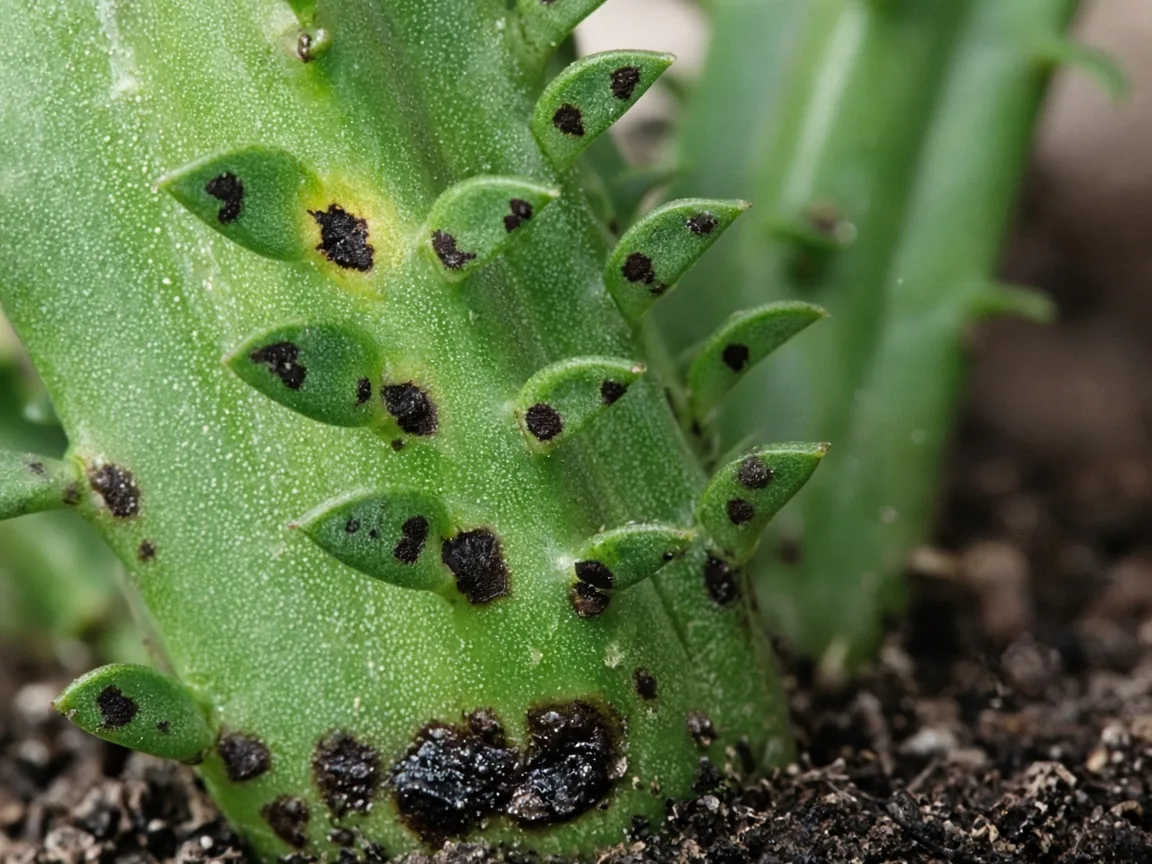
Black spot lesions on Euphorbia trigona ridge leaves—compare firm green stem tissue with any soft dark zone at the soil line.
- Soft black at soil line spreading up the rib — Stem gives under pressure; may ooze if pierced. Rot from chronic wet mix.
- Dry black specks on ridge leaves with raised bumps — Scale insects feeding on sap.
- Small dry black dots on leaves only, firm stem — Minor fungal leaf spot or old injury; lower urgency if stem is hard.
- Corky dark patches after cold exposure — Tissue firm but discolored along one face of the column.
- Blackening after physical snap — Latex dried at wound; margin may darken as callus forms—normal if firm.
Unlike broad-leaf houseplants, stem firmness matters more than leaf count—this plant can drop all ridge leaves and still survive if the column is hard.
The soil-line black spot test
Euphorbia trigona rots from the bottom up when roots sit wet. This section is meaningless on ferns or violets:
- Gently squeeze the lowest 5 cm of the main stem above soil.
- If it flexes or feels hollow, unpot the same day—do not wait for more leaf spots.
- If firm, black is likely leaf-level scale, fungus, or cold—inspect ridge leaves with a magnifier.
Wear gloves—euphorbia latex irritates skin and eyes.
Why African Milk Tree gets black spots
Overwatering and stem rot. Tall columns in heavy peat mix hold moisture at the base. Euphorbia trigona needs well-drained soil and infrequent watering.
Scale insects. Armored scales leave dry black honeydew spots on small leaves along ridges.
Leaf spot fungi. Fungal leaf spots favor wet foliage and poor airflow between crowded columns.
Cold injury. Cold drafts damage tropical succulents below about 55°F (13°C) and can darken stem tissue permanently.
Mechanical wounds. Bumps against ceilings or stakes blacken at latex-exposed edges as they heal.
How to confirm the cause
- Stem squeeze at soil line — Soft = rot protocol.
- Bump test on leaf spots — Raised = scale.
- Pot weight and dry-down — Heavy days after watering on peat mix = moisture driver.
- Temperature history — Recent cold window or AC blast.
- Spread speed — Rot climbs fast; scale stays localized.
Lookalike symptoms on ridge foliage
Black spots on a columnar euphorbia are easy to misread if you treat every dark mark like fungal leaf spot on a philodendron. Use this table before spraying:
| What you see | Texture | Stem check | Likely cause |
|---|---|---|---|
| Soft black climbing from soil | Wet, gives under pressure | Hollow at base | Root rot |
| Dry specks with raised bumps | Hard, scrapes off | Firm column | Scale insects |
| Small dry dots, firm stem | Papery leaf only | Firm throughout | Minor leaf spot or old injury |
| Dark corky patch on one face | Firm, not spreading fast | Firm | Cold damage |
| Black at latex wound edge | Dry callus forming | Firm above wound | Healing mechanical snap |
Photo the lowest stem and one ridge leaf weekly. Spread up the rib in days beats leaf-count anxiety every time.
When black spots become urgent
Treat same-day when the stem base feels soft, black moves upward within a week, or the whole column goes limp despite wet or dry soil. Lower urgency when spots stay on ridge leaves only, the column squeezes firm at every height, and dry-down matches the watering guide. Isolated dry specks on one branch with firm tissue elsewhere often mean localized scale—not a whole-plant emergency.
First fix for African Milk Tree
Press the lowest stem above soil—if soft, stop watering and unpot to inspect roots the same day.
For firm stems with leaf-only spots:
- Remove affected ridge leaves with gloves; dab latex dry with paper towel.
- For scale, scrape gently and treat per scale insects.
- Improve airflow; never mist.
For rot:
- Cut into firm tissue above black zone; air-dry cuts 48 hours before dry repot in cactus mix.
- See root rot.
Do not spray fungicide on wet stems. Do not water “to help recovery.”
Source note: Euphorbia trigona culture from NC State and overwatering injury from Missouri Botanical Garden.
Recovery timeline
Leaf spots on firm columns may stop spreading within two weeks after dry-down and scale clearance. Stem rot recovery depends on how much column was saved—new branches may sprout below cuts in warm bright conditions over one to three months.
Mistakes to avoid
- Misting ridge leaves
- Leaving standing water in saucers on tall unstable pots
- Treating soft stem base with leaf fungicide only
- Handling without gloves when latex is flowing
How to prevent black spots next time
Prevention on Euphorbia trigona is mostly dry-down discipline and stem-base inspection, not foliar sprays:
- Water on weight, not weekday. Learn dry pot feel; soak only when the top 2–3 inches are dry per the watering guide.
- Use gritty mix in a stable heavy pot so tall columns do not tip and snap—wounds invite black margins as latex dries.
- Inspect the soil line after every watering with gloves; catch soft black before it climbs.
- Keep above cold drafts and AC blasts; tropical succulents darken permanently below about 55°F (13°C).
- Quarantine new columns and check ridge axils monthly for scale before specks spread.
- Never mist ridge leaves—stagnant moisture between ridges favors fungal leaf spot on the few leaves this plant keeps.
See African Milk Tree overview and problems hub for the full care cluster.
Related African Milk Tree guides
Conclusion
Black spots on African milk tree are stem-first diagnostics—soft base on wet mix is rot today, not next week. Firm columns with dry leaf specks are usually scale or minor spot. Gloves, dry-down, and soil-line inspection beat blanket spraying.